Trump's Friday ultimatum to Netanyahu exposes the gap between US pressure and Israeli action in Lebanon
Trump's Friday ultimatum to Netanyahu on Lebanon operations arrives as Israeli helicopters evacuate wounded from southern Lebanon and Iranian negotiators delay their Switzerland trip, exposing a three-clock collision between American, Israeli, and Iranian calendars.
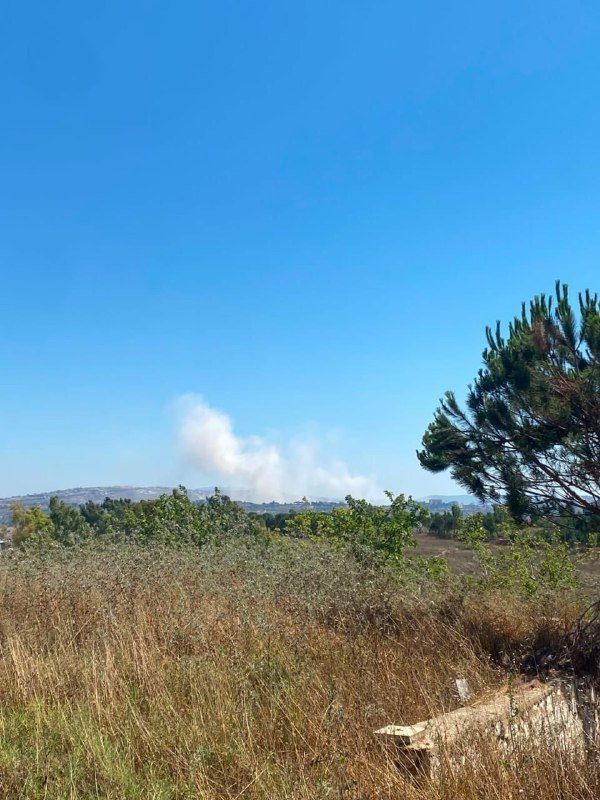
President Donald Trump delivered a Friday ultimatum to Prime Minister Benjamin Netanyahu demanding a halt to Israeli operations in southern Lebanon, according to Israeli Channel 14 reporting circulated on 18 June 2026. The ultimatum, framed as a deadline for compliance rather than a negotiation opener, lands inside the same 24-hour window in which Iranian negotiators delayed a Switzerland trip because of fresh Israeli strikes near Ali al-Tahir, and in which JD Vance publicly told Israel that Trump is its last great-power friend. On the ground, four Israeli helicopters were rotating into southern Lebanon to evacuate wounded troops as Hezbollah fighters contested the hills, and Israeli warplanes hit Harouf and Sharqiya with multiple casualties reported. The deadline is a single-source Friday claim, and that caveat has to lead.
The push is not coming from a position of leverage. According to a Telegram analysis cited from the 18 June feed, the US administration is pursuing an Iranian settlement under the pressure of its own domestic calendar, with congressional elections fewer than six months out. The framing matters: an ultimatum issued by a president who needs a foreign-policy win at home carries different weight than one issued by a president with room to wait. Trump dismissed separate reporting that Washington might impose an arms embargo on Israel, telling Channel 14 he had "never heard" of such claims, a denial that did not foreclose the underlying sequencing dispute. Vance, by contrast, made the threat explicit in language directed at Israeli critics of the Iran deal, reminding them of the billions in annual US defence assistance and pointing to the dwindling roster of Israeli allies in Western capitals.
The guns did not wait for the deadline
Hezbollah's own public line, distributed on 18 June, is that Israel is obliged to cease all hostile action on land, sea, and in airspace within 60 days and to withdraw fully from Lebanese territory, a position the group is now publicly stating even as Israeli forces push toward the Ali al-Tahir heights under artillery fire. The Israeli air force struck Harouf's al-Baydar neighbourhood and the town of Sharqiya the same evening, with casualties reported by Lebanese and regional outlets. Israeli media described a "complex and difficult" security incident in the south, with details under censorship, a phrasing that in Israeli usage signals friendly losses being suppressed in real time. The four helicopters brought in to evacuate wounded are a more measurable indicator of cost than any press release. Turkish National Security Council readout, issued after an Erdogan-chaired meeting, said Israeli actions have a "negative impact on stabilization efforts in the region," a rare pointed formulation from an Ankara that has been working to stay useful to both Washington and the Gulf.
The Iran track, on ice by design
Middle East Eye reported on 18 June that Iranian negotiators postponed their Switzerland trip after the Israeli strikes in southern Lebanon, a sequencing that Israeli media treated as confirmation that the deal Trump is selling at home is being paid for in Lebanese blood. The Iranian read, carried in regional outlets, is that Washington is structurally subordinate to a Netanyahu government that does not accept a settlement on terms Tehran can sign, and that the gap between American words and Israeli action has become the defining feature of the negotiation. That is a serious structural claim, not spin, and it sits alongside a separate Iranian move reported the same day: Tehran plans to introduce maritime transit fees for the Strait of Hormuz, a revenue and signalling instrument aimed squarely at the Asian buyers who keep the country's economy alive. The fees are also a reminder that Iranian leverage in any deal is not confined to the negotiating room.
The regional audition
A separate dispatch, citing Israeli Channel Kan 11, reports that Syria's de facto leader Ahmed al-Julani refused a Trump request to put Syrian troops into Lebanon alongside operations against Hezbollah, a refusal that, if confirmed, narrows Washington's coalition options in the north. The Syrian refusal matters less for what it says about Damascus than for what it says about the price the Americans are now willing to pay for partners willing to fight. Turkey's National Security Council statement, welcoming the Iran understanding while criticising Israeli operations, places Ankara in an awkward mediator's seat, neither endorsing the Israeli campaign nor breaking with Washington.
Where the two clocks disagree
Netanyahu, for his part, is operating against his own domestic clock. Former prime ministers Ehud Barak and Ehud Olmert joined other ex-officials in a joint statement, reported by Haaretz on Thursday 18 June, warning the government they will appeal to the Supreme Court over the conduct of the war, a step that pulls the legal-political fight inside Israel onto the same front page as the Lebanon ultimatum. The Vance message to Israeli critics of the Iran deal should be read against this backdrop: a prime minister under domestic legal pressure, fighting a war his chief patron wants paused, and negotiating with an Iranian side that has just watched Israeli strikes blow up a Switzerland trip. The Friday deadline is therefore best read as the collision point of three clocks running at different speeds: an American electoral calendar, an Israeli legal calendar, and an Iranian negotiating calendar that has just been told, in strikes, what "good faith" looks like from Tel Aviv.
The next marker to watch is whether the Iran team rebooks the Switzerland flight inside the 60-day Hezbollah envelope, or waits for the Israeli operations to actually stop. Trump's words are on the wire; Israeli helicopters over Harouf are on the wire too. Only one of those is reversible by Friday.
Sources: Haaretz (ex-officials statement, 18 Jun 2026); Israeli Channel 14, via Clash Report (Trump embargo denial, 18 Jun 2026); Middle East Eye (Iranian negotiators delay, 18 Jun 2026); Telegram, @wfwitness (Lebanon strikes, 18 Jun 2026); Telegram, @mehrnews (Turkish NSC readout, 18 Jun 2026); Telegram, @osintlive (US domestic-calendar analysis, 18 Jun 2026); Telegram, @DDGeopolitics and @IntelSlava (Ali al-Tahir clashes, 18 Jun 2026); Telegram, @JahanTasnim (Hezbollah conditions, 18 Jun 2026); Israeli Channel Kan 11, via X (Syria refusal, 18 Jun 2026).
Desk note: Monexus treats the Friday deadline as a single-source claim and leads with that caveat, while giving Netanyahu's own public line and the Israeli legal pushback equal weight. The Iranian structural read of US primacy is treated as a serious claim to be analysed, not dismissed.