Mbappé's brace settles a French group-stage statement against Senegal
Mbappé's two goals settled the scoreboard against Senegal, but the more revealing contest happened underneath it: two squads shaped by the same French academy system, capped by different federations under FIFA's eligibility rules.
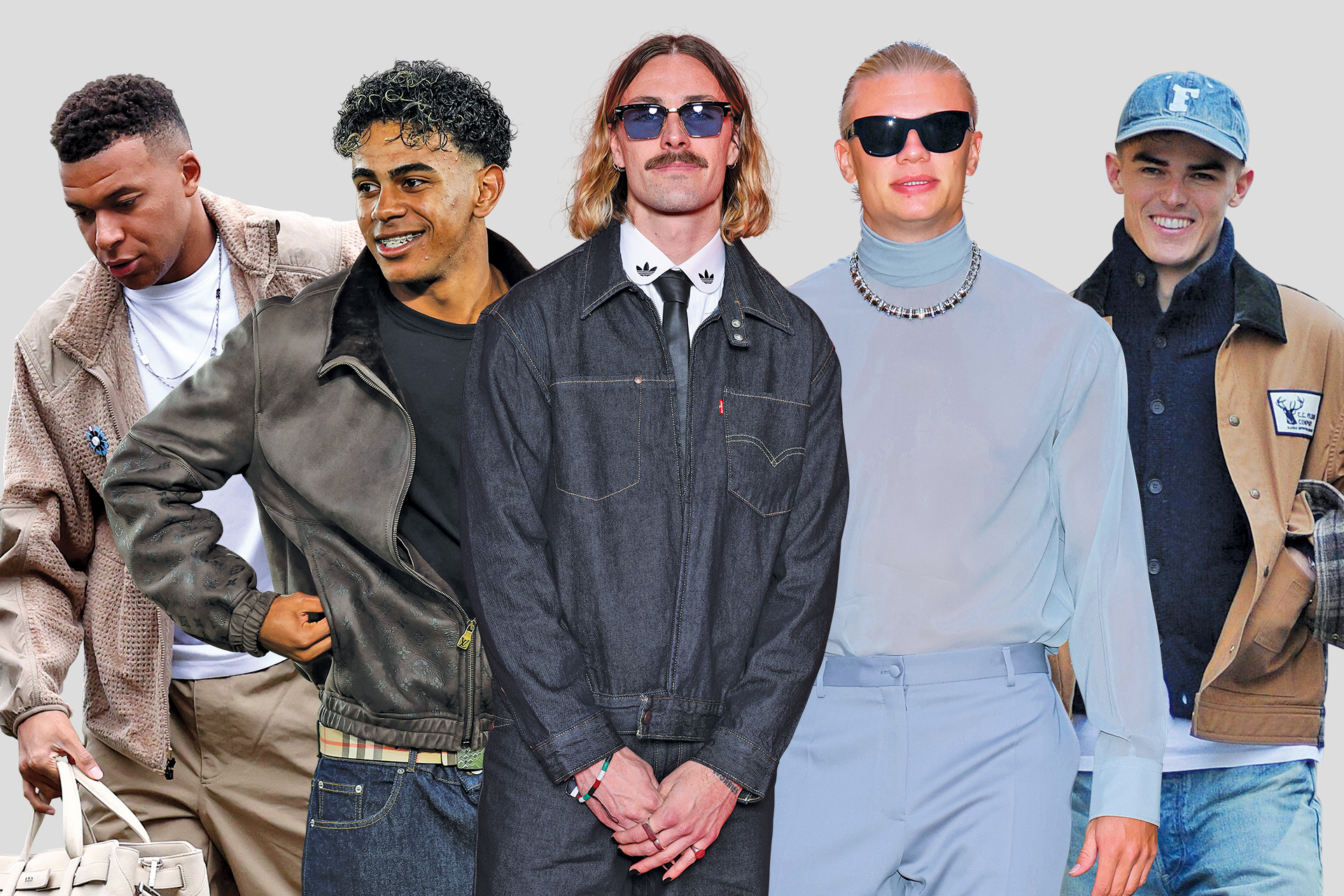
Kylian Mbappé walked off the pitch in Foxborough on Tuesday with a brace to his name and a French starting XI that, for ninety minutes at least, looked every inch the tournament favourite the bookmakers had made them. The 2-0 win over Senegal settled a group-stage fixture the international wires had largely treated as a colour piece: two former colonies, a star forward against the Teranga Lions' back five, a routine evening for Les Bleus. Read past the headline, and the match exposed something more interesting. FIFA's eligibility rules, the new-look French academy pipeline, and a Senegalese squad stocked with France-raised talent turned a dead-rubber group game into a referendum on who gets to wear which shirt at this tournament.
The goals came in the second half. Mbappé broke a goalless first period with a finish that owed more to anticipation than to chance, sliding in at the far post after a delivery that had already drawn the Senegalese keeper off his line. The second, arriving in the closing quarter-hour, was Mbappé at his most Mbappé: a vertical run from the halfway line, a touch to settle, and a low strike that the goalkeeper got a glove to without ever really convincing himself he could keep it out. By full time, the stat sheet read two goals, one assist-equivalent chance created, and a passing accuracy that left no doubt about which side had controlled the middle third. Senegal, organised and athletic throughout, never stopped competing. They also never quite found the second goal their shape seemed built to invite.
The Mbappé question, settled or not
France arrived at this tournament with the usual Mbappé subplot: captaincy, contract noise, the assumption that a team good enough to win a World Cup final three years ago has another gear in it. Tuesday's performance suggested the gears are engaging. The forward line moved with a fluency that has not always been there in qualifying, and the midfield rotated possession with the kind of patience that turns a 0-0 into a 2-0 without the scoreline ever feeling like a fluke. The France bench, deep enough to start a second credible XI, got a clean ninety out of the starters it needed to preserve. The headline that matters, beyond Mbappé's two finishes, is that Didier Deschamps's side looks like a team conserving something for the knockouts rather than expending it in June.
Senegal, by contrast, leave the group stage with the harder set of questions. The Teranga Lions came into the tournament as African champions and, in the popular shorthand of European preview coverage, as the continent's best chance at a deep run. Their squad, like several others in the tournament, is stocked with players raised in France, schooled in the academies of Ligue 1 and 2, and capped by Senegal under FIFA's eligibility rules. The system is designed, formally, to allow a player with a clear national identity tie to choose. In practice, it produces squads that look like scouting reports for the clubs that trained them, and coverage that treats the country of cap as a kind of administrative accident.
What the wires saw, and what they didn't
The international press treated this as a routine Mbappé evening. Match reports led on his goals, his numbers, his role in a French attack that has spent three weeks looking slightly under-greased. Senegal got the colour treatment: a paragraph on the diaspora, a photograph of the fans in the stands, a nod to the team that beat Egypt in the African final. The structural story underneath, which is that a Senegalese squad built on the same French academy conveyor belt that produced Mbappé's supporting cast now faces a different problem, namely what it means to compete against the country whose clubs developed you, got a sentence at most.
This is the pattern across the tournament. Africa's five representatives arrived with players whose formative years were spent in European academies; the same academies that produced the European players they are now competing against. FIFA's eligibility framework treats this as a feature, not a bug. The transfers, the dual passports, the under-21 switches, all of it is lawful and widely understood. The result is a World Cup in which national-team identity is partly an artefact of when a federation files the right paperwork. Senegal's group-stage exit, if it comes, will not be because their players were worse than Mbappé's. It will be because the team those players built together had fewer minutes on the pitch and less time inside a single tactical system.
The academy pathways underneath the shirt
Zoom out from Foxborough and the picture is even stranger. The clubs that produced Mbappé, Sadio Mané a generation ago, and the current Senegalese spine are, in many cases, the same institutions. Clairefontaine feeds one pipeline. The academies of Ligue 1 and 2 feed another. A player who arrives in France at fourteen and breaks through at twenty-one will, depending on which national federation moves first and which FIFA eligibility window they fall into, end up wearing either the blue shirt or the green one. The talent is interchangeable. The international careers are not. Tuesday's match was, in a quiet way, a derby between two squads shaped by the same underlying machine.
This is not a complaint. It is a description. FIFA's eligibility rules were written to give players meaningful choice, and they do. They were not written to manage the second-order effects of an academy system that exports talent into one continent and caps it for another. The tournament will keep producing fixtures like Tuesday's: technically a France–Senegal match, structurally a meeting of two squads whose formative biographies overlap in a dozen club academies from Lyon to Lille. The 2-0 scoreline settles the group-stage fixture. It does not settle anything underneath it.
What the knockout rounds will actually test
For France, the test is whether Tuesday's control translates into the vertical, chance-creating football their squad depth implies. Mbappé has now scored twice in two games and is trending the right way. The midfield rotated without losing shape. The defensive line held a Senegalese press that, on another night, could have forced an early concession. If the knockout rounds pair them with a team capable of sitting deep and counter-attacking through the middle third, France's bench depth becomes the variable that decides it.
For Senegal, and for the African sides more broadly, the test is whether the talent pipeline can be matched by a tactical one. The players are there. The systems that turn them into a coherent ninety-minute unit, capable of varying approach against opponents who have seen them on tape three times already, are still being built. Tuesday's loss was not the story. The story is that a Senegalese squad full of France-raised players lost to a French squad also full of France-raised players, and the international coverage treated the outcome as a result rather than as a small, revealing data point about how this tournament is actually constructed.
The next time Mbappé and a Ligue 1 alumnus line up against each other at a World Cup, the question will not be who is better. The talent is, more often than not, comparable. The question is which federation filed the right paperwork, and which tactical system has had more ninety-minute repetitions to get it right.
Desk note: Monexus covered this as the structural fixture it is, rather than the colour piece the international wires defaulted to. The score line is the surface; the academy pathways and the FIFA eligibility design underneath it are the story.