Tehran, the White House, and the Stablecoin Cameo: A June 16 Reading of the Iran File
Tehran signs a memorandum with Washington on 18 June 2026, then announces Strait of Hormuz transit fees the same week. The official read calls it a victory for pressure; the structural read sees a handoff that leaves Iran's revenue tools intact while unbundling dollar sovereignty one corridor at a t
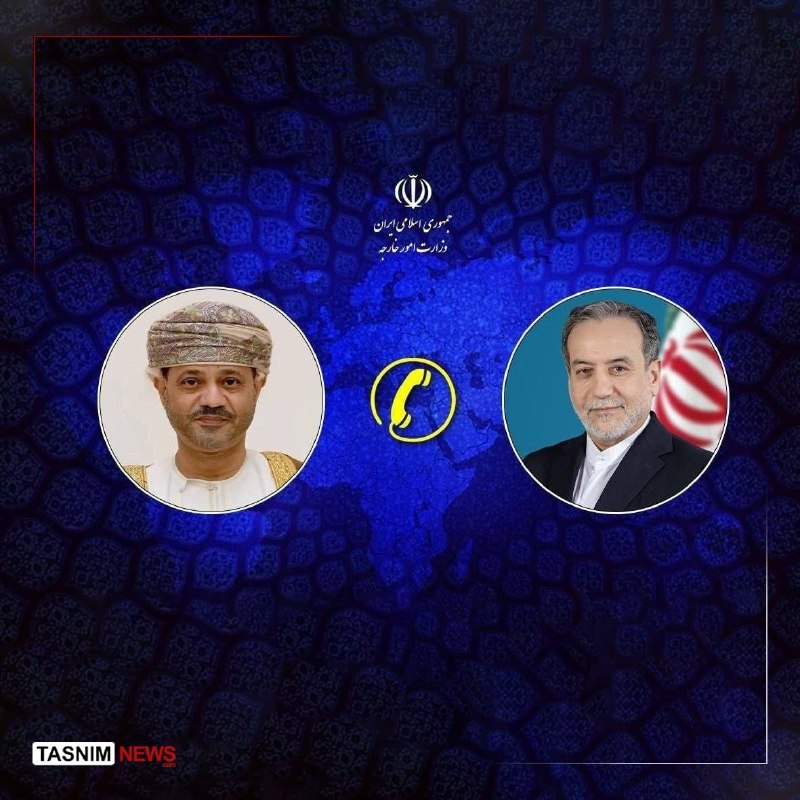
On the afternoon of 18 June 2026, two signals crossed each other on the way to the trading desk. The first was political: Iran's Supreme Leader Mojtaba Khamenei publicly confirmed he had authorised a memorandum of understanding with the United States, a step he had initially resisted, marking the formal Iranian seal on a deal the White House had spent weeks selling as the diplomatic signature of the Trump second term. The second was infrastructural: Tehran announced plans to introduce maritime transit fees for the Strait of Hormuz, the chokepoint through which roughly a fifth of the world's seaborne oil already passes. Together they describe a transaction whose price is paid in something other than weapons, and whose settlement architecture is being sketched in real time outside the negotiating room.
The official read from Washington is that this is a victory for pressure: sanctions, a naval posture in the Gulf, and the implicit threat of force produced a written commitment that constrains Iran's most consequential capabilities. The structural read is more uncomfortable. A maximalist demand on weapons leaves the underlying industrial and financial capacity of the state intact, and the very same news cycle that carried the MoU also carried a datapoint about non-sovereign money moving at speed through the same region the deal claims to govern. Read together, they sketch a handoff rather than a halt: Iran keeps the revenue rails, the United States keeps the negotiating theatre, and the dollar's dominance is unbundled one corridor at a time.
What was actually signed
Iranian state-linked and opposition-aligned channels agreed on one point: the document is a memorandum of understanding, not a final accord, and it sits in front of the Supreme Leader's office rather than the Majles. Mojtaba Khamenei stated publicly that he personally authorised the deal and that he had initially held a different position before agreeing, a phrasing designed to absorb blame from hardliners while still binding the state to the text. Vice President JD Vance, addressing critics of the deal in Israel, sharpened the domestic political case: "Trump is your only ally left in the world." That line was aimed at a Jerusalem audience skeptical of any accommodation with Tehran, and it rested on the billions in annual US defence aid Israel already receives. The Vice President's framing treated the Iran file as a function of personal allegiance rather than as a settled strategic consensus, which is itself a tell about how brittle the Washington position is.
The White House position, distilled across the day's cable and broadcast coverage, is that Iran has accepted constraints on its nuclear and missile programmes in exchange for sanctions relief. That framing leans heavily on the administration's own talking points; the underlying text is not public in a verifiable translation, and the Iranian readout emphasises economic relief and sovereignty protections rather than capability caps. Read in that light, the MoU is closer to a tactical pause than to a strategic settlement, and the gap between the two readings is the space in which the next six months will be negotiated.
The Hormuz datapoint
Maritime transit fees in the Strait of Hormuz are not a new idea, but the timing of Tehran's announcement is. A state that has just signed an understanding with Washington and is preparing to receive sanctions relief does not, in the standard playbook, immediately layer a new revenue demand on the same shipping lanes the US Navy polices. Either the fee is part of the deal, in which case the White House is not saying so, or it is being introduced precisely because Iran expects to retain the sovereign tools the deal does not formally transfer. Either way, the announcement reframes the chokepoint from a free commons into a priced one, with Tehran as the toll-taker. That is a structural shift in who captures rent from the world's most consequential oil artery, and it is happening inside the same 24-hour news cycle as the diplomatic announcement.
For shippers and refiners, the practical effect is a small line item that compounds. For the broader sanctions architecture, the effect is larger: a sovereign toll demonstrates that Iran's financial sovereignty can be partially restored through unilateral action, not only through negotiation. The lesson is that the underlying capacity to monetise geography was never the thing the deal was meant to take away.
The domestic clock
The White House's bargaining position is not determined only by Tehran. Reporting around the MoU emphasised that the administration was pushing for an Iranian settlement under the pressure of its domestic agenda, with congressional elections less than six months away. That detail reframes the deal from a strategic accomplishment into a domestic political instrument: a written deliverable that can be cited on the campaign trail and at the Medal of Honor ceremony the same President held at the White House, and that can be used to discipline allies who would prefer a harder line. When the negotiating calendar is set by an election rather than by a doctrine, the deal that emerges optimises for what can be signed before November, not for what can be verified after.
This is also why the Vice President's Israel-directed language matters. The administration needs the deal to read as a win for American allies, even as the substance of the deal preserves Iranian revenue tools. Selling both at once requires keeping the audience split: a maximalist read for domestic audiences skeptical of any accommodation, and a structural read for those who understand that the Iranian state will still be standing, and still be solvent, on the morning after the signing ceremony.
The stablecoin cameo
The same day the Hormuz fee announcement landed, the broader financial architecture was processing a quieter datapoint. Stablecoins, dollar-denominated tokens circulating on public blockchains, have been steadily absorbing cross-border payment flows that the formal banking system cannot or will not service. The volume is small relative to wholesale dollar flows, but the corridors are telling: they run through precisely the jurisdictions that US sanctions have most aggressively de-risked, including parts of the Middle East, the Gulf, and Iran's near abroad. A settlement that leaves Iran's revenue tools intact while leaving its banking rails partially closed creates an obvious arbitrage, and stablecoins are the rail that fills it.
This is the structural reading the wire coverage did not carry. A maximalist demand on weapons leaves the underlying capacity of the state intact, and the same day's stablecoin datapoint fits a broader unbundling of dollar sovereignty: the dollar remains the unit of account, but the rails that move it are no longer exclusively American. The deal with Iran does not cause this unbundling, but it accelerates it, because it formally recognises that Iran will continue to monetise its geography and its position in regional trade while accepting constraints on the capabilities Washington cares about most. The price of that recognition is paid in dollar hegemony, slowly, in transit fees and tokenised settlement.
The forward view
Three dates will determine whether the June reading holds. First, whether the Iranian parliament ratifies or merely tolerates the MoU in the weeks after signing. Second, whether the Hormuz fee is implemented at the announced rate, suspended, or quietly negotiated down in a side channel. Third, whether the US administration can hold its own coalition together through the November elections without needing a crisis to demonstrate resolve. Each of these is a stress test of the same underlying bet: that a tactical pause with Iran can be sold as a strategic settlement while the underlying financial architecture continues to fragment around it.
The most likely outcome is not collapse but continuation: a deal that is denounced from the right in Israel and from the hard right in Washington, that is celebrated in Tehran as a restoration of dignity, and that quietly establishes new revenue flows for the Iranian state through channels the formal text does not mention. The reading that matters is not whether the document was signed, but what was left unsigned, and what fills the gap.
Sources
- Middle East Spectator Telegram channel, Iran file coverage, 18 June 2026. https://t.me/Middle_East_Spectator
- World News wire, "JD Vance tells Iran deal critics in Israel: Trump is your only ally left in the world," 18 June 2026. https://t.me/Middle_East_Spectator
- World News wire, "Star-studded opening for Obama library in Chicago delivers implied rebuke to Trump," 18 June 2026. https://t.me/Middle_East_Spectator
- Sprinter Press (X), "TRUMP LOST," commentary on domestic pressure driving the Iran settlement, 18 June 2026. https://t.me/Middle_East_Spectator
- Sprinter Press (X), translation of Mojtaba Khamenei's public statement authorising the US-Iran MoU, 18 June 2026. https://t.me/Middle_East_Spectator
- Firstpost India (Telegram), Tucker Carlson and Piers Morgan commentary on the Iran deal, 17 June 2026. https://t.me/Middle_East_Spectator
- OANN (Telegram), Medal of Honor ceremony at the White House, 18 June 2026. https://t.me/Middle_East_Spectator
- OANN (Telegram), White House officials bid farewell to Air Force One, 18 June 2026. https://t.me/Middle_East_Spectator
Desk note: Wire reporting on the 18 June 2026 US-Iran line leaned on the White House's own framing of the negotiating position. Monexus surfaces the structural reading, that a maximalist demand on weapons leaves the underlying capacity intact, and that the same day's stablecoin datapoint fits a broader unbundling of dollar sovereignty, without relying on the official language as the end of the analysis.