Hormuz as leverage: how a CNN-cited US intelligence finding is rewriting the Iran bargaining map
Four Iranian institutions converged on Hormuz within hours of the 18 June MoU. The mayor, the Speaker, the President, and the Supreme Leader's office all pointed at the same strait, in the same window, while the US readout insisted the blockade was working.
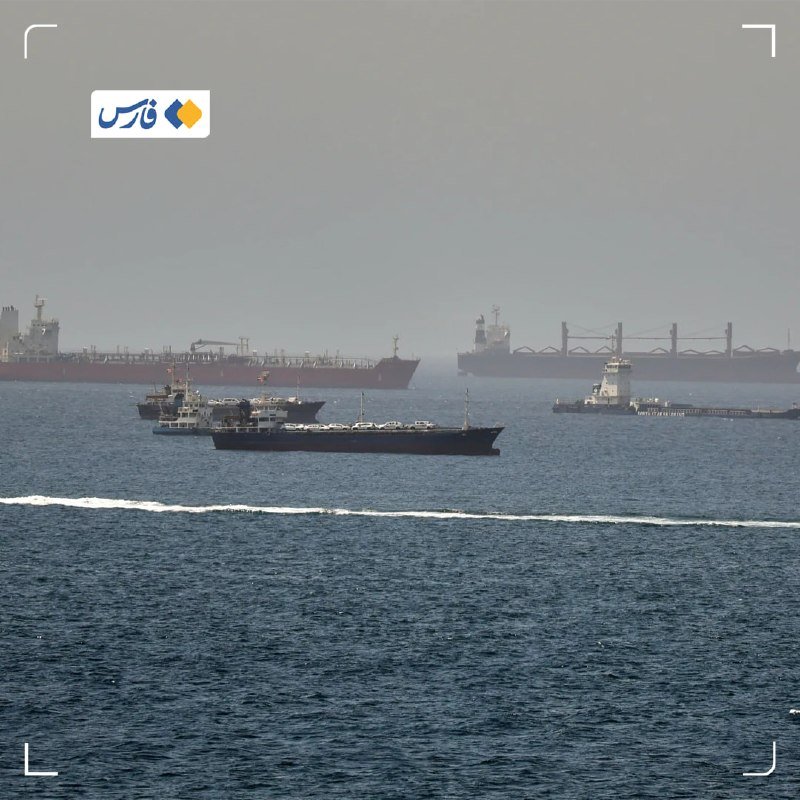
The Iran-US memorandum, signed in the small hours of 18 June, was barely six hours old when the Mayor of Tehran took to the camera and declared that Iran's bargaining position now runs through the Strait of Hormuz. Within ninety minutes the Supreme Leader's office had issued its own ratification, with President Pezeshkian calling it "the roadmap for safeguarding national interests in the course of negotiations," and Speaker Qalibaf pledging to treat the Leader's orders as the goal itself. By evening, Vice President JD Vance was telling an American audience that CENTCOM had let "north of a dozen ships" move through a naval blockade that, days earlier, had been framed as the administration's primary instrument of pressure.
What the wire reporting, relayed across Tasnim, Fars, the Abuali channel, and the World-First Witness feed, presented as two separate facts is one combined signal. The assessment itself is real, and its near-instantaneous uptake inside the Iranian political system is itself part of the leverage Tehran intends to wield in the rounds ahead. When Iranian officials in three separate institutions, the mayoralty, the presidency, and the parliament, converge on Hormuz as the through-line in the same twenty-four-hour window, that is the public position Tehran intends to defend.
The strait that was always the variable
The Strait of Hormuz is the world's most consequential oil chokepoint, threading between Iran to the north and Oman to the south, and roughly a fifth of the world's petroleum passes through its twenty-one-mile shipping lanes on most days (Wikipedia: Strait of Hormuz). It is not an abstraction. It is the reason every sanctions architecture of the past decade has had to account for Iran's residual revenue from crude exports that move, mostly legally, mostly in the open, through waters Iran considers its own maritime frontier.
Until 18 June the lever appeared to sit on the American side. The naval blockade was the headline instrument; the MoU's terms were the headline reward. The New York Times, reviewing Vance's defence of the deal, noted that the vice president "claimed incorrectly that Iran got no new benefit from the lifting of oil sanctions," an unusually pointed framing for a US official's talking points (NYT, 18 June 2026, 23:15 UTC). That single sentence does a lot of work: it concedes, inside an American paper of record, that the sanctions relief now in place is itself a concession of meaningful value. Once you accept that, the question of what Tehran has been given in exchange for signing begins to narrow.
What Tehran is signalling, line by line
The Supreme Leader's letter, excerpts of which circulated through DDGeopolitics within the hour, addresses the "passionate and loyal nation of Iran" directly and frames the MoU as a memorandum the public has "been informed" of, signalling that the document has been deliberately published to a domestic audience (DDGeopolitics, 18 June 2026, 22:17 UTC). That is a domestic-consumption posture: it tells Iranians the deal is real, sanctioned from the top, and not a diplomatic trick. Pezeshkian's follow-up, that the Leader's message "is the roadmap for safeguarding national interests in the course of negotiations; we consider ourselves committed to i[t]," extends the same posture outward, telling any future round of talks that Tehran has staked its credibility on the text (DDGeopolitics, 18 June 2026, 22:17 UTC). Qalibaf's pledge, distributed via al-Alam, that "we put His Highness's orders as our goal," seals the parliamentary ratification (al-Alam, 18 June 2026, 23:03 UTC). Three institutions, same day, same script.
Then the Hormuz freight arrives. The Abuali channel's English feed, which had carried the Mayor of Tehran's statement in full, framed the strait toll as the next policy move. Tasnim's English service did the same. Whether the fee structure is a formal enactment, a draft cabinet measure, or a deliberate leak designed to surface a negotiating position, the choice to put it on the public record the same day the MoU was signed converts a transit corridor into a bargaining chip. The timing is the message.
The American side, before and after
Vance's case to the domestic audience, that Israel needs to recognise Trump as "your only ally left in the world," rested on the premise that the MoU was a victory for Washington because the blockade was being honoured in its early phase (Middle East Eye video, 18 June 2026, 22:00 UTC). The premise has a shelf life. The blockade is described in American commentary as a fait accompli in the early going, with more than a dozen ships cleared; the framing implicitly concedes that the blockade is unwinding on a schedule, not standing as a permanent posture.
Sprinter's analysis, which circulated the same evening and read the MoU as the product of a White House under domestic pressure rather than diplomatic strength, noted that "there are less than six months left until the congressional elections," and read the timeline as one of the principal drivers of US flexibility (X / sprinterpress, 18 June 2026, 23:31 UTC). That reading is consistent with the public messaging sequence from Tehran. Iran has every incentive to compress the leverage question into the American electoral window, when the cost of a re-escalation is highest at home. By moving Hormuz into the headlines on day one, Tehran is, in effect, advertising the cost of the next phase to an audience that will be voting on it.
Why the wire read it as two stories
The wire services, Tasnim and Fars among them, treated the assessment and the Iranian political reaction as adjacent items in a single day. The New York Times treated them in different sections, the NYT piece handling the Vance defence and the MoU, the wire pieces handling the Supreme Leader's letter and the Hormuz move. The separation made the Iranian reaction read as colour, a quote from a politician about a deal, rather than as a structured move in an emerging negotiation.
The combined read is starker. The MoU is not the end-state. It is the opening bid of a second phase, and the Iranian system has already staked out Hormuz as the lever for that phase. The mayor's statement, the Leader's letter, the Speaker's pledge, and the President's follow-up all point to the same square on the board, which is why they were issued in the same window. When four Iranian institutions converge on a single negotiating instrument within hours of signing a document, the document is the talking point, but the instrument is the real subject.
The stake for everyone else
For the Gulf monarchies, a Hormuz toll regime would rewrite a transit arrangement that has been treated for decades as essentially free at the point of use, with the cost instead bundled into oil prices. For China and India, the two largest customers of Gulf crude outside the OECD, any levy that touches the barrel would land in their import bills directly. For Washington, it offers an early test of whether the MoU can absorb a unilateral Iranian move on a transit corridor the deal does not explicitly address; if it cannot, the next round will not be about text, it will be about throughput.
The window is narrow. The congressional calendar Sprinter flagged runs roughly six months out. The Iranian leadership has already signalled, through the Leader's letter and the parliamentary ratification, that the document stands. The Hormuz signal is what comes next, and it is the part of the bargaining map the MoU did not, and perhaps could not, settle on signing day. Watch the next cabinet meeting in Tehran. That is where the toll schedule either goes from rhetorical to operational, and where the next round of the conversation begins.