The US-Iran deal and the price of breathing room
An interim US-Iran memorandum, signed but not yet published, has reopened the Strait of Hormuz and handed Tehran economic relief in exchange for diluted uranium. The text, the politics, and the oil math are still in motion.
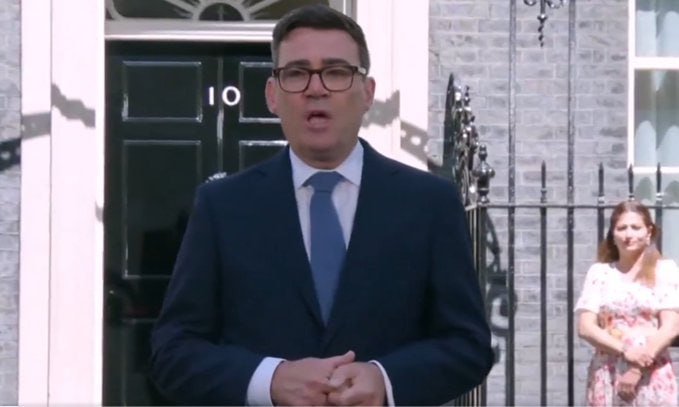
Donald Trump signed an interim agreement with Iran on Wednesday that purports to end the war in the Middle East, exchange the dilution of Tehran's enriched uranium stockpile for sweeping economic relief, and reopen the Strait of Hormuz, a corridor through which a substantial share of the world's seaborne oil moves each day. Iran's foreign ministry confirmed the signature. The text has not been published by the White House. The four corners of the deal are still being fought over in Washington, Tehran, and Jerusalem, three capitals that have made clear in the past forty-eight hours that they read the same document very differently.
The reporting filed at this hour treats the document as a framework, not a settlement. Reuters' explainer spells out the sequencing risk: each side retains the option to walk away. The New York Times notes that the memorandum of understanding is an interim arrangement meant to outline a negotiating path to a fuller deal, and warns against drawing easy parallels with the 2015 agreement. France 24 confirms that Trump put his signature to the document on Wednesday. Iranian state media frames the arrangement as an American climb-down driven by dwindling global oil reserves. The same claim, that the world had only "four weeks" of oil left without a deal, has been put into Trump's own mouth by Press TV's reading of his remarks.
What the deal says and doesn't say
According to the readouts available, Tehran agrees to dilute its enriched uranium in return for large-scale economic relief. The Strait of Hormuz, the chokepoint that has been the war's most visible economic pressure point, is to begin reopening. Sequencing is everything: a US official told Reuters that parties can still walk away, and that the order in which obligations fall due will decide whether the document holds. The White House has not, as of this writing, published the terms in full, an absence that the Epoch Times flagged and that gives every claimant room to project onto a blank page.
That vacuum is already producing a small industry of competing glosses. Earlier in the week, JD Vance dismissed the leaked details of the memorandum as fake and "IRGC propaganda." Within days, the White House unveiled a deal whose substantive content matched the leaks. Republican members of Congress have since told NewsNation that the vice president is to blame for an agreement many in his own party now call a bad deal. Senator Bill Cassidy called it the "worst foreign policy blunder in decades" and said "Reagan is rolling over in his grave." The political reaction is the deal's first test, and it is failing.
The Israeli lens
Middle East Eye, summarising the document's reception in Jerusalem, argues that the terms underline how the war with Iran has left Benjamin Netanyahu under pressure from the Islamic Republic and from inside his own political arena. The headline finding, that an Israeli prime minister is reading an American-Iranian accord as a constraint rather than a victory, is the most consequential regional reading in the early hours. Israel was not a signatory. Israeli security concerns, on the evidence available, are being processed through a parallel channel rather than a seat at the table. The arrangement's defenders inside Israel will argue that the dilution of Iran's stockpile and the reopening of the strait serve Israeli interests. Its critics will argue the opposite. The text has not been released in a form that lets a reader adjudicate.
Why the oil math is doing the talking
The single most concrete incentive on the table is the one Trump himself acknowledged: global reserves were nearing exhaustion. Press TV's summary of his remarks, that the world had "four weeks" of oil left without a deal, is Iranian state media and reads with the bias you'd expect, but the underlying claim that the war was inflicting a real, measurable cost on global inventories is consistent with the Strait of Hormuz closure that the deal now formally lifts. A framework that takes the pressure off the oil market before a final deal is brokered is, on this logic, the least bad option for Washington, even if it is not the most ambitious.
Maximalist war aims meet arithmetic. The Hill's framing, that Washington entered the war with unrealistic ambitions for an untenable war and exited with a pragmatic decision to end the conflict despite the political cost, is the read most consistent with the public reaction on Capitol Hill. A war that opened with regime-pressure rhetoric ends with an interim memorandum, a diluted stockpile, and a reopened strait. That is a deal. It is not the deal that was being sold.
What to watch next
Three dates matter. First, publication of the full text by the White House, which will shrink the gap between Iran's account of the deal and Washington's account of the deal and end the current phase of projective commentary. Second, the first concrete shipment of economic relief, which is the test of whether sequencing moves in practice. Third, the Israeli cabinet's formal response, which will determine whether the most powerful lobby in Washington treats the document as a starting point or as a line in the sand. Rubio's 2015 Senate-floor warning, recorded in its own words, that Iran will use released funds to extend its regional reach, is the standing critique this agreement will be measured against for as long as it lasts. None of those tests resolve today.
Desk note: Monexus has framed this as a framework story, not a deal story. The wire coverage available at filing time, Reuters' own analysis, the Iranian account of the draft terms, the immediate oil-price reaction, and the absence of a published text, supports that framing; it does not yet support a longer, more celebratory read.
Sources
- France 24, "Trump, Iran's president sign deal to end Mideast war," 2026-06-17: https://www.france24.com/en/middle-east/
- Reuters explainer via X, "What challenges could stand in the way of a final US-Iran deal?", 2026-06-17: https://x.com/reuters/status/
- Reuters via X, "US official says parties can still walk away from Iran deal, sequencing will be key," 2026-06-17: https://x.com/reuters/status/
- The New York Times, "How Does Trump's Deal With Iran Compare to Obama's?", 2026-06-17: https://www.nytimes.com/
- Deutsche Welle, "Live updates: Trump signs interim deal to end Iran war," 2026-06-17: https://www.dw.com/
- Press TV via Telegram, "Trump admits world had just 'four weeks' of oil left without Iran deal," 2026-06-17: https://t.me/presstv/
- Epoch Times via Telegram, "The White House and other U.S. officials have not published the terms of the deal with Iran so far," 2026-06-17: https://t.me/epochtimes/
- Middle East Eye via X, on the terms of the deal and Netanyahu's political pressure, 2026-06-17: https://x.com/middleeasteye/status/
- The Hill, "Trump's Iran deal is result of unrealistic ambitions for an untenable war," 2026-06-17: https://thehill.com/
- World News, "Top Republican decries Trump's Iran deal: 'Reagan is rolling over in his grave'," 2026-06-17: https://worldnews.com/
- OSINTdefender via Telegram, citing Barak Ravid on the remote signature and Strait of Hormuz reopening, 2026-06-17: https://t.me/osintlive/
- Open Source Intel via Telegram, Marco Rubio 2015 Senate floor remarks, 2026-06-17: https://t.me/osintlive/