A 'peace deal' that moves oil but not policy: reading the US-Iran announcement
Trump and Iran's president signed a memorandum to end the Middle East war and reopen the Strait of Hormuz, but the White House has not published the text, the Israeli coalition is fraying, and Senate Republicans are calling it the worst foreign policy blunder in decades.
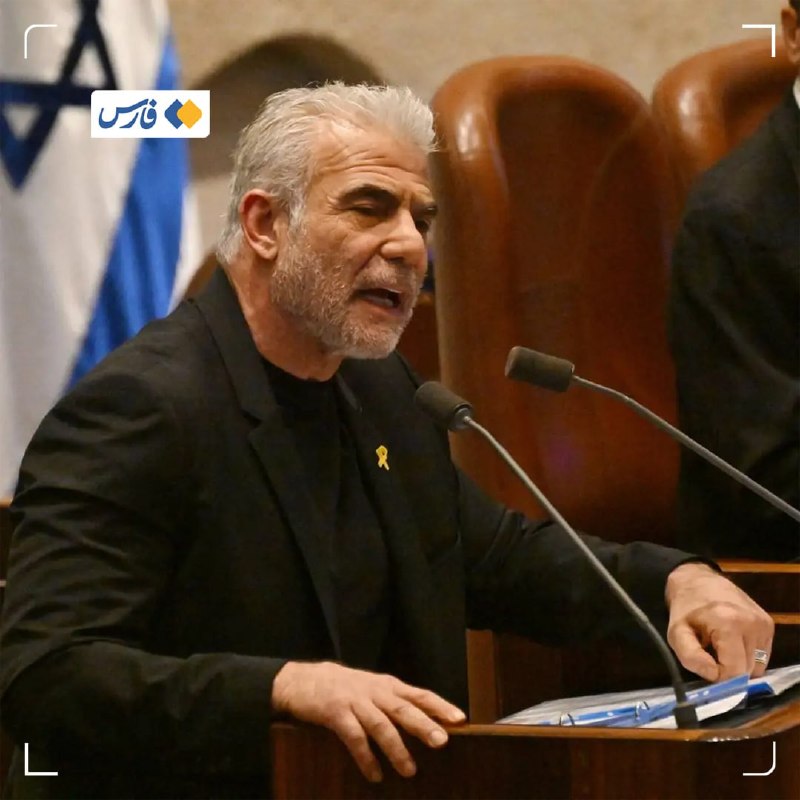
On 17 June 2026, Donald Trump and Iran's president put their signatures to a memorandum of understanding that, on paper, ends the Middle East war and reopens the Strait of Hormuz to commercial traffic. Within hours, Tehran's foreign ministry spokesman Esmail Baghaei was already performing the deal for domestic audiences, declaring that oil sanctions would lift "not just on paper, but with all its requirements." Oil markets are moving on it. The text itself has not been published.
The MoU's headline terms, as relayed by Bloomberg, Axios and Iran's own state-aligned channels, sketch a familiar bargain: Iran dilutes its enriched uranium stockpile; in return, the United States and its allies agree to a sweeping economic rehabilitation plan, with oil sanctions lifted immediately and Iranian crude, transport and insurance released into the world market. Pakistani Prime Minister Shehbaz Sharif announced the package as the "Islamabad Memorandum of Understanding," a useful reminder of who brokered what. The White House has, as of the latest wire check, not released the document.
The war that was, and wasn't
Coverage of the deal has converged on a striking framing: that the United States entered this conflict with maximalist objectives and is exiting it with a pragmatic, politically costly retreat. That is the alibi the administration is selling, and on the narrow question of oil flows it may even be true. Trump himself, walking out of a dinner at Versailles on Thursday morning, confirmed that the memorandum had been signed and leaned into the energy argument: global reserves, he said, had been weeks from exhaustion. Four weeks, per his account of the timeline.
The harder question is what was conceded to get there. Baghaei's own statements, carried by DDGeopolitics and Tasnim, draw two bright lines. Iran's missiles, he said, are "meant to be fired, not negotiated over"; the defensive programme is off the table. And on Lebanon, Tehran has warned that continued Israeli strikes would constitute a breach of American obligations under the deal. That is not the posture of a defeated party. It is the posture of a state that thinks it extracted a security guarantee out of Washington while trading away only what it was prepared to trade: a uranium stockpile that was, after a serious bombing campaign, partially degraded anyway.
What the text doesn't say
The MoU has not been published. That single fact shapes everything else. Without a document, the deal exists as a constellation of press reads: the Bloomberg summary, the Axios sourcing of two senior US officials, the Fars News read of Trump's Versailles remarks, the Telegram circulation of Pakistani and Iranian statements, and an Epoch Times note that the White House itself has not released terms. Each of these tells a slightly different story. Each is also a piece of political positioning aimed at a domestic audience that will never see the same paragraph twice.
A memo with no published text is, in practice, a framework. It commits the parties to negotiate further, to lift sanctions in stages, to reopen the Strait under new management arrangements that will, per Middle East Spectator's read, see US and coalition warships pulled out of the Persian Gulf itself and repositioned to the Gulf of Oman and Arabian Sea. The framing of "full reopening" of Hormuz is doing real work in the wire cycle; the operational reality is a maritime architecture still in flux, with naval presence moving but not disappearing.
Republican recoil
The deal is not selling on Capitol Hill. Senator Bill Cassidy has denounced it as the "worst foreign policy blunder in decades," invoking Reagan's name and a grave that, presumably, will not stop rolling. Vice President JD Vance, per NewsNation reporting cited by OSINTdefender, is taking heat from inside his own caucus as the architect of an arrangement many Republicans are calling a bad deal. Senator Marco Rubio's 2015 Senate floor remarks about unfrozen Iranian funds are recirculating in the same Telegram channels that are amplifying Iranian state media, a small irony of the contemporary information environment.
That recoil matters less for the deal's survival than for its durability. Sanctions relief that depends on executive action can survive a hostile Congress. A formalised new security architecture in the Gulf cannot. If Republicans win the argument that the MoU is a Chamberlain moment, the next administration inherits a deal it can renege on with a phone call and a press conference.
The price the Gulf pays
The most consequential concession, if the wire reads hold up, is structural rather than nuclear. A US naval posture pulled back from the Persian Gulf to the Arabian Sea is not a drawdown; it is a rebalancing. It hands Iran a quieter theatre in which to operate, and it hands the Gulf states a more expensive insurance problem. Saudi Arabia and the UAE, neither of which appears as a signatory in any of the circulated texts, are now the implicit underwriters of Hormuz traffic that no longer has an American frigate patrolling the chokepoint in real time.
Meanwhile, Israeli politics is doing its own arithmetic. Middle East Eye's read is that Netanyahu is now under pressure from two directions at once: from Tehran, which has made Lebanon a tripwire, and from inside his own coalition, which is reading a deal-without-Israeli-signature as an abandonment. That is the kind of pressure that produces unilateral action, and unilateral action is precisely what Baghaei has warned would void the American side of the bargain.
What to watch by Friday
Friday's planned signing ceremony in Geneva, which Baghaei's office has not formally confirmed even as Trump has confirmed the underlying memo, is the next hard date. If the document is published, the deal becomes auditable and the arguments inside Iran, Israel and the US Republican caucus all shift to the text. If it is not, the MoU stays where it is now: a market-moving claim with oil already priced in, Hormuz traffic already resuming, and a security architecture that exists mostly in the confident paragraphs of Telegram posts from actors with a stake in how the story lands at home.
The Iranians are behaving like victors. The Americans are behaving like deal-makers. The Republicans are behaving like the opposition. Somewhere in the gap between those performances is a piece of paper the world has not yet seen.
Desk note: Monexus has weighted the Iranian, Pakistani and Israeli-readout channels against the Western wire on the assumption that, until the MoU text is published, the deal is best read as competing press summaries rather than as a single verifiable agreement. We will re-cut if the Geneva signing produces a document.
Sources
- France 24 (2026-06-17), Middle East live: Trump, Iran's president sign deal to end Mideast war. https://www.france24.com/en/middle-east/
- Middle East Eye (2026-06-17), Live: US and Iran confirm peace accord, signing set for Friday in Geneva. https://www.middleeasteye.net/live/live-us-and-iran-confirm-peace-accord-signing-set-friday-geneva
- Middle East Eye (2026-06-17), Terms of the deal underline pressure on Netanyahu from Iran and from inside his coalition. https://www.middleeasteye.net/
- The Epoch Times / wire (2026-06-17), White House has not published the terms of the deal with Iran. https://theepochtim.es/xqebjy
- Press TV (2026-06-17), Trump admits world had just 'four weeks' of oil left without Iran deal. Telegram: presstv.
- DDGeopolitics (2026-06-17), Baghaei on oil sanctions lifting "today" and on missiles being non-negotiable. Telegram: DDGeopolitics.
- Fars News International (2026-06-17), Trump confirms signing of Iran memorandum at Versailles. Telegram: FarsNewsInt.
- Middle East Spectator (2026-06-17), US and coalition warships to relocate from Persian Gulf to Gulf of Oman and Arabian Sea. Telegram: Middle_East_Spectator.
- OSINTdefender / NewsNation (2026-06-17), Republican members of Congress blame VP Vance for the deal. Telegram: osintlive.
- The Cradle media thread (Telegram), supplementary regional coverage. https://t.me/s/thecradlemedia