Tehran claims it forced Washington to the table over Lebanon, the framing is doing real work
Iranian state outlets claim Pezeshkian-Trump MoU proves Washington's leverage has collapsed. The Western record, and the Israeli security posture in southern Lebanon, tell a more contingent story.
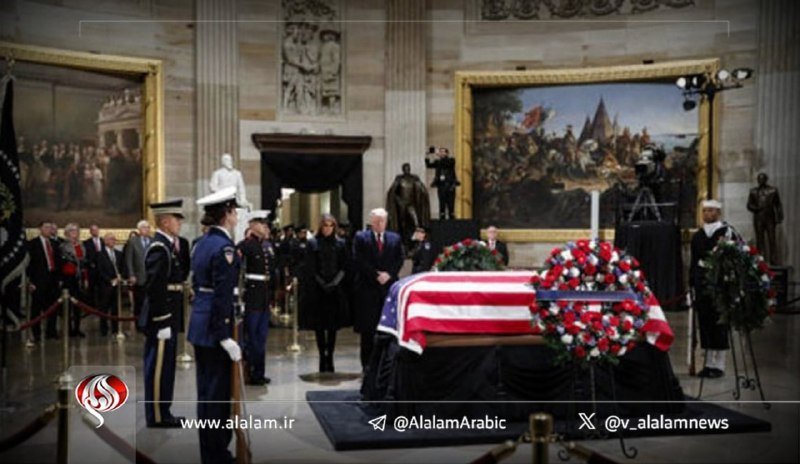
On 17 June 2026, Iran's foreign ministry spokesperson Esmail Baghaei confirmed that a memorandum of understanding between Tehran and Washington had been finalised and electronically signed by Presidents Masoud Pezeshkian and Donald Trump, with the text now in effect. The announcement, carried by Iranian state outlets including Press TV, Fars, and al-Alam Arabic, frames the deal as a vindication of Iranian diplomacy and, more pointedly, as proof that American leverage in the region has collapsed. That frame is the story: not whether a piece of paper was signed, but whose narrative travels furthest while the ink is still drying.
The headline Tehran wants you to read
The Iranian readout insists the United States came to the table under duress. Press TV quoted Trump as acknowledging that the world had only "four weeks" of oil reserves left without an Iran deal, a formulation designed to convert a routine commercial disruption into a geopolitical confession. Iranian outlets quickly amplified Baghaei's claim that Tehran will charge fees for services provided to vessels transiting the Strait of Hormuz, presenting the choke point as a tollbooth the United States now has no choice but to queue at. The combined message: sanctions pressure failed, the strait reopened on Iranian terms, and Washington signed because it had to.
What the Western record actually shows
The American side tells a more contingent story. According to Barak Ravid, cited by OSINTdefender and corroborated by two U.S. officials speaking to Axios, the MOU was remotely signed on Thursday morning and is now in effect, with the Strait of Hormuz set to begin fully reopening as an immediate consequence. Two American officials confirmed the signing to Axios the same day. The architecture described in those readouts is bilateral and transactional: sanctions relief in exchange for transit normalisation, not a strategic surrender. Even the Republican criticism now surfacing in the U.S. Senate, from figures such as Senator Bill Cassidy, who called the agreement the "worst foreign policy blunder in decades," and reporting that Vice President JD Vance is being blamed inside the GOP conference, treats the deal as a flawed bargain rather than an American defeat. Cassidy invoked Reagan. He did not invoke Saigon.
Lebanon, and the framing that runs through it
The Lebanese dimension is where Iranian framing finds its loudest megaphone. Iranian outlets have pushed a parallel narrative that Tehran, through its relationship with the Speaker of the Lebanese Parliament Nabih Berri, forced Washington's hand on Lebanon during the Araqchi-mediated exchanges. The Israeli security record complicates that reading sharply. Israeli coverage, echoed in the Open Source Intel channel, holds that Israel will do whatever it takes to defend itself regardless of Iranian threats over Hezbollah, that Hezbollah will keep firing rockets and drones, and that Israel will keep responding. Reporting on the ground, including analysis published under the headline "Why Netanyahu won't let go of Southern Lebanon," notes that Israel refuses to withdraw from southern Lebanon and intends to hold territory up to the Litani River indefinitely, the only tangible gain from the recent fighting. None of that posture reads as a country being rolled by an Iranian diplomatic coup.
The structural problem with the Tehran frame
The pattern is familiar: a regime under sustained pressure produces a tactical opening, declares it a strategic triumph, and waits for foreign media to repeat the verdict. The Baqaei line carried by al-Alam, that "diplomacy is the continuation of the defence of the homeland in other terms," is honest about the project's intent. It is also a sentence aimed at a domestic audience that needs to believe the cost of the past year's confrontation was worth paying. Western aggregators that lift the "forced Washington to the table" formulation without flagging its provenance are doing Tehran's domestic communications work for free.
What to watch next
The MOU is signed; what follows is implementation, which is where Iranian diplomatic victories historically meet their ceiling. The Strait of Hormuz reopening language will be tested by the first disputed tanker. The southern Lebanon file will be tested by the next Hezbollah rocket and the next Israeli response. And the U.S. domestic fight, with Cassidy and others already on the record and JD Vance absorbing blame inside his own party, will determine whether the deal survives long enough for Iran's narrative, or anyone else's, to harden into fact.
Sources
- Press TV, "Pezeshkian and Trump sign MoU digitally and remotely," 17 June 2026, 23:59 UTC. https://t.me/presstv
- al-Alam (Arabic), Baqaei: "Diplomacy is the continuation of the defence of the homeland," 17 June 2026, 22:43 UTC. https://t.me/alalamarabic
- al-Alam (Arabic), Washington confirms MoU signing per Axios, 17 June 2026, 23:27 UTC. https://t.me/alalamfa
- OSINTdefender via Telegram, summarising Barak Ravid citing two senior U.S. officials, 17 June 2026, 22:07 UTC. https://t.me/intelslava
- Press TV, "Trump admits world had just 'four weeks' of oil left without Iran deal," 17 June 2026, 22:50 UTC. https://t.me/presstv
- OSINTdefender via Telegram, Israeli framing on Iran-Hezbollah threats, 17 June 2026, 23:08 UTC. https://t.me/osintlive
- Open Source Intel via Telegram, "Why Netanyahu won't let go of Southern Lebanon," 17 June 2026, 22:07 UTC. https://x:sprinterpress
- Witness Feed via Telegram, Tasnim: Baghaei on Strait of Hormuz transit fees, 17 June 2026, 22:06 UTC. https://t.me/wfwitness
Desk note: Monexus paired the Iranian state readouts from Press TV, Fars, and al-Alam with the U.S. and Israeli negotiating record as carried by Axios, Ravid, and Open Source Intel, and flagged the "forced to the table" framing as Iranian-provenance rather than wire-neutral throughout.