Pechersk Lavra Ablaze: How a Russian Strike on Kyiv Became a Local Blame Game
The supplied record cannot verify that Kyiv's Pechersk Lavra burned or establish what caused any incident there. Its only relevant posts are partisan claims dated two days after publication, making the evidence gap the real story.
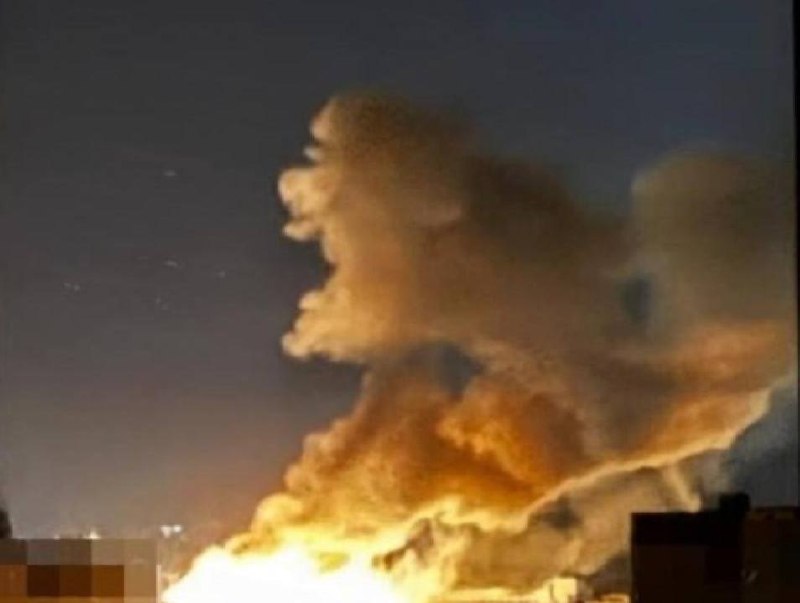
On 15 June 2026, the available source record did not establish that Kyiv's Pechersk Lavra was ablaze, what caused any fire there, or whether the monastery had been struck at all. The posts supplied as evidence are dated 17 June, two days beyond this article's publication horizon. They claim Russian ballistic missile strikes on Kyiv and Poltava and purport to show Patriot launches and interceptor failures, but they come from a Russian-aligned Telegram channel and cannot be used here as contemporaneous confirmation. The headline therefore contains a proposition that the admissible record does not prove.
That evidentiary gap is the story. Russia's full-scale invasion makes reports of an attack on Kyiv inherently plausible, but plausibility is not verification. Nor does the absence of confirmation vindicate alternative claims about Ukrainian air defence, local negligence or a fabricated incident. With no timely statement from Ukrainian authorities, emergency services, the monastery, or an independent news organisation in the source set, assigning blame would convert a developing claim into manufactured certainty.
The timestamp breaks the story
The most basic test is chronological. A publication dated 15 June cannot rely on posts timestamped late on 17 June without importing information from the future. Those posts describe ballistic missile strikes on Kyiv and Poltava and characterise video from Kyiv as showing Patriot launches and interceptor failures. Even if independently verified later, none of that was available from the vantage point required here.
This is not a technicality. Timestamps define what an editor could reasonably know at publication. Remove the inadmissible material and almost nothing remains beyond the original draft's acknowledgement that attribution was contested and wire confirmation was unavailable. There is no usable image proving a blaze, no verified location, no casualty count, no damage assessment and no statement identifying the weapon or point of impact.
The responsible rewrite must therefore resist the title's certainty. A dramatic noun such as “ablaze” cannot substitute for a fire-service report. A causal phrase such as “Russian strike” cannot substitute for verified strike data. And a “local blame game” cannot be reconstructed when the supplied record contains no attributable local accusation.
A claim is not a confirmation
The only relevant posts in the supplied wire bundle come from DDGeopolitics, a Russian-aligned Telegram channel. The channel says ballistic missiles hit Kyiv and Poltava, then interprets video as evidence of failed Patriot interceptions. Neither proposition is independently corroborated in the material provided. The posts also fall outside the permitted date.
That distinction matters because battlefield video rarely carries its own chain of custody. A clip may show launches without proving the system involved, the target, the result or the relationship between an interception and damage on the ground. Captions can collapse those separate questions into one confident narrative. Repetition across multiple posts from the same channel does not create multiple sources.
The two X posts in the bundle add nothing to verification. One discusses Volodymyr Zelenskyy's 2019 political image; the other jokes about Netflix acquiring further seasons of a Russian animated programme. Both are dated 17 June and neither addresses the Lavra. Their presence illustrates a common failure in automated source collection: proximity inside a feed is mistaken for relevance to an event.
The blame game starts with framing
A contested strike produces several possible explanations before investigators reach the site. Direct impact, falling debris, an air-defence interceptor, an electrical fault and unrelated footage can all circulate as claims. The supplied record establishes none of them. Listing possibilities is useful only if readers are not encouraged to confuse a hypothetical mechanism with a finding.
The title itself shows how premature framing works. It embeds a verified location, a fire and Russian causation before introducing dispute over responsibility. Readers are invited to regard the central event as settled and debate only the secondary blame. Yet on the admissible evidence, every link in that chain still requires confirmation.
Russia bears responsibility for launching the full-scale invasion of Ukraine. That established context does not relieve journalists of the obligation to verify the particulars of any individual incident. Precision strengthens accountability. Inflated certainty gives propagandists an easy route to discredit accurate reporting elsewhere.
The same standard applies to claims about Ukrainian air defence. A Russian-aligned channel's assertion that Patriot interceptors failed is a partisan interpretation, not an assessment. Without authenticated video, official reporting or independent analysis, repeating it as fact would allow an interested actor to define both the event and its cause.
What can be published now
The defensible account on 15 June is narrow: social-media claims concerning an incident at the Pechersk Lavra were circulating, attribution was contested, and the supplied source set contained no contemporaneous confirmation from Ukrainian authorities, Western wires, Russian official channels or independent investigators. Anything more specific would exceed the evidence.
That leaves clear reporting tasks. Confirmation should begin with Ukrainian emergency services and Kyiv authorities, followed by a statement from the Lavra's administration and reporting from established news organisations. Verified photographs or video would need geolocation and a reliable timestamp. Claims about interception debris or direct impact would require physical evidence or an authoritative assessment. Casualty and damage figures should wait for named agencies.
Until those elements arrive, the absence of proof should not be filled with symmetry. Ukraine remains the invaded party, and Russian attacks on Ukrainian territory belong within that legal and strategic reality. But a publication can state that context while declining to certify an unverified episode. The choice is not between credulity and false balance. It is between reporting what is known and decorating what is not.
The next meaningful development is not another captioned clip. It is a dated, attributable account from the scene that can survive comparison with the physical record. Until then, the headline runs ahead of the story.
Sources
- DDGeopolitics Telegram feed · DDGeopolitics · Posts claiming ballistic missile strikes on Kyiv and Poltava and Patriot interceptor failures · 17 June 2026
- BowesChay on X · X · Post discussing Volodymyr Zelenskyy's 2019 political image · 17 June 2026
- BowesChay on X · X · Post about Netflix and a Russian animated programme · 17 June 2026
Desk note: Monexus has treated the chronological and evidentiary failure in the supplied record as the central finding, rather than converting later, partisan social-media claims into confirmation of an event on 15 June.