Israel signals advance US notice on Beirut strike, Israeli officials stay silent
Israeli officials have stayed silent after Axios reported that Jerusalem gave Washington advance notice before a Beirut strike, while Reuters reports at least four killed in southern Lebanon and an Iranian command counts 84 ceasefire violations in two days.
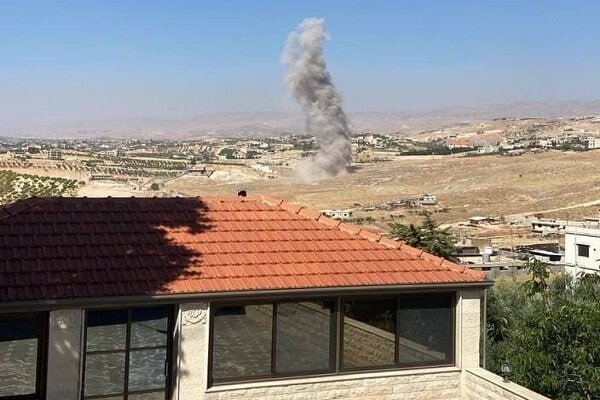
Israeli officials have stayed conspicuously silent after Axios reported on Sunday that Jerusalem gave Washington advance notice before a strike on Beirut earlier this month, a coordination narrative that, if true, sits awkwardly alongside the public posture of both governments and against a backdrop of reported Israeli ceasefire violations in southern Lebanon that an Iranian military command put at 84 in two days.
The Axios reporting, picked up by Middle East Eye on Monday, holds that the United States rebuffed an Israeli request to see the memorandum of understanding Washington signed with Iran, even as the two governments continued to coordinate on at least one military action inside Lebanese territory. That single sentence, if the underlying reporting holds up, carries more weight than most of the official communiqués this week combined. It implies two parallel tracks: a public track in which the Trump administration sells an interim deal with Tehran as a regional stabilisation, and an operational track in which Israeli and American militaries continue to act on the assumption that the deal is a ceiling, not a floor.
What Axios claims, and what Jerusalem will not say
The reporting centres on a specific, datable event: an Israeli strike on Beirut. According to Middle East Eye's summary of Axios, Israel provided advance notice to the United States before that strike. The reporting does not specify the date, the target, or the casualty count, and that absence is itself the story. Israeli government channels have not publicly confirmed, denied, or amplified the account. The usual on-the-record ministers and the IDF Spokesperson have, as of Monday evening UTC, treated the story as if it does not exist.
Silence is rarely the absence of information. It is usually a calculation about which sentence, if any, costs less than the others. Confirmation would expose the coordination publicly and complicate the White House's interim-deal narrative; denial would contradict Axios's sourcing and risk a credibility fight the government does not need; amplification is unthinkable. So the Israeli side opts for the third path, which is to say nothing and let the story circulate in a half-light where it cannot be cleanly refuted nor cleanly relied upon.
The Lebanese ground contradicts the rhetoric
The operational backdrop on Monday made the silence harder to maintain. Reuters reported that Israeli drone strikes killed at least four people in southern Lebanon, and Lebanese sources cited by Iran's Tasnim news agency said Israeli artillery shelled the town of Kafr Tabnit. Iran's Khatam al-Anbiya Central Headquarters said the Israeli military had violated the ceasefire in southern Lebanon 84 times in the two days after a US announcement of the interim arrangement with Iran, and warned of a "harsh response" if the violations continued. Iranian state media is, of course, a partisan narrator on this question, and the figure should be treated as a claim rather than a count. The Reuters report on drone fatalities, by contrast, is a wire fact: at least four dead, southern Lebanon, Israeli drones, on Monday.
The pattern that emerges, reading across the wire reporting rather than any single dispatch, is of a ceasefire that exists in the announcement and not on the ground. Whether the Israeli strikes of the past 48 hours count as violations or as routine enforcement of a porous arrangement depends on which official is doing the counting. The United States has not, as of Monday evening, characterised any specific Israeli action as a violation. Iran has characterised all of them. France and Germany have gestured toward stability without endorsing or condemning any particular strike.
A memorandum the ally cannot see
The deeper fracture sits at the document level. Middle East Eye reported, citing US and Israeli media, that Washington rebuffed an Israeli request to see the text of the MOU it signed with Iran. The diplomatic weight of that detail is hard to overstate. Israel is the country most directly named in the Iran threat matrix, the country whose security the US administration invokes when explaining the deal to skeptical domestic audiences, and the country the deal is partly designed to constrain. That country cannot get a copy of the document.
A former Israeli defense minister, Moshe Ya'alon, said in a Ynet interview published the same day that factions within the religious Zionist movement hold a "Jewish supremacy ideology," an unusually blunt formulation from a former chief of staff that complicates any clean reading of Israeli intent. Ya'alon's intervention does not directly address the MOU question, but it does puncture the assumption that the Israeli political class is operating from a single playbook on Iran, on settlements, or on the conduct of operations in Lebanon.
The silence that travels
The American side is not filling the gap. The diplomatic record visible on Monday consists of two gestures: Donald Trump, in remarks captured on video, criticised Israeli strikes on Lebanese civilians and floated the idea that Syria should "take over the job" of degrading Hezbollah, a line that, depending on the listener, reads as policy or as provocation. German Chancellor Friedrich Merz said Berlin was prepared to contribute to Middle East stability efforts following the US-Iran interim agreement, a sentence so carefully constructed that it commits Berlin to almost nothing and signals almost everything to the Iranian and Israeli missions in Berlin.
The wire reporting from Monday also captured the peripheral spillover of the broader moment. France shut down a dozen Israeli company stands at a major Paris defence exhibition. A British MP asked for clarification on a London real estate event marketing properties in illegal West Bank settlements, and the Metropolitan Police confirmed it would not investigate. Somaliland's president opened an embassy in Israel and addressed the Knesset, a normalisation step that, in a quieter news cycle, would have been the lead of the day. None of these items are about Beirut. All of them are about the political weather inside which any Beirut strike has to be defended.
What the coordination narrative is buying
If the Axios reporting is accurate, the advance-notice story serves two governments simultaneously. For Washington, it lets the administration argue that operational coordination continues even as strategic restraint is being negotiated with Tehran, a useful line for domestic critics who want to know whether the Iran deal is being underwritten by Israeli acquiescence or Israeli coercion. For Jerusalem, the same story lets the Israeli government maintain that its campaign against Hezbollah continues at a tempo it controls, not a tempo the Americans dictate, while still preserving the channel through which ammunition, intelligence and diplomatic cover continue to flow.
The cost of that arrangement is paid in southern Lebanese towns whose names appear in the wire reports one day and disappear the next. Kafr Tabnit on Monday. Other villages on other days. The reporting does not yet support a verdict on whether the advance-notice claim is true, whether it is true of one strike or many, or whether the notice was a request for permission or a courtesy call after the decision was made. The Israeli silence will be read, in Washington and in Beirut, as confirmation by those who already believed and as denial by those who did not. That ambiguity is the product. It is not a failure of communication. It is the communication.