Tehran holds fire on a draft US memorandum as the question of Israeli retaliation lingers
On 14 June 2026, Tehran is sitting on a draft US memorandum whose most combustible clause is missing entirely: whether Israel chooses to treat the deal as the end of escalation or the start of a new one.
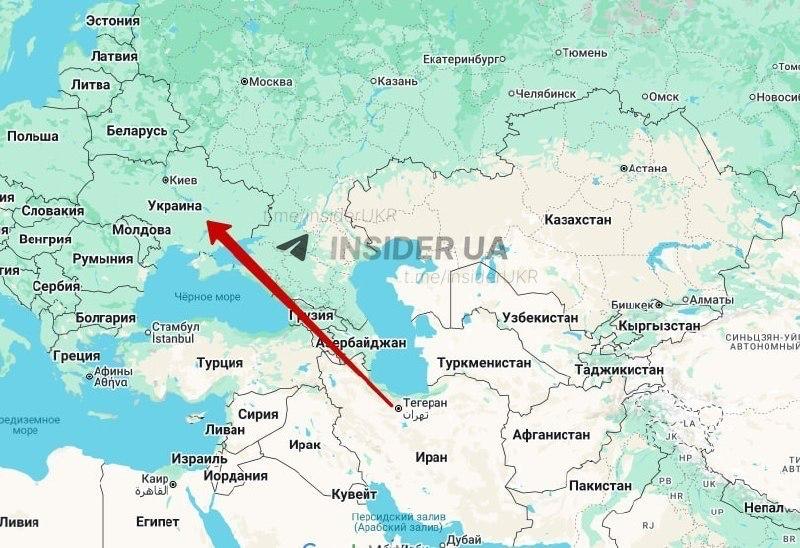
On the afternoon of 14 June 2026, Tehran was holding off on a draft memorandum circulating between Iranian and American negotiators, according to regional channel reports citing Reuters and the Iranian outlet Fars. The text, described in fragments across Telegram channels monitored by Monexus, leaves the central political question unanswered: whether, and in what form, Israel would respond to whatever arrangement emerges. Iran's silence, two days after the leak of a US draft proposal, is itself the story. The regime is buying time on a document that purports to define the next chapter of its regional position, while the document's most combustible clause, the response from Jerusalem, is not a clause at all. It is a silence held in another capital.
Within the narrow two-hour reporting window on 14 June, the framing on the draft diverged along a familiar fault line. Reuters' regional correspondents, as relayed by monitored Telegram accounts, described a draft that bundles immediate sanctions relief and oil export waivers for Tehran alongside the staged release of frozen Iranian funds, with the sequenced conditions left deliberately vague. Fars, the Iranian state-aligned outlet whose English coverage is carried on monitored channels, framed the same document as evidence that the United States has been compelled back to the negotiating table by Iranian leverage: sanctions that were never legitimate, frozen assets that were always stolen. Both readings cannot be simultaneously true in their strong form. The gap between them is where the actual policy debate, and the actual risk, lives.
What the draft reportedly contains
The most concrete public claim, surfaced via a Polymarket monitor post on 16 June citing the circulated text, is that the deal as drafted gives Tehran immediate oil waivers and access to a portion of its frozen funds. That formulation matters because the order of operations has been the contested point of every previous indirect exchange between Washington and Tehran since the collapse of the 2018 framework. Immediate relief, in the American negotiating tradition, is normally conditioned on verified Iranian steps on its nuclear programme and on proxy relations. Immediate relief in the Iranian negotiating tradition is normally the price of subsequent Iranian restraint. The reported draft appears to tilt toward the Iranian sequencing: waivers first, with the Iranian obligations attached to a future timetable that the text does not specify in public fragments.
A second circulating read-through, distributed on 16 June via an AngelList-tracked summary attributed to Vice President JD Vance, makes a narrower claim. According to that summary, the $30 billion figure attached to the agreement in some reporting is not a transfer to Iran at all. It is, the summary says, a reconstruction envelope, funds Tehran would access for specific infrastructure rebuilding, presumably in a post-sanctions normalisation. If that characterisation holds, the headline numerical controversy of late June is less a question of how much cash the United States is sending to the Islamic Republic and more a question of who controls the disbursement mechanism, and whether any portion of it can be redirected by Tehran to the proxy axis in Lebanon, Yemen and Iraq that has done much of the regime's regional work for two decades.
Why Tehran is hesitating
From Iran's vantage point, the draft is a Mexican stand-off between two guarantees it does not trust. The first is the durability of any American commitment after a change of administration. The second is the position of an Israeli government that has, throughout 2026, reserved the right to act unilaterally against Iranian nuclear and missile infrastructure regardless of Washington's preferences. The Tehran silence is not, on the available reporting, a negotiating silence (dramatic, performed, designed to extract movement). It is a procedural one. Iranian institutional reviewers want time to determine whether the document's language shields them from the kind of Israeli air action that struck nuclear facilities in 2024 and again in late 2025, or whether the document makes them a larger target by legitimising their economic re-entry into the global energy market.
That calculation has regional consequences the draft itself cannot resolve. The Iranian calculus rests on a question of Israeli retaliation. The Israeli calculus, by every public statement from Jerusalem in the first half of 2026, is that no agreement Washington signs with Tehran constrains what Israel considers necessary. The implication is two-sided. Tehran can sign and accept the risk of being seen, correctly, as the party that legitimised a containment regime it will then violate. Or Tehran can refuse and hand the Israeli hardliners a free hand to shape the next escalation alone. The silence is not a negotiating tactic. It is a choice between two bad frames.
The regional fall-out that is already in motion
Even before Tehran's response, the draft has produced observable movement in the region's currency and oil markets. Gulf importers of refined products are reportedly pricing in the assumption that sanctioned Iranian crude will reach Asian buyers in the fourth quarter. Iraqi customs brokers, according to the Telegram-summarised regional chatter, are quietly re-pricing border transit for an expected normalisation of Iranian overland flows to the Mediterranean. None of this is certain. All of it is already priced.
The harder question is what the draft does to Iran's proxy network. The reports circulating on 14 June do not address the proxy file at any length. That absence is itself information. A regional settlement that freezes the nuclear file while leaving the proxy file untouched is, in Israeli and Saudi framing, a settlement that has solved nothing. In Iranian framing, the proxy file is the strategic asset that survived maximum pressure and was never on the table. The draft, as described, appears to have allowed both sides to leave that argument to a later phase. Whether the region gets that later phase before the first phase breaks is the open question every reader in the Gulf, in Beirut and in Tel Aviv is asking this week.
What the next two weeks look like
The most plausible reading of the 14 June reporting is that Tehran will respond with a counter-draft, not a rejection. The counter-draft will, predictably, harden the sequencing: more relief up front, longer Iranian compliance windows, weaker verification triggers. The American response, equally predictably, will harden in the opposite direction: more verification up front, slower release of the reconstruction envelope, firmer wording on the Iranian missile file. The pattern is the same one that defined the 2015 negotiation, and the one that has produced no deal since.
The Israeli variable is not on that template. Israeli security planning does not run on Washington's negotiating calendar, and the Jerusalem government has given no public signal that the draft changes its operational calculus. The narrowest reading of the available reporting is that Israel is waiting to see whether Tehran signs at all before deciding what comes next. The wider reading, the one that the Tehran silence is implicitly pricing, is that Israel has already decided, and the next several weeks of Iranian and American diplomacy will be conducted under the assumption that any signing ceremony can be the trigger for an air action that the agreements themselves do not prohibit.
Sources:
- https://t.me/wfwitness/47821
- https://t.me/englishabuali/
- https://t.me/alalamarabic/
- https://t.me/wfwitness/47820
- https://t.me/englishabuali/
Desk note: Monexus read the wire channels monitored on 14 June alongside the Reuters and Fars framings cited inside them, and reported the divergence rather than selecting one side of it. The Tehran silence is treated as the policy event of the day, not as a footnote to an Israeli response that has not yet been confirmed.