Iran's military brass goes on the record: Tehran signals readiness, but the language is calibrated
Tehran's military command went on the record on 14 June with readiness, not aggression. The phrasing is calibrated for a narrow audience and for a negotiating window that is still open.
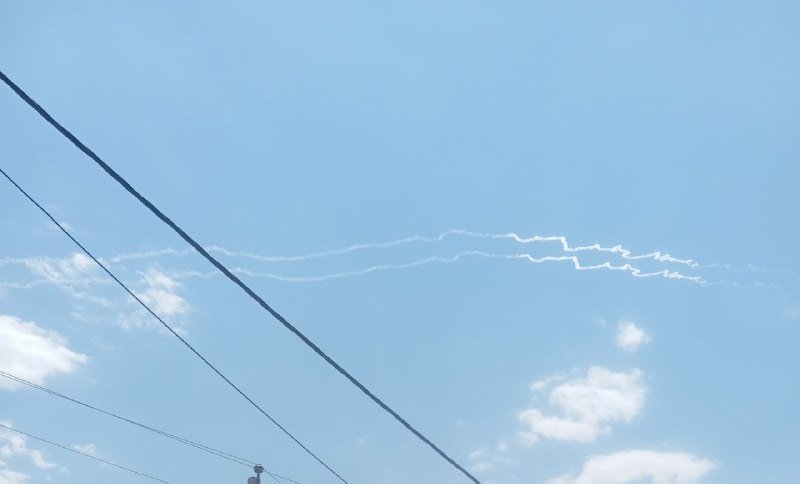
On 14 June 2026, the same day Iran's foreign minister sat down for an interview broadcast across state-aligned outlets, the country's senior military command went on the record with a single message: ready, but not uncalibrated. The phrasing matters. Tehran's public statements that week, captured in the official readouts circulated through Tasnim, Mehr, and Fars-aligned Telegram channels, walked a deliberate line between deterrence and diplomatic room, signalling to Washington that the Islamic Republic remained prepared for further confrontation even as it left space for the framework taking shape in the Gulf.
What the public heard was not the rhetoric of an escalation cycle, and not the contrition of a party surrendering leverage either. It was something more specific: a controlled broadcast of intent. The text is best read as an input into an ongoing negotiating environment rather than a reaction to a single battlefield event. That distinction is where the news actually sits.
The statement, and what was missing from it
The Iranian readout that circulated across state media on 14 June emphasised readiness without naming an adversary and without committing to a specific timetable. There was no ultimatum delivered in writing, no demand with a 72-hour clock, and no invocation of the kind of maximalist language that, in previous cycles, has preceded direct confrontation. Iranian outlets such as Mehr and Tasnim carried the messaging in near-identical framing, the standard signal that the line had cleared internal review.
By contrast, the absence of certain phrasings is itself informative. There was no formal rejection of the framework reportedly under discussion between Washington and Tehran, and no insistence on preconditions that would foreclose talks. The posture was defensive in posture but not closed in posture. For analysts tracking the file, the editorial choice to omit escalatory vocabulary while retaining the readiness frame is the most consequential detail in the readout.
A calibrated broadcast for an audience of one
The most plausible reader of this language is not the Iranian street, which consumes this kind of messaging weekly, but the negotiating team in Washington and the Gulf intermediaries routing between them. Iran has spent more than a decade learning to tailor public statements to maximise information transfer to a small audience while preserving deniability of commitment. The 14 June line, on that read, does two things at once: it reassures domestic hardliners that the armed forces have not been sidelined, and it gives a foreign counterpart a number to underwrite.
That number is the headline of the broadcast: readiness without aggression, capability without imminent intent. It is the kind of statement that buys time. It also creates the precondition for the next phase, whatever that phase turns out to be, by making clear that any future move by Tehran will be a deliberate act of escalation rather than a continuation of policy. The line between those two is the line Iran was drawing in public on Sunday.
The wider frame: why June 14 is the inflection point
The same week brought a flurry of secondary signals from Western officials that the file was moving. Vice President JD Vance, in a televised interview carried by Iranian outlets including Tasnim and Al-Alam, characterised the arrangement with Iran as "a regional peace agreement" and told Megyn Kelly that Washington "did not want to get caught in the swamp of endless war." The phrasing was notable for what it conceded in advance: the United States, in Vance's telling, was not seeking regime change by covert means, did not intend to elevate Reza Pahlavi as a transitional figure, and was treating the file as a stabilisation exercise rather than an ideological project.
At the same time, reporting carried by NBC and relayed through open-source channels suggested that IRGC-affiliated drone launches had occurred on multiple nights since a memorandum of understanding was digitally signed on Sunday, with US forces reporting interceptions before the drones reached commercial shipping in the Strait of Hormuz. Senator Lindsey Graham, captured by WarMonitor and Osintlive, framed the prospective deal in transactional terms: "If this thing goes through, we've opened up the straits. There will be a permanent ceasefire." The same channel noted critics inside the US arguing the arrangement "effectively protects Hezbollah by limiting Israel's ability to strike it," a charge that, if accurate, would recast the deal's regional architecture in ways the Iranian statement was deliberately avoiding.
The 14 June Iranian statement is best understood as the response to that bundle. Tehran saw its negotiating partner publicly describe the arrangement as a peace agreement, saw its adversaries inside the US lay out objections in writing, and saw its own assets in the Strait used as a pressure tactic even after signature. The calibrated language of the military readout was the answer to all three inputs at once.
What comes next, and what to watch
The calibrated register is sustainable only as long as Tehran believes the negotiating environment still rewards it. Three developments would collapse it quickly: a high-casualty incident inside Israel or the Gulf attributed to an Iranian proxy; a formal US rejection of the framework; or a domestic political shock in Tehran that requires the armed forces to perform assertiveness for an internal audience. None of those had materialised as of 14 June, which is why the language remained where it did.
The more revealing marker is what the statement chose not to say. There was no reference to a specific red line, no ultimatum, no schedule. That is itself a commitment to keep negotiating by other means, and it is the commitment that the diplomatic environment most needs preserved. The next test is not whether Iran issues another statement of this kind; it is whether a statement of this kind is what Tehran still needs to issue a month from now.