Trump pulls back strikes on Iran as Qatar brokers a last-minute deal, and Tehran says it never signed
The handshake scheduled by Washington was rejected by Tehran within the hour. The two read-outs cannot yet be reconciled, and mediators in Doha are working the phones to keep the choreography from collapsing.
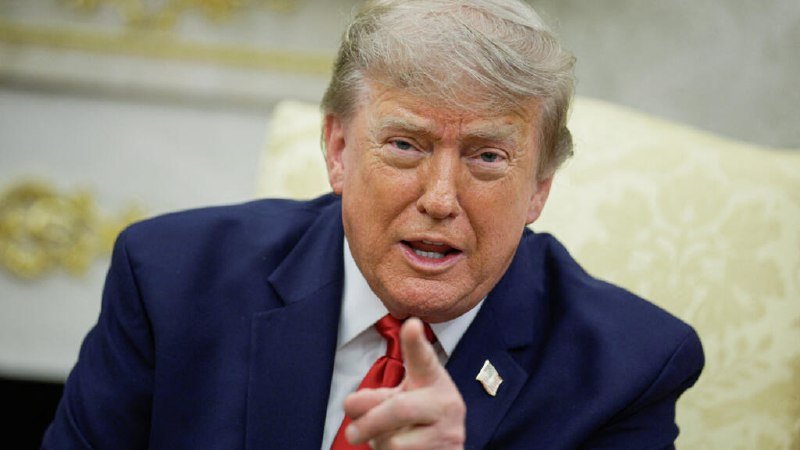
The handshake did not happen on Sunday, and by Monday evening the two capitals could not agree on whether there was ever a handshake scheduled at all. At 23:40 UTC on 13 June 2026, President Donald Trump told reporters the agreement with Iran should be signed the next day, warning that if no deal materialised Washington still held a "last option" he hoped never to use. Within the hour, Tehran knocked the timeline down. An Iranian official quoted by aggregators put it bluntly: the memorandum of understanding "certainly will not be signed tomorrow." The gap between those two statements, separated by minutes and an ocean of interpretation, is now the story.
Pakistan's government, credited alongside Qatar as a mediator, separately told Reuters a Sunday signing was the plan. The framework on the table, as described in fragments by officials on both sides and by Gulf intermediaries, would reopen the Strait of Hormuz, release a multibillion-dollar tranche of frozen Iranian funds held abroad, and require Tehran to give ground on its nuclear and missile architecture in a sequence that neither side is willing to describe in public yet. The dispute is not over whether the deal exists. It is over whether anything has been signed at all.
What Qatar put on the table
The Qatari package now circulating in regional reporting is the most concrete number attached to the talks. Tehran-friendly outlets and Western wires both reference a roughly $12 billion arrangement: the release of about $6 billion in Iranian funds already frozen inside Qatari accounts, plus another $6 billion routed through a credit line or loan mechanism. An advisor to Iran's Supreme Leader went further in remarks published on the sprinterpress feed, claiming Washington had agreed to unfreeze $24 billion in Iranian assets but was refusing to publicly announce it. Trump, for his part, told reporters no fresh money would flow to Tehran at most a portion of already-frozen balances would be released as part of the ceasefire architecture.
The mediators are doing what they can to keep the choreography from collapsing. Qatar's prime minister and foreign minister held a phone call with his Kuwaiti counterpart to coordinate positions ahead of any signing, according to the Qatari foreign ministry readout. Kuwait has joined Qatar in publicly backing the progress of the talks. Washington's framing of the package is deliberately austere: Trump has insisted the deal is not a payout, a rebuttal aimed at the political backlash any agreement would trigger inside Iran.
The protests already breaking out in front of the Foreign Ministry building in Tehran show why that rebuttal matters. Demonstrators gathered over the weekend against a US deal, and a principlist current inside Iran has begun publicly criticising the silence of the Supreme Leader's office on the nuclear-track talks. One protest placard, posted by a Persian-language channel and relayed through Telegram monitors, invoked a plane-tree metaphor to demand a public verdict from the country's highest authority. Inside Iran's command structure, the message from the top operational commander was equally pointed: the nation would never bargain away its security or independence.
The nuclear file the deal must touch
The most sensitive item on the table is not money but metal. According to CNN reporting referenced through field monitoring channels and attributed to five US intelligence sources, Iran has begun dispersing its stockpiles of highly enriched uranium, collapsing some tunnel entrances and seeding mines and traps inside the most heavily protected underground facilities. That description, if accurate, suggests Tehran is hardening a set of sites Washington would want rendered inaccessible under any inspection regime. The intelligence picture also implies a second, more delicate calculation: that even with a deal signed, a residual enrichment capacity remains buried.
Iranian-affiliated channels have circulated high-resolution satellite imagery purporting to show damage to US airbase and radar facilities inside Bahrain, claimed as retaliation strikes during the war's active phase. The pictures, circulated via Telegram and referenced in regional bulletins, are difficult to verify independently, and the Western wire has not confirmed the strikes' impact on radar and hangar infrastructure at the facilities in question. They matter to the negotiation because each side is bargaining from a documented tally of what the other side lost. Bahrain's air bases host the US Navy's Fifth Fleet and a substantial portion of American airpower in the Gulf. Damage to either changes the deterrent arithmetic that any ceasefire is meant to restore.
Read-outs that cannot be reconciled
The cleanest way to read the weekend's messaging is to take the two read-outs at face value and treat the disagreement as itself the news. Trump's account: an agreement, a Sunday signing, no cash to Tehran, plus a public warning of further force. Tehran's account: a memorandum of understanding still has unresolved issues, the timing is later than Sunday, and the leadership's security red lines will not be traded away. The Reuters summary captured the contradiction cleanly: the US side and Pakistan as named mediator said Sunday; Iran denied it. There is no shared factual ground yet on what gets initialed first.
The complication is that two issues are still live, according to one Iranian official relayed via DropSite News and picked up by osint channels. Which two is not stated in the available reporting. But the existence of unresolved questions is itself a brake on the signing timeline, and it gives Tehran room to slow-walk without openly breaking off. If those two points close, the same official said, the agreement could move quickly in either direction: signed soon, or slipped back to a longer negotiating horizon.
Why the Strait of Hormuz clause is the political pivot
A successful deal would reopen the Strait of Hormuz, a clause Trump has cited and that Middle East Eye's live coverage notes Tehran has not publicly confirmed. The strait carries roughly a fifth of global seaborne oil. It was the pressure point that, as the Washington Post's reporting summarised by Telegram monitors makes clear, brought Qatar to the table early in the war with a proposal that included halting gas-related restrictions on Iran. That history suggests the strait is doing more than energy-supply work in the text. It is the visible payoff for Iran's regional posture during the conflict and the visible concession for Iran's nuclear constraints.
For Washington, the strait's reopening buys something tangible: de-escalation of a chokepoint that has driven insurance and freight rates higher, a thesis supported by the wartime reporting but not directly verified in weekend bulletins. For Tehran, the strait's reopening is a way to claim victory in a war the political class inside Iran must also have lost, given the public protests outside the Foreign Ministry. The two readings can both be true, which is probably why both sides want the signing on their preferred timetable.
The 24-hour window
The next 24 hours determine whether the framework becomes a signed text or a memo of intent. Trump has set the public clock: Sunday, then a deadline pressure that doubles as a coercive threat. Tehran has reset the clock: not Sunday, possibly later, possibly after the two outstanding issues resolve. Mediators in Doha and Kuwait City are working the phones. Gulf states have backed "progress" without endorsing the Sunday timeline. Pakistan, in its role as named mediator, has aligned itself with the US framing.
What the available record does not yet contain is any party willing to put their signature on a paragraph. Until that happens, the most accurate description of the state of play is the one this article began with: a handshake scheduled by one side, denied by the other, and waited on by a third.
Sources: Reuters via X (reuters, 2026-06-13T22:00); Middle East Eye live blog (2026-06-13T22:30, 22:29); sprinterpress via X (2026-06-13T23:40, 23:41, 23:47, 23:53, 23:49, 23:54); Geo Political Watch via Telegram (2026-06-13T22:43); DropSite News relayed via Telegram (2026-06-13T22:43); Fars News via Telegram (2026-06-13T22:11); Press TV via Telegram (2026-06-13T23:30); Tasnim via Telegram (2026-06-13T22:38); Witness via Telegram (2026-06-13T22:00); Qatar foreign ministry readout via Telegram (2026-06-13T21:11).
Desk note: Monexus has presented the American and Iranian read-outs in the strongest available form for each, drawing on Telegram-sourced field monitoring. The two read-outs disagree on the central factual question (is there a signed text?) and the article flags that disagreement rather than resolving it.