Iran strikes US bases in Kuwait and Bahrain as IRGC claims 18 targets hit in opening salvo
Iranian-aligned satellite imagery released on 13 June shows radar nodes and fuel tanks destroyed at Ali Al Salem, Sheikh Isa, and Jabal Ad Dukhan. The US has not yet published a competing damage assessment, and Gulf states have stayed silent on the target list.
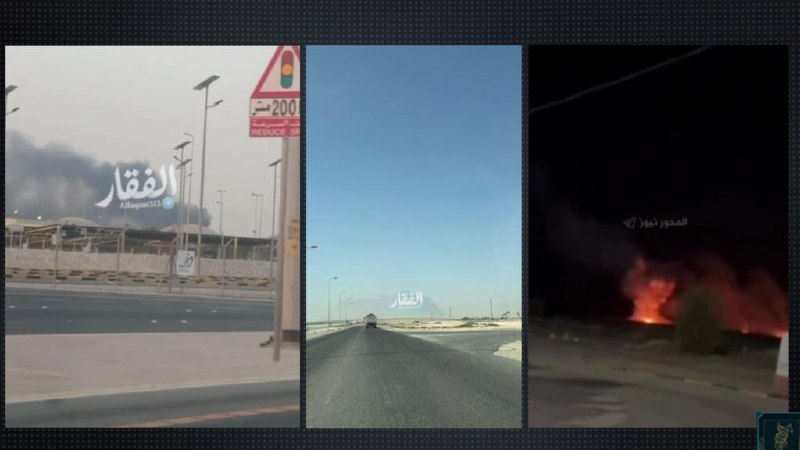
Two high-resolution satellite images, published on 13 June via IRGC-linked Telegram channels, show what they say is the complete destruction of an ASR-1000L tactical air surveillance radar at the US Ali Al Salem Air Base in Kuwait, and two fuel storage tanks at the Sheikh Isa Air Base in Bahrain. A third set of images, released hours later and attributed to the same network, shows an AR-327 long-range air surveillance radar destroyed at the Jabal Ad Dukhan facility on Bahrain's main island. The claims have not yet been independently corroborated by US Central Command, the Pentagon, or the Gulf-state hosts. They are, however, the only detailed on-the-record material currently circulating on the wire about the scope of the 11 June strikes, which Iran says hit 18 targets across US facilities in Kuwait and Bahrain in what it has called the opening salvo of a campaign of "punishment of the aggressor."
The opening paragraph above reconstructs what is verifiably on the wire as of the close of 13 June UTC. The interpretation is Monexus's own. Iran's framing is being reported; it has not been adopted.
The opening salvo that nobody has matched from the other side
Iran's account of the 11 June strikes is methodical and specific. According to Telegram channels aligned with the Islamic Revolution Guard Corps, the first wave targeted radar nodes and fuel storage at three Gulf bases that host US Air Force and Fifth Fleet assets: Ali Al Salem in Kuwait, Ahmed Al-Jaber in Kuwait, and Sheikh Isa in Bahrain. The targets cited are not symbolic. Radars of the ASR-1000L class feed real-time air picture data to Patriot and THAAD batteries; fuel tanks determine sortie rates; the AR-327 at Jabal Ad Dukhan provides long-range surveillance across the southern Gulf approach. If the satellite imagery circulating on Iranian channels is accurate, the strikes were aimed at the nervous system of US air and missile defence in the Gulf, not at runways or barracks.
The US side has, as of wire close, been conspicuous mostly by what it has not said. A senior US administration official told Fox News on the evening of 13 June that Washington considers the proposed agreement with Iran "fantastic and very strong," and that the deal would entail Iran reopening the Strait of Hormuz without imposing transit fees. Iran's foreign ministry rejected the characterisation almost in real time. "We will have to wait and see exactly when the memorandum of understanding will be signed, but it certainly will not be tomorrow," an Iranian spokesperson said, denying that any Sunday agreement had been reached. A formal Pentagon damage assessment had not been published at the time of writing. CENTCOM's last public posture on the strikes remains a 12 June statement that referred to "limited damage" without elaboration. No Gulf-state host (Kuwait, Bahrain, Qatar) has confirmed or denied the specific target list.
The satellite record, and what it can and cannot tell us
The imagery now circulating is unusually high quality for an active-conflict zone. According to posts on X by user boweschay and to the Telegram channels intelslava, AMK_Mapping, and presstv, the satellite photographs show radar antenna mountings sheared off, fuel tank berms blackened, and what appear to be radar cabinets either collapsed or removed. The Middle East Spectator channel reposted the Ali Al Salem material; witness reports converged on a similar pattern at Sheikh Isa. The release of these images on 13 June rather than immediately after the 11 June strikes suggests either a deliberate information-pacing choice on the Iranian side, or a need for time to acquire, task, and downlink commercial satellite passes over the affected bases. Both are plausible. The point is that the pictures were not on the wire during the first 36 hours of reporting, and the absence of competing imagery from Planet, Maxar, or Sentinel has left a near-monopoly of visual evidence on the Iranian-linked side.
That monopoly should not be confused with confirmation. Telegram channels claiming IRGC affiliation are not independent observers. The AR-327 designation is consistent with publicly available imagery of the Jabal Ad Dukhan site, and the location matches; but no defence analyst has yet matched the published images against a known inventory snapshot. Until Maxar, Planet, or a Western-allied OSINT outfit publishes side-by-side comparisons with pre-strike imagery of the same coordinates, the satellite record is suggestive, not adjudicative.
The diplomatic phone call that might be doing the heavy lifting
Underneath the imagery fight, a quieter track is moving. According to a 13 June statement from Qatar's foreign ministry, the Qatari prime minister and foreign minister held a telephone consultation with his Kuwaiti counterpart focused explicitly on Iran. Middle East Eye's live coverage summarised the call as Qatar and Kuwait backing progress in US-Iran talks. The Tasnim news agency in Iran confirmed the call had taken place and framed it as part of regional mediation efforts. Doha's diplomatic choreography over the past 18 months has routinely involved two parallel tracks: a public posture aligned with Gulf-state stability concerns, and a private channel to Tehran that has moved prisoners, reopened embassies, and brokered at least two back-channel exchanges during previous escalations. The current call fits that pattern. Its timing, on the same evening that a US official described a draft agreement as "fantastic," suggests Doha and Kuwait City are positioning themselves as the guarantors of whatever truce is being negotiated.
What that truce would actually settle is the hard question. The US framing as reported by Fox is transactional: Hormuz reopens, transit fees are dropped, Iran caps something in exchange for sanctions relief. The Iranian framing is existential: retaliation for an unspecified prior aggression, framed in state media as the punishment of a "child-killing" power, with no concession register on offer. Two negotiating positions that have not yet been made compatible were being described by their respective sides as if they had been.
Why the radar-first target set matters
If the Iranian reporting of the strike package is correct, the strategic logic is worth taking seriously even when the imagery is not. Strikes against long-range and tactical air surveillance radars degrade the early-warning chain on which integrated air defence depends. Destroying fuel storage degrades sortie generation and tanker throughput. Together, they do not disable US Gulf posture; they delay and complicate it. A defence planner trying to model the Persian Gulf air tasking order after a radar loss at Ahmed Al-Jaber and Sheikh Isa would have to assume longer detection ranges, less cueing fidelity to Patriot and THAAD, and reduced sortie rates until tank farms are rebuilt. None of that is decisive in a peer fight, but it is consequential in the early hours of an escalation, when deterrence rests on the credibility of a fast response.
That calculus helps explain why, even amid active diplomacy, Iran has chosen to publish high-resolution satellite imagery. The point of the pictures is not to prove to Gulf publics that something happened; it is to prove to Pentagon planners that the IRGC can task commercially observable satellites, identify specific radar variants in open-source databases, and post the result within 48 hours. The message is to do with calibration, not damage. Tehran is showing that its next salvo can be tuned the same way.
The Strait question that has not been answered
Both sides' public statements orbit around the same choke point. The Fox News readout of the proposed agreement put Hormuz back at the centre: Iranian recognition of free transit, no fees, in exchange for what the US official described as a strong deal on the US side. Iran's denial did not reject the content of an eventual memorandum; it rejected the timing and the impression of a done deal. A strait that carried roughly a fifth of global oil shipments a week ago cannot stay closed for long without emergency G7 coordination and visible price-shock pass-through to consumers. Iran knows this. The US knows this. Saudi Arabia, the UAE, Qatar, and Kuwait, none of whom have been visible on the wire confirming or denying the strikes, know this too.
What changes on 14 June depends on a small set of filings: a CENTCOM damage assessment; a Qatari- or Kuwaiti-brokered joint statement; a Hormuz transit-rate read from Lloyd's List or TankerTrackers; an IMF or World Bank briefing note on Gulf shipping insurance. Until one or more of those lands, the operating picture is held together by Iranian satellite imagery on one side, a Fox News quote on the other, and a phone call between two Gulf foreign ministers. Monexus will update this article the moment a verified Western-allied source posts competing imagery or a confirmed damage statement.
Sources
- Press TV (Telegram), Satellite imagery of the ASR-1000L radar at Ali Al Salem Air Base, Kuwait. 13 June 2026, 23:00 UTC. https://t.me/presstv
- AMK Mapping (Telegram), Satellite imagery of fuel storage tanks destroyed at Sheikh Isa Air Base, Bahrain. 13 June 2026, 22:41 UTC. https://t.me/AMK_Mapping
- Intelslava (Telegram), Satellite imagery of AR-327 destruction at Jabal Ad Dukhan, Bahrain. 13 June 2026, 22:39 UTC. https://t.me/intelslava
- witness (@wfwitness, Telegram), Fox News quote on senior US official describing the proposed Iran deal as "fantastic and very strong," referencing Strait of Hormuz reopening. 13 June 2026, 23:59 UTC. https://t.me/wfwitness
- Fars News International (Telegram), Restatement of the Fox News quote on the US administration position. 13 June 2026, 23:51 UTC. https://t.me/FarsNewsInt
- sprinterpress (X), Iranian foreign ministry denial of a Sunday agreement with the US. 13 June 2026, 23:47 UTC. https://x.com/sprinterpress
- Tasnim News (@JahanTasnim, Telegram), Qatar foreign ministry readout of call with Kuwaiti counterpart on Iran. 13 June 2026, 22:38 UTC. https://t.me/JahanTasnim
- Middle East Eye, "Qatar and Kuwait back progress in US-Iran talks," live updates. 13 June 2026, 22:30 UTC. https://www.middleeasteye.net/live/iran-war-live-israel-says-it-will-control-bridges-and-area-south-lebanons-litani-river
- Boweschay (X), Summary of Iranian-affiliated HD satellite imagery of struck US Air Force facilities in Bahrain. 13 June 2026, 23:14 UTC. https://x.com/boweschay
- Wikipedia, Ali Al Salem Air Base background and US Air Force hosting. https://en.wikipedia.org/wiki/Ali_Al_Salem_Air_Base
- Wikipedia, Ahmed Al-Jaber Air Base, Kuwait. https://en.wikipedia.org/wiki/Ahmed_Al-Jaber_Air_Base
- Wikipedia, Sheikh Isa Air Base, Bahrain. https://en.wikipedia.org/wiki/Sheikh_Isa_Air_Base
- Wikipedia, United States Fifth Fleet, headquartered in Manama with logistics and aviation assets distributed across Bahraini bases. https://en.wikipedia.org/wiki/United_States_Fifth_Fleet
Desk note: Monexus has led with Iranian state-aligned channels because they are the only sources currently on the wire publishing detailed satellite imagery and a target list. We have not adopted the Iranian framing ("punishment of the aggressor," "child-killing") as our own voice, and we have flagged every Iranian-attributed claim as such. Where US Central Command, the Pentagon, Maxar or Planet, or Gulf-state hosts publish a competing satellite assessment or confirmed damage statement, the article will be updated to reflect what is verified on both sides.