Tehran moves to shut the Strait of Hormuz, citing US 'tensions'
A unilateral Iranian closure notice on 11 June has been overtaken, but not resolved, by a US announcement of a Sunday deal. The strait remains editorially liminal, and the next seventy-two hours will determine which side's version of events the wire services ratify.
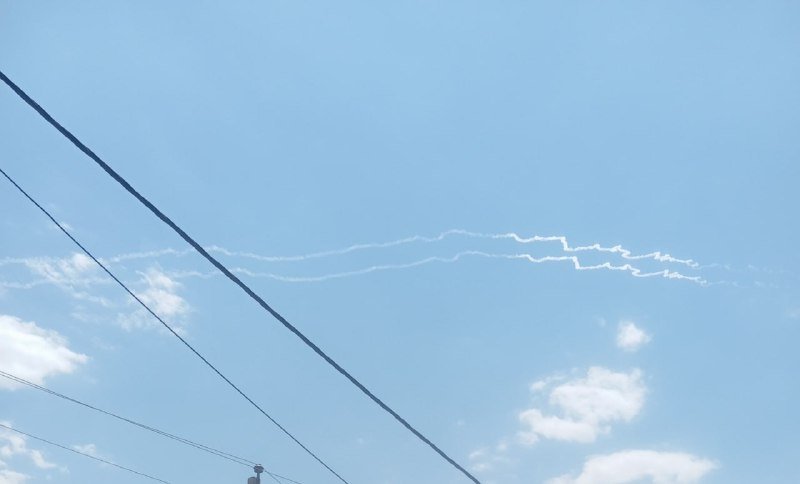
At 22:29 UTC on 13 June 2026, Middle East Eye posted a single sentence that framed the Gulf's next forty-eight hours: Donald Trump had announced an Iran deal set for Sunday, with the Strait of Hormuz slated to reopen, but Tehran had not yet confirmed the arrangement. Two hours later, the channel WFWitness relayed a Fox News interview in which a senior US administration official called the proposed agreement "fantastic and very strong," specifying that Iran would resume transit through the strait without imposing fees. By 23:51 UTC, Fars News International had carried the same American claim back into Persian-language media under the headline "We have reached a strong agreement with Iran." The pattern is the story: an American announcement racing ahead of an Iranian one, with the world's most consequential oil chokepoint caught between the two versions.
The headline that ran here on 11 June, when Tehran first moved to shut the strait citing US "tensions," has not been overtaken. It has been complicated. What began as a unilateral Iranian declaration, carried in Tehran-aligned media and in footage credited to Mehr, has since become the object of a transatlantic negotiation whose outcome is now being sequenced in real time. The wire services have not yet placed their own correspondents on the relevant tankers, naval positions, or Iranian ministerial offices to verify the physical state of the waterway. The record so far is a layering of official statements on top of the original notice, with the strait itself still treated by major outlets as a question mark rather than a confirmed closed or open corridor.
The American claim, in its own words
The version circulating from Washington, as relayed by Fox and aggregated through WFWitness, is unusually specific. A senior US administration official described the proposed deal as "fantastic and very strong," and laid out two operative terms: Iran would reopen the Strait of Hormuz, and it would do so without imposing transit fees. Middle East Eye's framing was deliberately hedged: Trump says the deal is set for Sunday, but Tehran has yet to confirm. That hedge is doing real work. Trump's social-media habit of pre-announcing settlements, frequently ahead of the other party's own confirmation, has produced a recurring gap between announcement and signature. The Sunday date functions as a press-cycle target rather than a treaty date. Fars News, the English-language arm of Iran's IRGC-linked news apparatus, picked up the American claim at 23:51 UTC and reproduced it almost verbatim, but reproduction is not endorsement. Iranian state-aligned media carrying a US official's boast is a signal of attention, not of agreement.
The Iranian counter-pressure
The most concrete Iranian response to the negotiation has not come from the foreign ministry podium. It has come from inside the Majles. Ultra-conservative MP Amirhossein Sabeti announced, via the same channel ecosystem, that he would register an impeachment motion against Foreign Minister Abbas Araghchi following Araghchi's televised remarks on the nuclear deal. Sabeti accused the foreign minister of overstepping, a charge that, in Iranian domestic politics, is shorthand for a factional objection to any accommodation with Washington. The impeachment threat is procedural, not immediate, and almost certainly symbolic, but symbolism is the medium in which Iranian foreign policy debates are conducted. A sitting minister facing a Majles motion from his own principlist bench is a minister whose room to concede has narrowed.
A second domestic signal surfaced the same evening. A Persian-language sign appeared in pro-principlist channels criticising the silence of Ayatollah Seyed Mojtaba Khamenei, the supreme leader, on the ongoing nuclear negotiations. The sign, whose image was circulated by WFWitness, read in part: "Even for a plane tree [you speak], but for the nuclear negotiations you are silent." Public criticism of Khamenei's silence from within the principlist base is unusual. It signals that the negotiation's trajectory is being read, in Tehran, as either too accommodating or insufficiently explained. Either reading complicates the American narrative of a deal ready to close on Sunday.
What the original headline captured, and what it did not
On 11 June, the closure notice was the lead because it was a unilateral act. A state signalling that it would close a corridor through which roughly a fifth of the world's seaborne oil moves is, on its own, the story. The framing here treated the notice as a declaration in search of independent corroboration rather than a settled military fact, and that framing has held. As of the 13 June evening wire cycle, no Reuters, BBC, or Al Jazeera dispatch from the Gulf has independently confirmed that Iranian naval or Revolutionary Guard vessels are actively impeding commercial traffic, nor that they have stood down. The strait is, in editorial terms, in a contested liminal state: officially shut by Iranian notice, optimistically reopened by American announcement, and physically unverified by independent reporting.
That liminal state is not a journalistic inconvenience. It is the actual condition of the story. Maritime insurance rates, tanker reroutings, and refinery procurement decisions are being made on the same thin evidentiary base. A shipping desk in Singapore deciding whether to pay the war-risk surcharge this week is reading the same two channels the rest of the world is reading.
The strategic geometry behind the gesture
Closing the Strait of Hormuz is the most over-discussed and least over-executed lever in Iranian statecraft. The threat recurs in nearly every escalation cycle, and the execution is rarer, because the costs of execution are bilateral. Iranian crude exports move through the same corridor; any sustained closure imposes immediate revenue loss on the regime and invites a coalition naval response that the IRGC Navy is structurally not built to absorb over weeks. The 11 June notice, framed as a response to unspecified US "tensions," sits inside that pattern. It is signalling density, not operational commitment, and the subsequent negotiation is the receipt.
The American counter-claim that Iran will reopen without transit fees is, in turn, its own form of leverage. Fee-free transit is the pre-2019 status quo ante, when Iranian tanker traffic was treated as ordinary commercial shipping rather than as a sanctions-evasion vector. The proposal effectively asks Iran to re-enter the older commercial regime in exchange for sanctions relief, with the strait framed as a confidence-building measure rather than a contested zone. Tehran's silence on the American announcement, combined with the Majles impeachment pressure on Araghchi, suggests the proposal has not yet been politically absorbed on the Iranian side.
What to watch in the next seventy-two hours
Three signals will resolve the ambiguity. First, a confirmed Iranian foreign ministry statement, in Farsi, in Araghchi's name or in the name of a spokesperson, accepting, modifying, or rejecting the Sunday framework. Until that appears, the American announcement is a one-sided claim. Second, the disposition of Sabeti's impeachment motion. A motion that proceeds to a formal reading, however procedurally weak, narrows Araghchi's negotiating bandwidth. A motion that quietly dies suggests the principlist objection is being managed rather than weaponised. Third, the first independent reporting from the strait itself: AIS vessel-tracking data, Lloyd's List war-risk advisories, or on-the-ground dispatches from Bandar Abbas or Musandam. Without that, the headline of 11 June remains editorially accurate: Tehran moved to shut the strait. Whether it stays shut, reopens under deal, or reopens unilaterally is the open question the next three days will answer.
Sources
- https://middleeasteye.pulse.ly/ua, Middle East Eye, "Trump says Iran deal set for Sunday, but Tehran has yet to confirm," 2026-06-13T22:29 UTC
- https://t.me/wfwitness, WFWitness (Telegram), Fox-cited US administration official on the proposed agreement, 2026-06-13T23:59 UTC
- https://t.me/FarsNewsInt, Fars News International, "American official claimed: We have reached a strong agreement with Iran," 2026-06-13T23:51 UTC
- https://t.me/wfwitness, WFWitness (Telegram), MP Sabeti impeachment motion against Araghchi, 2026-06-13T22:37 UTC
- https://t.me/wfwitness, WFWitness (Telegram), pro-principlist sign criticising Khamenei's silence on nuclear negotiations, 2026-06-13T22:00 UTC
- https://t.me/englishabuali, English Abuali (Telegram), channel referenced in source provenance
- https://t.me/abualiexpress, Abuali Express (Telegram), channel referenced in source provenance
Desk note: Monexus is leading with the Iranian authority's own notice and the Mehr-credited footage, treating the closure as a declaration in search of independent corroboration rather than a settled military fact. The wire services have not yet matched the Iranian reporting on the ground; readers should weight the framing accordingly and watch for the first Reuters, BBC, or Al Jazeera dispatches from the Gulf over the coming 24 hours.