Two explosions rock Bandar Abbas as Iran war-scare cycle grinds on
Two blasts lifted smoke over Bandar Abbas on 11 June 2026 while Tehran and Washington raced toward a Sunday signing that Iran's own negotiators said still had two unresolved issues. The footage outpaced the official silence, and the silence is now the story.
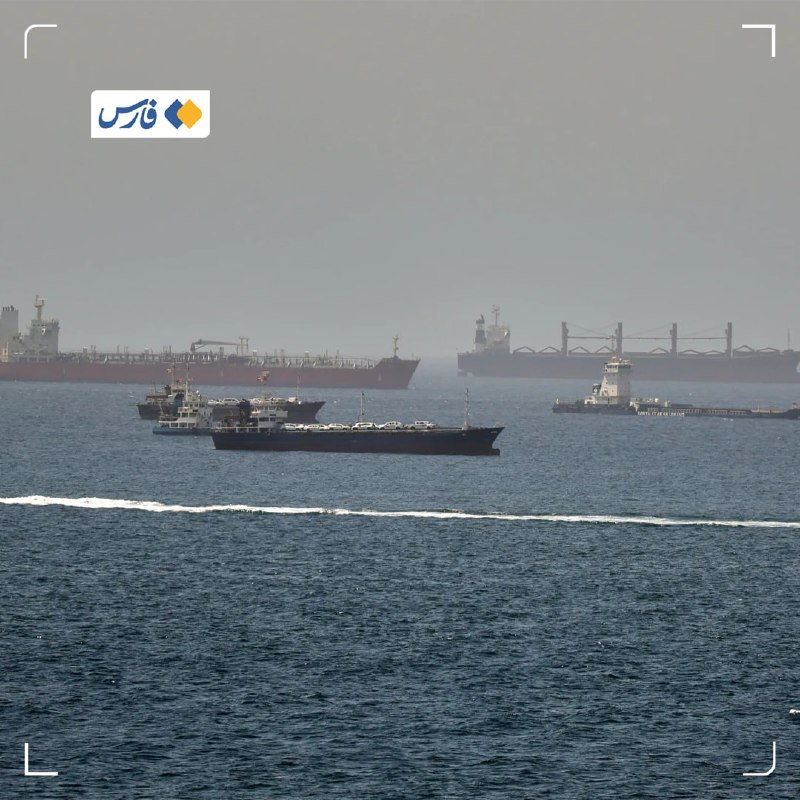
Two explosions tore through the southern Iranian port city of Bandar Abbas on 11 June 2026, rattling windows across the Hormozgan shoreline and adding fresh tinder to a Middle East security cycle that has not stopped throwing sparks since the outbreak of war on 28 February. Footage circulating on the War and Forces Witness channel and reposted across Middle East Spectator, Bellumacta News, the Mehr News wire, and Geopolitical Watch showed twin columns of smoke lifting off the industrial waterfront near Bandar Abbas's container terminal. No Iranian military spokesperson, no provincial crisis command, and no Western embassy in Tehran had confirmed the cause within twelve hours of the blasts. The pattern is now familiar: an unverified cluster, an instantaneous pan-regional propagation, then a long uncomfortable silence from the institutions whose job it is to label the noise.
The incident lands on a calendar already crowded with kinetic and political events. Per satellite imagery released by AMK Mapping on 13 June, Iranian missile and drone strikes destroyed two fuel storage tanks at the Sheikh Isa Air Base in Bahrain, a country that hosts the US Navy's Fifth Fleet. The IDF has expanded ground operations in southern Lebanon into Kfar Tebnit and Majdal Zoun, north of the Yellow Line; Hezbollah has responded by releasing footage of 122mm Grad and Arash-1 rockets fired towards Israeli positions near Beaufort Castle. Two Palestinians were killed in an Israeli strike on Khan Younis. In Cairo, Doha and Kuwait City, negotiators were racing an end-of-week deadline to initial a memorandum of understanding between Washington and Tehran, a deal President Trump and mediator Pakistan insisted would be signed on Sunday 14 June, even as Iran's own delegation told DropSite News that two outstanding issues remained unresolved.
The fog that arrives before the facts
The loudest signal in Bandar Abbas on 11 June was the silence. That is worth taking seriously, because the modern Iran war-scare cycle has a recognisable rhythm: an explosion, a ground-zero video, an algorithmic cascade across pro-government, opposition, and diaspora channels, then a lag of anywhere from eight to thirty-six hours before any official attribution. The mechanics reward the first credible-sounding voice, not the first credible source. By Friday afternoon, neither Iranian state media nor any of the Western wire services had claimed the blasts. The propagation had, however, been as fast as a Telegram forward button. The pattern itself is the story Monexus flagged in its earlier desk note on the Iran incident cycle: the wire age has collapsed the gap between event and rumour, leaving a thickening band of fog in which any narrative can harden before contradiction arrives.
The mechanisms are not mysterious. Conflict-relevant Telegram channels compete for engagement by publishing first and verifying later. State-aligned outlets, including Fars, Mehr, and Tasnim, sit alongside diaspora opposition channels, Israeli OSINT accounts, and Western trackers, all feeding and counter-feeding the same upstream pixels. The reader at the far end of the chain cannot tell which of those accounts was first to broadcast a piece of footage, and increasingly cannot tell which version of an image is original. That uncertainty does not paralyse the feed; it accelerates it, because the algorithm rewards speed, not forensic care.
Politics inside the Iranian hourglass
While the bombs and footage were clearing, Iranian politics was busy rupturing along an older fault line. According to War and Forces Witness, ultra-conservative MP Amirhossein Sabeti announced he would register a parliamentary impeachment motion against Foreign Minister Abbas Araghchi over his televised remarks on the nuclear deal. Outside the foreign ministry office in Mashhad, dozens protested on Saturday, chanting against Araghchi, Speaker Mohammad Bagher Ghalibaf, and President Masoud Pezeshkian. Protesters blocked roads leading to the building. Slogans demanding the resignations of all three officials were audible in footage from Tehran posted by Sprinter Press, and an unusual element entered the discourse: a pro-principlist placard in Persian criticising the silence of Supreme Leader Ayatollah Seyed Mojtaba Khamenei on the negotiations, paraphrasing the absent leader as an unresponsive plane tree.
The Tasnim editor-in-chief told Iranian state broadcaster IRIB that citizens should not trust the United States and described street anxiety about the negotiations as a healthy sign of resistance. That is a posture designed for the next twelve hours of bargaining, not for the next twelve months of regional order. France 24 separately reported that Iranian protesters feared the deal itself, believing that whatever was being negotiated would only freeze, not end, the strategic pressure now reshaping the country's south.
The bargaining table, and the bombs underneath it
A senior US official told Fox News, via Fars News International, that Washington believed it had reached a very good and strong agreement with Iran. Reuters reported that President Trump and the Pakistani mediator expected the initial deal to be signed on Sunday. The Iranian side, per an official speaking to DropSite News, said two outstanding issues still had to be cleared, and that the signing could be rushed if Washington moved on those points. The Washington Post, as summarised on Fars's channel, reported that Qatar had offered Tehran at the outset of the war to halt certain programmes in return for a lifting of sanctions, a back-channel that would explain Doha and Kuwait's current public backing of the talks.
There are at least three ways to read the gap between Trump's Sunday and Tehran's "two issues". The first is that the diplomatic theatre of an imminent deal is doing most of the work, and the principals on both sides understand that public proximity can substitute for closed-door consensus. The second is that some of the most consequential clauses, likely around enrichment, IAEA access, and the release of frozen assets, are genuinely unresolved and will only be settled under the pressure of a deadline already in the room. The third is that Bandar Abbas itself is now part of the negotiation, kinetic pressure applied on the Iranian public at the precise moment politicians in Tehran are telling protesters to trust the process.
What the silence will eventually say
Attribution is coming, one way or another. Iranian state media will eventually issue a casualty count and a cause. Western intelligence services, which track Hormozgan ports with a permanent constellation of commercial and overhead satellites, will file their own internal assessments and leak the form of them through domestic outlets within seventy-two hours. The pattern across the past three months suggests Tehran most often frames domestic industrial incidents as accidents, foreign sabotage, or Israeli-Mossad operations, sometimes in that order and sometimes all three. Israel, for its part, has maintained a studied ambiguity about deep strikes inside the Islamic Republic, even as it has widened the geography of the open war.
Monexus will treat the cause of the Bandar Abbas blasts as unverified until two independent sources, ideally a wire service and an Iranian ministry, converge on a single account and that account survives a basic digital provenance check. Until then, what is verifiable is the shape of the cycle itself, and that shape is the most important fact on the table. The next forty-eight hours are not just another episode; they are the metadata of an information war being fought in real time above an active war that has not paused for the negotiators to find a graceful verb for the end of it.
Sources
- War and Forces Witness channel on the explosion footage propagation: https://t.me/wfwitness
- Middle East Spectator channel coverage: https://t.me/middle_east_spectator
- Bellumacta News channel on the broader incident cycle: https://t.me/bellumactanews
- Mehr News coverage: https://t.me/mehrnews
- Geopolitical Watch channel: https://t.me/geopwatch
- AMK Mapping on Sheikh Isa Air Base imagery and Lebanon ground operations: https://t.me/AMK_Mapping
- Middle East Eye live coverage of Khan Younis and Doha/Kuwait statements: https://www.middleeasteye.net/live/iran-war-live-israel-says-it-will-control-bridges-and-area-south-lebanons-litani-river
- Reuters on Trump and Pakistan's signing timeline: https://reuters.com/world/middle-east/iran-trump-signing
- Fars News International on the senior US official's "strong agreement" claim: https://t.me/FarsNewsInt
- France 24 on Mashhad protests outside the foreign ministry office: https://www.france24.com/middle-east/iran-foreign-ministry-protests
- DropSite News via Geopolitical Watch on the two outstanding issues: https://t.me/GeoPWatch
Desk note: Monexus runs the Bandar Abbas event as an unverified-cluster item pending attribution. The wire pattern, propagation speed, and the institutional silence of Iranian and Western military spokespeople are themselves the story. A follow-up will be published once causation is established.