Hegseth signals imminent US strikes on Iran: what the wire says
Hegseth's public signalling on Friday put US forces back on a strike footing against Tehran, while the same news cycle carried Trump's claimed cancellation and a Pakistani-brokered claim that the final text of a deal had been agreed. The arithmetic of near-miss and near-deal is the story.
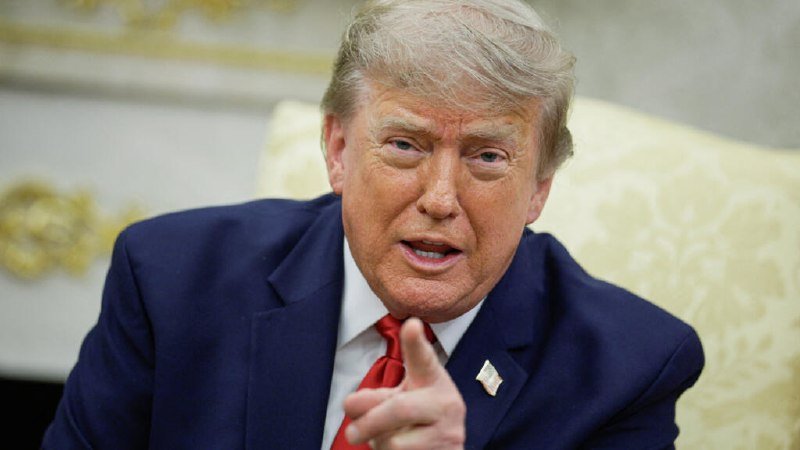
Defense Secretary Pete Hegseth's public signalling on Friday put the US military back on a collision course with Tehran, with Telegram channels tracking the Iran-Israel war report a flurry of Pentagon advisories and intercept notices that, if accurate, point to a strike package being readied inside the next 48 hours. The arithmetic has hardened since midday: Iran-aligned channels logged a fresh missile impact at Ramat David Airbase in northern Israel on Friday evening, the IAF's 157th Electronic Warfare Squadron taking what observers called a direct warehouse hit. That strike, claimed by Iran via Telegram accounts including ClashReport, did not come with independent confirmation from Israeli sources at the time of writing.
The reporting chain on Friday was a stack of competing signals, not a verified sequence. US-aligned channels framed a strike as imminent; Iranian Foreign Minister Abbas Araghchi told state television that a memorandum of understanding with Washington was being finalised; Pakistan's Prime Minister Shehbaz Sharif posted on X that the "final text" of a US-Iran deal had already been agreed. By Friday evening, NPR was reporting that President Trump had cancelled planned strikes on Iran, claiming once again that a peace deal was near. The whiplash is the story.
What the channels are actually showing
The Telegram traffic on Friday came in three distinct registers, and reading them flat makes the picture incoherent. The first register is the open-source tracking layer: posts on ClashReport logged the Ramat David impact and tied it to the 157th Squadron's known EW role, which would imply a degradation of Israeli electronic warfare capacity rather than a manpower loss. The second register is the diplomatic-blurbs layer: Iran-broadcast interviews with Araghchi, carried on English-language aggregators, kept insisting the deal was close while hardening the language on the Strait of Hormuz.
The third register is the regional-realpolitik layer. Middle East Eye reported on Friday that IRGC officials had stayed at the UAE national security adviser's guest house the previous week to cut a de-escalation arrangement, and that the UAE had paid Iran "billions of dollars" to halt strikes. The same outlet carried Araghchi's claim that the Strait of Hormuz will not return to its pre-war status, with the foreign minister declaring the waterway "under the sovereignty of Iran and Oman." Lebanon's Hossein al-Haj Hassan, a member of parliament, said Iranian officials had informed Beirut that "Lebanon is also subject to the ceasefire regime" and that Israel would withdraw. None of these lines have been confirmed by Israeli or American officials in the public record at the time of publication.
The deal that keeps almost being signed
The most concrete signal of the day came not from Washington but from Islamabad. Reuters reported on Friday that Prime Minister Sharif posted on X that the "final text" of a US-Iran deal had been agreed, with both sides now "working on next steps." A senior US official, carried on the Our Wars Today Telegram channel, told reporters that the parties were "very close" and that a signing was possible in the coming days. Araghchi, speaking on Iranian television, said the proposed memorandum would announce an end to the war "on all fronts, including in Lebanon," and that a mechanism for releasing Iranian frozen funds sat inside the text, even as he rejected media reporting on the deal's specifics.
The detail that should not be lost is the conditional scaffolding inside the Iranian position. Araghchi told Iranian state TV on Friday that "if the agreements of the first stage are not honored, we will not proceed to the second stage," and added that this staged structure was itself the guarantee. He also confirmed that the US had insisted on zero enrichment and that Iran had refused, the diplomatic impasse that preceded the war. Iran's framing is therefore a phased reprieve, not a surrender: enrichment remains a negotiating chip, frozen funds are a sequenced concession, and the Strait of Hormuz has been elevated from a transit corridor to a deterrent.
Why the rhetoric is doing so much work
Both sides have reason to talk loudly about a deal that does not yet exist on paper. The Trump administration's logic is a familiar one: a near-miss strike paired with a last-minute cancellation is a negotiation tactic that can move a counterpart who is closer to the edge than they admit. Araghchi's appearance on Iranian state television on Friday, carried via the English-language IRIB-affiliated aggregators, served a parallel domestic function, signalling that Tehran had absorbed a US-Israeli bombing campaign, retained missile capability, and walked the regime back from war without foregoing the enrichment file. A clip captured by X account @Sprinterpress quoted The Economist on Friday reading, "Iran's fear of war has disappeared," the analytic line that best captures the shift.
That analytic shift has a tangible price tag in the Gulf. If the Middle East Eye account of UAE-Iran de-escalation money is in the right order of magnitude, the precedent is harsh: a Gulf state paid cash to an adversary to stop being hit, and that payment was structured through a security-adviser channel rather than a finance ministry. Whether this deal holds past its first ceasefire violation will be one of the more consequential tests of the arrangement.
What it would mean if the strike package is real
If Hegseth's signalling translates into actual launch orders, the targets that Telegram trackers are watching are not the ones the headlines usually name. The Ramat David impact on Friday, if verified, suggests Iran's ballistic forces have line-of-sight aim points inside northern Israel; the IAF's 157th Squadron losing an EW warehouse would degrade Israeli air defence coordination, not its fighter inventory. A US strike package aimed at the Strait of Hormuz would be striking an asset that Araghchi has now publicly described as Iran's deterrent, which is a different proposition from striking a fixed nuclear site. The diplomatic tier that Pakistan is helping to host, with Sharif visibly claiming credit, would not survive a US strike package operating inside hours of the announcement.
The risk window is also shaped by the football. Iran's World Cup delegation is currently training in Mexico because of visa issues at the US end of the draw, with thirteen members reportedly lacking documentation and ticket allocations cancelled. A US strike on Iran while the Iranian team is travelling to a tournament hosted on American soil would be a different kind of optic from any post-9/11 frame.
The next 72 hours
The pieces most worth watching are not the bombast. NPR's report of a cancelled strike package on Friday evening and Sharif's claim of a final text exist in the same news cycle, and that coexistence is the signal: deal and strike are both being run as parallel options. Pentagon signalling through channels like GeoPWatch and Middle East Spectator is the public-facing floor; Araghchi's Iranian-television interviews are the public-facing ceiling. The space between them is where the actual war-or-peace decision will be taken, and that space closes inside the next 72 hours.
Sources
- NPR Topics: News, "Trump says he has canceled planned strikes on Iran and peace deal is near, again", 2026-06-12
- Middle East Eye (via X post), Araghchi on the Strait of Hormuz, 2026-06-12
- Middle East Eye (via X post), "UAE paid Iran billions of dollars to halt strikes: Report", 2026-06-12
- Reuters (via X post), "Pakistan PM Sharif says final text of US-Iran peace deal agreed", 2026-06-12
- ClashReport (Telegram), Ramat David Airbase impact and 157th Squadron strike, 2026-06-12
- Al Jazeera English Breaking News, "Will there be a deal to end the Iran war this time?", 2026-06-12
- The Economist, carried via @Sprinterpress, "Iran's fear of war has disappeared", 2026-06-12
Desk note: Monexus is running this from a Telegram-and-wire synthesis because the primary documents (Pentagon strike orders, signed memoranda, Israeli IDF briefings confirming damage assessments) are not yet public. Where the channel material is uncorroded by a wire confirmation, we have flagged it as such. The strike outcome and the deal text, if and when they arrive, will be carried in a confirmed follow-up.