Allan under pressure as Victorian poll hands Labor its worst reading in years
A fresh survey puts Victoria's governing Labor Party behind the Coalition and Pauline Hanson's One Nation, sharpening the political risk around Jacinta Allan's leadership and the federal NDIS overhaul she is meant to defend on home turf.
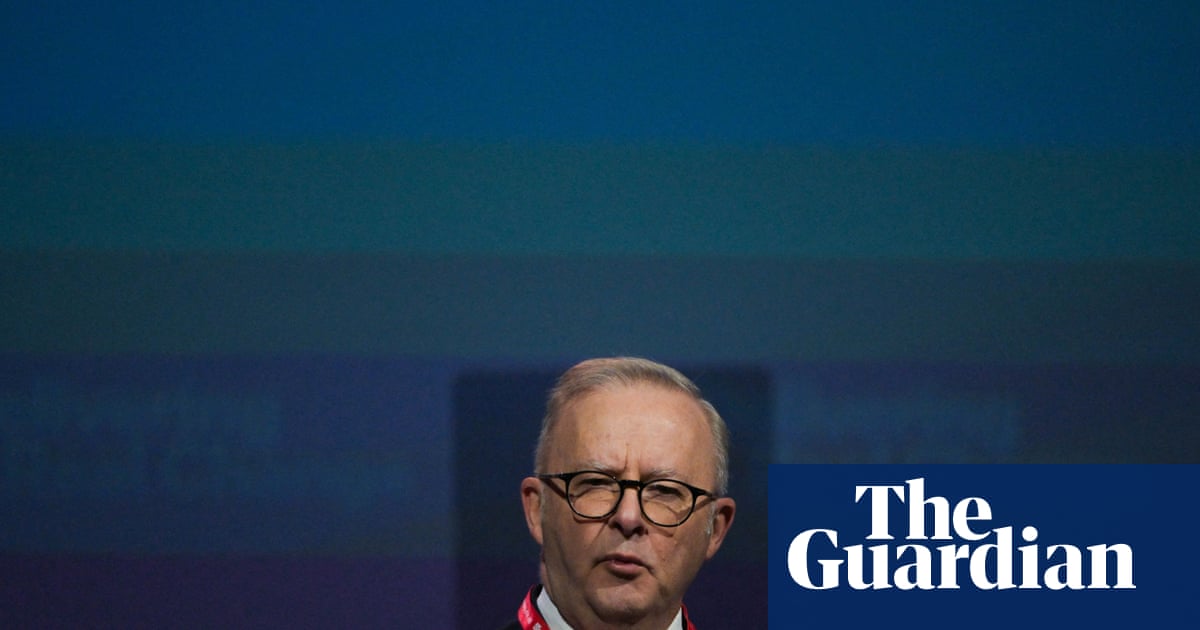
The political weather in Victoria turned sharply colder for Premier Jacinta Allan on 8 June 2026. A new state poll, published as part of the Guardian's Australia news live blog on Monday morning Australian time, has put the governing Australian Labor Party behind both the Liberal–National Coalition and Pauline Hanson's One Nation, intensifying pressure on Allan less than a year out from the next state election and just as her federal colleagues are taking a hard-edged redesign of the National Disability Insurance Scheme into the parliament.
That is the uncomfortable convergence Allan now has to manage: a domestic reading showing her government losing ground to a populist insurgent on her right, layered on top of a federally driven cost-of-living fight in which Victoria is the single biggest customer. Disability advocacy groups, briefed on the federal cuts, argue that women in particular will absorb the unpaid care that follows when participants lose packages. Allan has so far defended the redesign as necessary fiscal repair; the polling suggests the public is no longer in a mood to grant her that benefit of the doubt.
The numbers, and what they actually measure
The Guardian's live coverage, drawing on the published survey, frames Labor as trailing the Coalition and One Nation in two-party-preferred terms — a phrasing that, in Australian polling, signals that preference flows from minor right parties are now favouring the Liberals rather than washing back to Labor. The exact margin and sample size are not specified in the live-blog entry itself, which is consistent with Guardian Australia's house style of reporting top-line movements rather than the full crosstabs. Read in isolation, the survey is a single data point; read against the trend of Victorian state polling through 2025 and into 2026, it is the latest in a series of readings that have pushed Labor below the 50 per cent primary-vote threshold the party treats as its safety floor.
Allan's personal approval has tracked below her government's throughout 2026, a pattern that has become harder for her caucus to ignore. Two factors distinguish this poll from earlier soft results: One Nation's presence at the top of the minor-party pile, and the timing — landing in the same week that advocacy groups briefed journalists on what the federal NDIS reset will mean at the kitchen-table level in Melbourne's outer growth corridors, where the scheme has the highest per-capita uptake in the country.
The NDIS fight Allan cannot outsource
The redesign of the NDIS, advanced by the federal Labor government, is the policy backdrop doing most of the damage. Advocacy organisations quoted in the Guardian's live coverage argue that cuts to individual packages will not produce cheaper care — they will produce unpaid care, and that unpaid labour will fall disproportionately on women, on mothers, on daughters. The structural argument is straightforward: when formal supports contract, households fill the gap, and the gender distribution of informal care in Australia is heavily skewed. The federal government counters that the scheme is on an unsustainable trajectory and that tighter eligibility and capped packages are the only way to keep it solvent for the participants who need it most.
Allan sits awkwardly between the two positions. As a senior Victorian Labor figure and a former federal minister, she cannot disown the redesign; as state premier, she will wear the political consequences of it first. Victorian NDIS participants are concentrated in the same outer-suburban seats that already determine state election outcomes, which is why the advocacy groups chose this week to brief the press and why the Coalition and One Nation have been quick to echo their language.
Counterpoint: a single poll, a noisy electorate
The plausible alternative reading is that this is one survey, on a day when national attention is fixed elsewhere, and that Victorian voters have shown a repeated capacity to return Labor governments even from deep polling troughs — most recently in 2022, when Daniel Andrews led the party back from a similarly bleak position. One Nation's primary vote in particular has tended to deflate between state and federal cycles, and preference flows can revert when respondents focus on the actual ballot paper rather than the abstract question. The danger for Allan is not that this single number is decisive; it is that it confirms a direction, and that the NDIS conversation gives her opponents a way to make the direction legible to voters who do not normally follow state politics.
Stakes through to the next election
If the trajectory holds, Victoria enters the second half of 2026 with a premier whose authority within her own party is openly questioned, an opposition that has been handed a usable issue on disability and cost of living, and a third party on the right whose preferences now look like they will decide outcomes in inner-suburban marginal seats the Liberals have not won in two decades. The structural read is that Australian state Labor, having survived a decade of factional warfare and leadership turbulence, is running into the limits of incumbency at the moment the federal government's hardest spending choices land. Allan can recover from a bad poll; she cannot easily recover from a bad poll that arrives with a policy file attached.
What remains genuinely uncertain is whether the NDIS backlash, as articulated by advocacy groups this week, will harden into an organised campaign presence at the state level or dissipate once the federal legislative fight moves on. The sources do not specify which way the major Victorian advocacy organisations are leaning on that question, and the Guardian's live coverage flags the framing without resolving it.
Desk note: Monexus has read this story through the lens of incumbent risk and constituency pressure, rather than treating the poll as a stand-alone event. The wire line emphasises the leadership story; the policy read on NDIS sits underneath it.