A teenager's death at Juhu, and the city's recurring answer
A teenage visitor, on vacation, dies in the surf at Juhu beach — the same hazard, the same season, the same unanswered question for Mumbai.
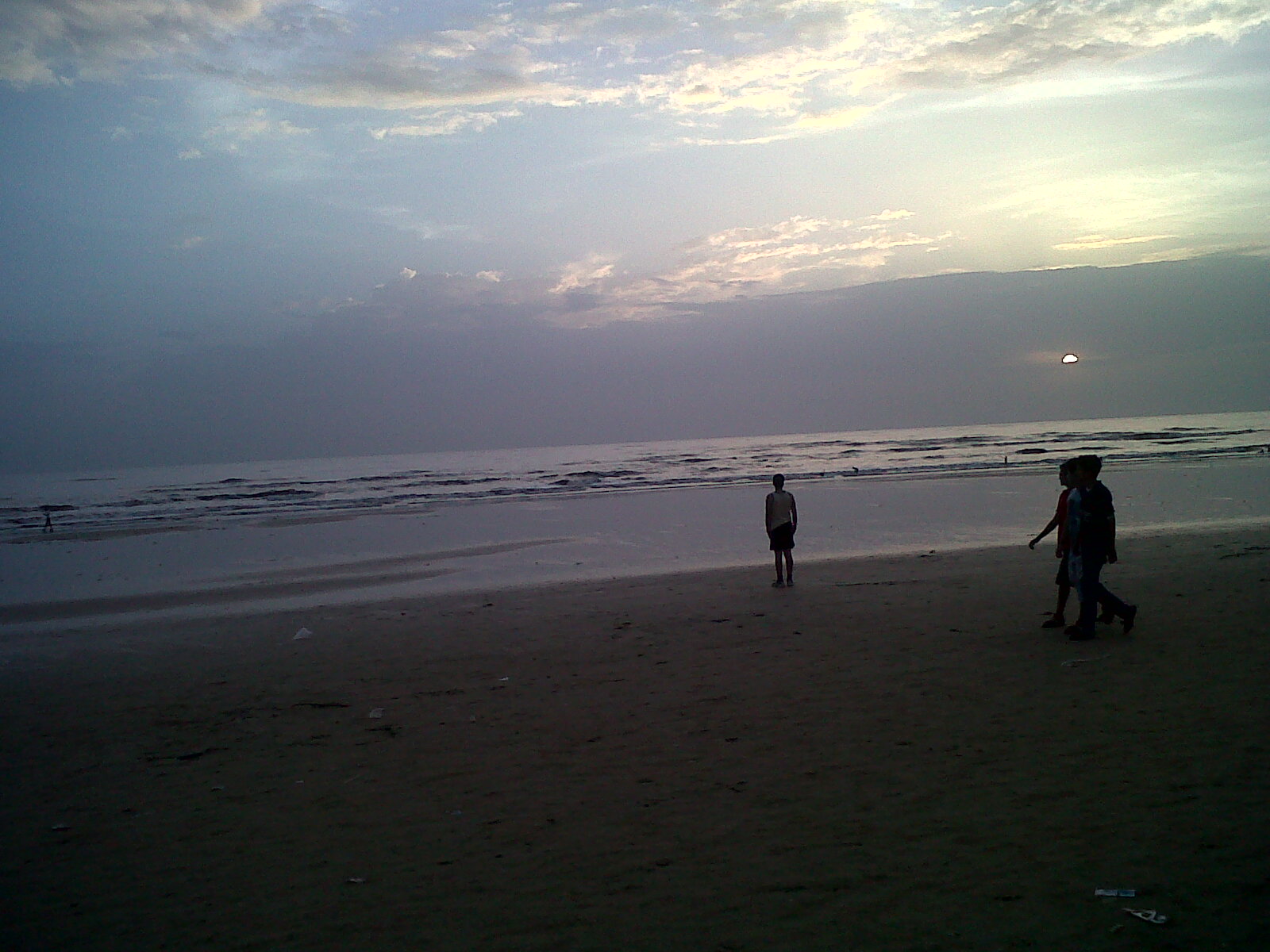
A teenager who had travelled to Mumbai for a holiday died after drowning at Juhu beach on 7 June 2026, according to a brief dispatch by The Indian Express carried on the newspaper's Telegram wire at 03:52 UTC. The dispatch does not name the victim or specify the teenager's age, and does not quote the Brihanmumbai Municipal Corporation, the Mumbai Police, or any eyewitness. The incident is, by the public record, the latest entry in a long and well-documented ledger of drownings at one of India's most-visited urban shorelines, and arrives at a particularly exposed moment in the city's calendar: the first week of the southwest monsoon, peak school-holiday footfall, and the seasonal rotation of lifeguard deployments along Mumbai's open coastline.
Mumbai's beaches function simultaneously as civic commons, recreational asset, and working coastline. The strain on that arrangement shows most acutely when the rains arrive. The death of a teenage visitor is a small data point in a much larger and very old ledger of preventable loss. The question it puts to the Brihanmumbai Municipal Corporation is one the city has answered, badly, several times before — most often in the slow aftermath of a recovery, and almost never in the form of a sustained, budgeted, year-round fix.
What is known
The Indian Express reported on 7 June 2026 that the teenager had "come to spend vacation" in Mumbai and died after entering the water at Juhu beach. The report, brief in detail, did not name the victim or specify an age; it surfaced through the newspaper's Telegram wire at 03:52 UTC. The Brihanmumbai Municipal Corporation and Mumbai Police were not quoted in the dispatch, and no follow-up item appeared on the same wire within the first hours of publication. The Indian Express also reported the same morning that domestic LPG cylinder prices had been raised by Rs 29 — a separate commercial-policy item that does not bear on the drowning but underlines the same news cycle on 7 June, and that the surface reporting on the death is, for now, confined to a short local-incident note.
A beach with a long ledger
Juhu sits on the western edge of suburban Mumbai, fronting the Arabian Sea in the Vile Parle–Juhu coastal stretch. Its shoreline is one of the most heavily visited in the country: residents from the surrounding wards, migrant workers on a Sunday or a holiday, film crews, foreign tourists, and school excursion groups all share the sand. The beach is also, by any honest account, dangerous to swim in. Strong littoral currents, sudden drop-offs in the nearshore bathymetry, and active monsoon swells make unsupervised entry into the water a recurring cause of death. The Wikipedia entry on Juhu Beach, drawing on the public record, catalogues a long history of drownings at the site and the repeated municipal response — a perimeter of red-flag signage, intermittent lifeguard towers, and printed advisories that struggle to reach the visitors most at risk. None of this is new. The novelty, each year, is the small surprise that the city continues to treat a known hazard as a matter of individual caution rather than collective responsibility.
The structural frame
Mumbai's beaches occupy an unusual position in the city's civic life. They are nominally public — open to all, unticketed, unmonitored in any sustained way — yet the infrastructure that supports their safe use is intermittent, seasonal, and unevenly distributed across ward boundaries. The Brihanmumbai Municipal Corporation operates lifeguard services through contracted agencies, but coverage thins in the pre-monsoon months when the beach is busiest with families, and the southwest monsoon, formally arriving in early June, transforms the surf into a categorically different hazard. The teenager's death on 7 June arrives at precisely that transition: the holidays, the school-break footfall, the first serious rain bands, the lifeguard rotation. Whether the rotation gap is the proximate cause is a question the available reporting does not resolve. The structural cause — that a city of millions treats its most-visited beaches as a soft commons, regulated more by warning flags than by enforced exclusion — is harder to dispute. Comparable coastlines with similar exposure run continuous lifeguard coverage and posted hazard ratings; Mumbai's record is patchier, and the patchiness is paid for in lives.
What remains uncertain
The Indian Express dispatch does not specify the time of day, the section of the Juhu shoreline where the teenager entered the water, the presence or absence of red flags at the entry point, or the lifeguard deployment status on the day. It does not name the teenager, the place of origin, the family, or the school, and gives no information on whether the family has issued a statement or on the recovery of the body. The teenager's age is itself unclear from the open reporting — "teen" in Indian press usage can mean anywhere from thirteen to nineteen, and the operational response from the BMC's beach-safety arm would differ across that range. Without these details, a confident reconstruction of the event is not possible from the open record. What is reliably knowable is the date, the location, and the broad pattern: a teenage visitor, an urban beach, a monsoon-onset surf, and a death that was, in the structural sense, foreseeable. Monexus has requested confirmation from the BMC and will append the response, if and when it arrives, to this record.
The Indian Express's same-day dispatch ran the drowning as a brief local-incident item, alongside its LPG price-hike story. Monexus treats the death as an obituary in the broader sense — a recorded life ended — and reads it against the documented hazards of Juhu beach, which the public record already supports.
Wire provenance
This editorial synthesis draws on the following public wire/social posts:
- https://en.wikipedia.org/wiki/Juhu_Beach