Trump's Third-Rate Problem: When Politics Meets the Stage
Trump's last-minute halt of an Israeli strike on Beirut and his rebuke of Netanyahu during a 1 June phone call did not just redraw the diplomatic map. It pulled the American entertainment industry into the news cycle it had spent decades pretending it did not have to cover.
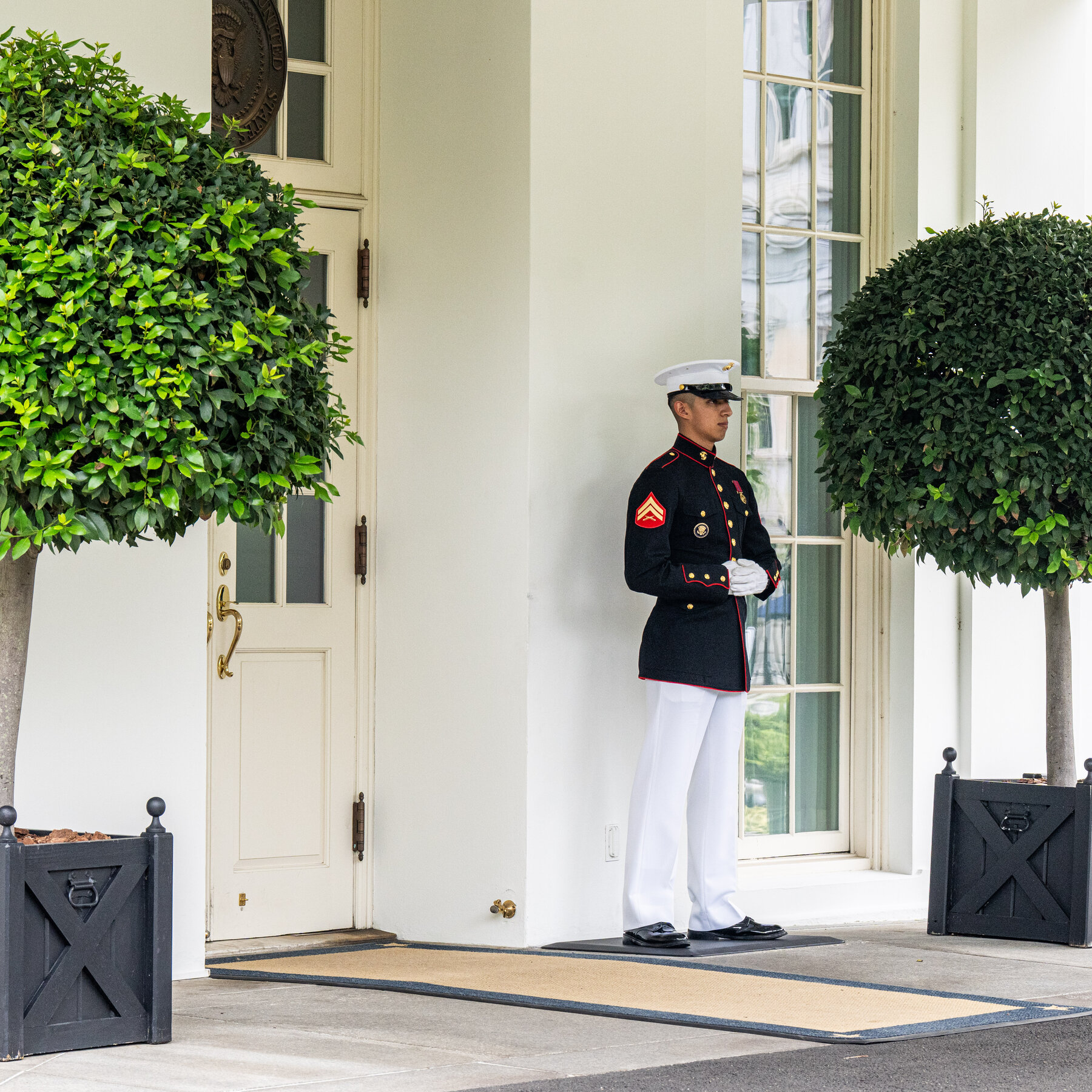
A late-May phone call between President Donald Trump and Israeli Prime Minister Benjamin Netanyahu, in which Trump publicly rebuked Netanyahu over Israeli escalation in Lebanon and its effect on US-Iran diplomacy, has spilled onto a less expected stage: the cultural one. The exchange, disclosed through official readouts and amplified across regional media on 1 June, did more than halt a planned Israeli strike on Beirut and pull Lebanon and Hezbollah into a reported ceasefire framework brokered via Lebanese Speaker Nabih Berri. It revealed, with unusual clarity, how a presidency that treats politics as performance is now colliding with cultural institutions that still expect the office to behave like an institution.
The pattern is familiar enough to have a name in the trade. A US president intervenes personally in a foreign conflict, the announcement is staged for maximum visual impact, and an incumbent entertainment industry that built its modern identity on the assumption of presidential solemnity scrambles to calibrate. What is different this time is that the calibration is happening live, on camera, and inside institutions whose own business models depend on the cultural authority of the American presidency staying intact.
When the script stops working
The proximate trigger was a Tuesday phone call in which Trump "lashed out" at Netanyahu over Israel's escalation in Lebanon and the risk it posed to parallel negotiations with Iran, according to a widely circulated account published by OSINTdefender on 1 June, sourcing the exchange between the two leaders. Within hours, Trump declared a Lebanon ceasefire and publicly called off an Israeli Defence Forces strike on Beirut after Speaker Nabih Berri communicated Hezbollah's willingness to a framework through the Lebanese parliament. The sequence moved quickly: messaging, then operational freeze, then public staging.
The Hollywood reflex was equally fast. Within 24 hours, industry insiders were reading Trump's social media cadence as a tonal cue. Commentators who usually frame themselves as above partisan theatre found themselves re-litigating, in real time, whether the president's instincts qualify as statecraft, showmanship, or both. The anxiety surfaced in places that rarely admit to it out loud: industry trade publications, agent newsletters, the kind of private Slack channels where deal terms and political risk get priced together. Coverage focused on the conflict's effect on a fragile negotiating track with Iran; the cultural story is what happens when the rest of the country has to keep treating the show as news.
Cultural institutions that still expect an institutional president
The friction is structural, not partisan. The American entertainment industry spent the last seventy years building a business model on the assumption that the US presidency is a steady, externally validated institution. Awards-show hosts mine the Oval Office for material, but the underlying deal is older than any individual host: the presidency lends cultural weight, the industry borrows it, both sides pretend the arrangement is natural. That compact has not yet broken. It is, however, visibly straining.
What is straining it is not Trump's style alone. It is the combination of that style with a media ecosystem that catalogues, clips, and rebroadcasts every unscripted presidential moment to a global audience within minutes. A president who improvises in public is no longer a domestic curiosity; he is a diplomatic variable that foreign ministries read in real time. The Lebanese ceasefire framework, the halted Beirut strike, the Iran track all moved on phrases that were not vetted through any traditional clearance process. By the time the State Department had a talking point, the talking point had already been posted.
The cultural-industry fallout that followed was less about policy than about deference. Talent agencies, studio publicity teams, and streaming platforms have built influence operations calibrated to the rhythms of an institutional presidency: official communiqués, scheduled interviews, cleared quotes. When the source material is a Truth Social post or a leaked call summary, the playbook does not fit. The result has been a visible scramble to retrofit.
The backlash, and the people running it
The pushback against the new template has been loudest from the media-commentary class. On X, the journalist Barak Ravid drew an immediate response after publishing his own account of the Trump-Netanyahu call: that Trump "yelled at Netanyahu and actually hates him," framed as evidence that Israel and the United States are operating on separate tracks. Critics piled on, calling the read naive, or worse, the predictable output of a regional press that needs Washington to be the steady hand in the room. The argument is not new, but its volume is. Every time the US president breaks with the conventional script, a sub-industry of analysts has to choose between two uncomfortable options: admit that the script has changed, or insist, against the evidence, that it has not.
The Iran dimension makes the dynamic sharper. Reports compiled by open-source analysts and circulated on the same evening, including one summary by NSTRIKE1231 picked up by OSINTlive, claim that Iran has, in seven weeks, cleared 50 out of 69 entrances to underground missile bases that were struck by US and Israeli forces earlier this year. Whatever the precise figure, the operating assumption inside regional planning shops is that any window for a negotiated settlement is narrow. A cultural establishment that still wants its president to sound like a Brookings panel chair is, in practical terms, arguing against a diplomacy that depends on speed and directness.
What the cultural institutions want, and cannot say
What the entertainment industry wants, in private, is a version of the last forty years back. Awards-show producers want a host who can roast a president without the president texting back within an hour. Studios want a foreign policy backdrop that reads as background. Streaming services want their prestige documentaries to land against a national mood they can name. None of that survives contact with a presidency that treats every cable hit as a venue.
What the industry will say in public is something narrower and safer: that the office deserves respect, that politics and entertainment should keep their distance, that the audience wants unity. The subtext is more candid. American cultural prestige has, for decades, been partly underwritten by the perceived stability of the American presidency. When that perception wobbles, the export product wobbles with it. The Lebanon ceasefire, the cancelled Beirut strike, the Iran track: these are foreign-policy events. The cultural consequence is that the soft-power scaffolding the industry never quite owned, but always leaned on, is suddenly something it has to talk about on the record.
The next frame
The next test will not be artistic. It will be procedural. Watch how the major US studios, the streaming majors, and the awards-show machinery handle the next presidential unscripted moment that lands during a marketing window. The trade press will look for coordinated talking points. The agent class will look for cover. What they will not say is what is plainly true: they are now in the news business, whether they want to be or not, and the office at the centre of that business no longer behaves the way their spreadsheets assume.
The Lebanon ceasefire may hold for a week or a month. The Iran track may close on a deal or collapse. None of that is in the entertainment industry's hands. What is in its hands is whether it adapts to the presidency as it now operates, or keeps improvising around a script that the office itself has stopped reading from. For an industry that is famously good at reading a room, the room has changed.