Rush and Retreat: How Washington's Hormuz Diplomacy Unraveled
The May 27 US strike on a military site near Bandar Abbas and Tehran's red-lines response revealed what the dominant narrative obscured: the Hormuz deal collapsed because the two sides were negotiating from incompatible architectures long before the bombs fell.
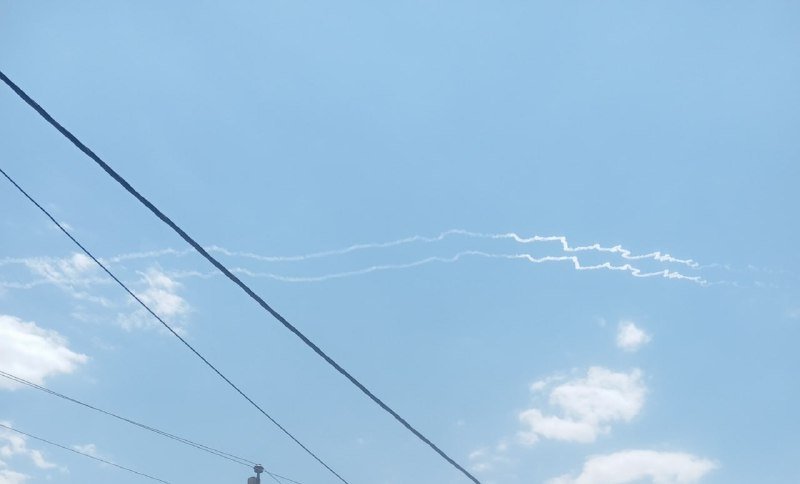
On May 27, 2026, the United States carried out fresh airstrikes on an Iranian military site near Bandar Abbas, framing the action as a defensive response to what Washington described as a threat to American forces and navigation in the Strait of Hormuz. Hours later, Ebrahim Azizi, chairman of the National Security Committee of Iran's Parliament, declared that Tehran would not be pushed back by Trump's rhetoric from its red lines: the right to enrich uranium, the possession of enriched uranium, and the autonomy of its nuclear programme. Two statements, posted within minutes of each other on the same night, capture the precise moment a diplomatic channel that had been narrowing for weeks collapsed into open kinetic action.
The conventional frame has cast the unraveling as a question of personal will: did the White House have the stomach for a fight it had spent months inviting? That framing treats the Hormuz standoff as a contest of resolve between two leaders, won or lost in the space of a phone call. It is the more flattering read for Washington's defenders, because it locates agency entirely in the Oval Office. It is also largely beside the point.
The deal that was never on the table
The structural condition for failure was set long before the May 27 strikes. Iran's negotiating posture, as articulated by Azizi through state-affiliated channels, anchored itself on three demands Washington was structurally incapable of accepting without re-opening a political fight at home: unfettered enrichment, retention of stockpiled material, and exclusion of any mechanism that would convert those rights into a contingent, time-limited privilege. Each of these conditions sits in direct contradiction to the negotiating mandate that any Republican administration would have to defend in Congress and to its Gulf partners. The deal that the White House's rhetoric gestured at and the deal that Iran's Parliament was empowered to accept were never the same instrument. What collapsed on May 27 was not a position that had hardened at the last minute; it was a misalignment that had been visible to anyone reading Iranian state output for weeks.
What the wire sources document
Open-source intelligence channels tracked the run-up in granular detail. Posts cataloguing movement near Bandar Abbas, the redeployment of fast-attack craft in the Strait, and the closure notice issued for adjacent airspace provided the operational backdrop to the eventual strike. None of these channels carried the diplomatic inside track; what they documented was the steady hardening of force posture on both sides, captured in near real time. The strike on the military site near Bandar Abbas, confirmed through Reuters-sourced reporting that propagated across monitoring channels in the same hour, was the operationalisation of a posture that had been visible for days.
A force posture substitutes for a framework
When two governments cannot agree on the architecture of an arrangement, military positioning becomes the only language that travels. The Bandar Abbas strike, paired with continued Western naval concentration in the Gulf, converted an impasse into a managed confrontation. This is the dynamic the dominant media narrative struggles to capture: the question stopped being whether Washington could compel a deal and became what level of force the Iranian system would absorb before its political coalition fractured. Azizi's statement, issued within hours of the strike, indicates that the parliamentary front has so far held. Tehran's bargaining power derives precisely from its capacity to absorb pressure without visible political rupture, which means that every incremental escalation imposes costs on the side that depends on speed.
What the structural frame explains
Any contest between a state operating on permission cycles (congressional, electoral, allied) and a state operating on endurance (theocratic, parliamentary-insulated, regionally distributed) resolves toward the latter when both sides are committed to their red lines. The US negotiating posture presupposed that pressure short of regime change would generate movement; the Iranian posture presupposed that pressure short of regime change would be metabolised. Both presuppositions are now load-bearing in their respective domestic narratives, and neither side can publicly walk them back without conceding the framing battle to the other.
Stakes into the next month
The Strait remains operational, but the political tolerance for the current posture is finite on both sides. Iran's parliamentary statement recalibrates expectations: any deal that emerges will now be presented domestically as a vindication of the absorption strategy rather than a concession under duress. Washington's task is correspondingly harder: it must convert a striking posture into a negotiating outcome without triggering the very political mobilisation in Tehran that the absorption strategy was built to prevent. The next thirty days will show whether the force posture in the Gulf is a prelude to a renewed framework or to a managed standoff that both sides agree to call something other than what it is.