Oil Tumbles 5% as US-Iran Deal Optimism Overlaps With Deep Uncertainty
Brent crude fell roughly 5% on 24 May after Iranian state TV reported an unsigned draft framework on Hormuz. The same afternoon, the US president said no deal existed, and prediction markets were giving the agreement only a 16% chance of completion by month-end.
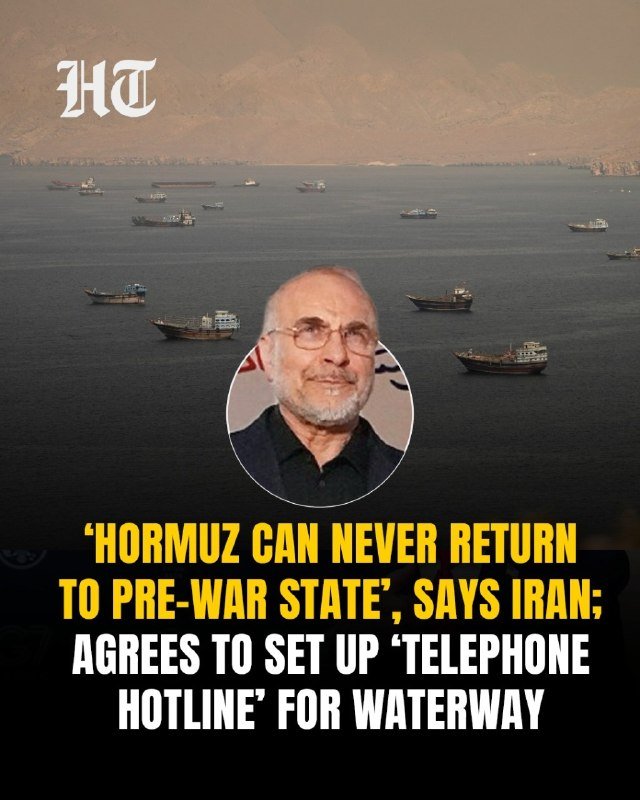
Brent crude fell roughly 5% on 24 May after Iranian state television reported that Tehran and Washington had reached an unsigned memorandum of understanding tied to the Strait of Hormuz. By the New York close, the front-month contract was trading at one-month lows, while US equity benchmarks printed fresh all-time highs as traders priced in the possibility that a contested waterway carrying close to a fifth of seaborne oil might reopen to commercial traffic. The move was textbook risk-on: oil down, equities up, rate-cut odds drifting higher.
The trouble is that the rally in stocks and the slide in oil both rest on a document that the same Iranian outlet described as a "draft, unofficial" framework, and that the American president, speaking from the Oval Office the same afternoon, insisted did not yet exist in any settled form. "We're not there yet on an Iran deal," Donald Trump told reporters. "We're not satisfied with it." Within two trading sessions, that single sentence had done more work than the Iranian state TV broadcast that triggered the move.
A deal that isn't a deal
The Iranian proposal, as summarised by state media, would see Washington withdraw forces positioned near Iran and lift a naval blockade of its coast, in exchange for Iran restoring commercial passage through Hormuz. That is the architecture of a deal. It is not, on the evidence available, a deal. A memorandum of understanding is, by long diplomatic convention, a statement of intent rather than a binding instrument; an "unofficial" draft of such a document is one rung further down the ladder, closer to a negotiating position than to a signed accord. Both sides have now confirmed that discussions are active. Neither side has confirmed that anything has been agreed.
The market reaction, in other words, was to a rumour about a draft of a draft.
The Polymarket discount
That gap between rhetoric and resolution is now visible in the prediction markets. On Polymarket, traders were assigning only a 16% probability that a US–Iran peace deal would be concluded by the end of May, even as the same platform showed implied odds of a Hormuz reopening materially higher than they had been a week earlier. On Kalshi, the pricing was starker still: traders treated as unlikely the suggestion, floated in coverage of the framework, that Iran could restore normal traffic through the strait within a month of any eventual peace.
The two together describe a market that wants to believe the headline and refuses to believe the timeline. Equities and oil front-month futures priced the announcement; prediction markets priced the probability of completion. The two are pointing at different trades.
The bitcoin tell
The cleanest read on the mood came from an asset that had no obvious business reacting to Hormuz at all. Bitcoin slipped below $75,000 on the same session, touching $74,600, with analysts pointing to a "dangerous divergence" between the equity rally and the leading crypto benchmark. ETF outflows were doing some of the work, but the broader signal was that the risk-on impulse did not extend uniformly across asset classes. A genuine geopolitical settlement would, on most priors, drag liquidity into the long tail of risk assets, not out of them. Bitcoin's behaviour on the day suggested that sophisticated flows were hedging the optimism rather than amplifying it.
The variables the market is not pricing
Three structural uncertainties remain unpriced in the move, and each one is capable of reversing it.
First, the Iranian side of any settlement runs through a supreme leader whose public health and political standing have been the subject of intense speculation for months. Tehran does not sign treaties without his sign-off, and the internal politics of any deal that explicitly trades Hormuz access for the lifting of a naval blockade will be vicious. The market is pricing an American concession. It is not pricing the Iranian capacity to ratify one.
Second, Israel has not been a party to these talks and has not endorsed the framework. Israeli security doctrine treats a US drawdown of forces near Iran as a strategic setback regardless of any Hormuz concession, and the government in Jerusalem has been explicit, in public and in private, that it reserves the right to act against Iranian nuclear infrastructure on its own timetable. Any deal that strips Washington of forward-deployed posture in the Gulf makes an Israeli strike more, not less, likely. The market is pricing a US–Iran bilateral. It is not pricing the regional triangle.
Third, the naval blockade itself is a US instrument, not a Hormuz constant. If Washington lifts the blockade as part of a settlement, the immediate effect on tanker routing is mechanical. If the blockade stays in place pending Iranian compliance verification, the effect is delayed and conditional. The framework text, to the extent that any of it has been made public, does not settle the sequencing.
What the next ten days look like
The honest reading of 24 May is that two things happened at once. Oil traders marked down a geopolitical risk premium on the basis of a draft framework that the American president publicly discounted within hours. Equity traders marked up on the same news and on a benign inflation print that had nothing to do with Iran. Bitcoin traders, with the most discretionary mandate of the three, sold.
The base case for the week ahead is consolidation. If Iranian negotiators confirm the framework in any language stronger than "draft" and "unofficial," oil has further to fall and the equity bid extends. If the document stays where it is, or if Washington leaks specific objections, the 5% move retraces and the question becomes how much of the squeeze was funded by short-dated speculators who are now trapped. The Polymarket price implies that the median trader's view is that none of this resolves by 31 May. The oil price implies that the median trader's view is that something has already resolved. One of those two readings has to give.
The deepest uncertainty is not whether a deal is struck, but what "deal" would mean in a context where the supreme leader's authority is contested, where Israel is a non-party with explicit red lines, and where the difference between a framework and a signed accord is, in this market, exactly 5% of the Brent curve.
Sources
- Cointelegraph News, "Bitcoin price threatens $75K loss as US-Iran peace progress sparks new stocks records," 27 May 2026. https://t.me/Cointelegraph/28438
- CoinJournal (via Telegram), "Bitcoin price fell to below $75,000 on Wednesday, touching $74,600," 27 May 2026. https://t.me/Cointelegraph/28430
- Unusual Whales (X), Trump remarks on Iran deal status, 27 May 2026. https://x.com/unusual_whales
- Finance wire, "Traders are skeptical of Iran timeline for Strait of Hormuz reopening," 27 May 2026. https://x.com/unusual_whales
- Polymarket (X), 16% implied probability of US–Iran peace deal by month-end, 27 May 2026. https://x.com/polymarket
- Unusual Whales (X), Iranian state TV draft MoU framework, 27 May 2026. https://x.com/unusual_whales
Desk note: Wire coverage led with the price action. Monexus foregrounds the gap between a draft framework, an unsigned memorandum, and a settled agreement, because that gap is what determines whether Friday's 5% decline is the start of a sustained repricing or a reaction to speculation that proves premature. Diplomatic optimism and geopolitical risk are simultaneous facts here, not sequential ones.