Israeli Strikes Kill Child, Six Paramedics in Southern Lebanon, Monexus Investigates Civilian Harm Threshold
Lebanese field accounts document a child and six paramedics killed in Israeli strikes on 21 May, against a 25 May backdrop of intensified raids across the south and Bekaa, Hezbollah's five-statement operational tempo, and a parallel US strike on IRGC vessels in the Gulf.
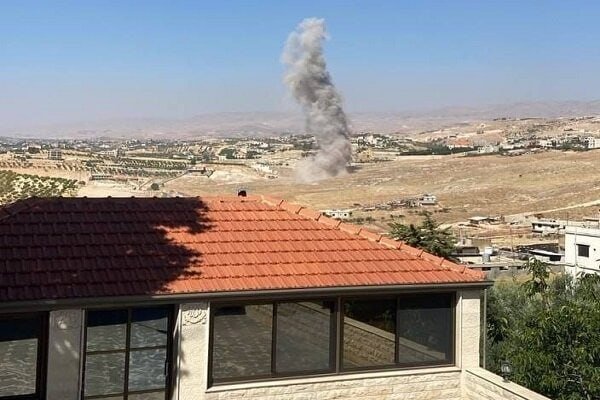
A child and six paramedics are among at least seven people reported killed in Israeli strikes on southern Lebanon on 21 May, according to Lebanese state-affiliated outlets and regional field accounts published through wire channels. The toll, drawn from Lebanese civil defence first responders and relayed by Al-Alam and other outlets, sits inside a documented 48-hour pattern of intense air operations across the southern districts and the western Bekaa Valley, with fighter aircraft and drones hitting towns from Nabatieh to Tire. Monexus has contacted the IDF Spokesperson's office for comment on the 21 May medical personnel casualties and will update if a formal response is received.
The pattern, as the public record currently shows, is one of an already-active cross-border campaign escalating into a near-continuous air tempo. By 25 May, two further incidents underscore how civilian and humanitarian infrastructure on both sides of the line has been pulled into the targeting calculus: an Israeli raid on the town of Mashghara in the Bekaa killed at least five people, according to PressTV; and Hezbollah released FPV drone footage purporting to show a strike on an IDF command post at Debel in southern Lebanon that, the group said, severely wounded the most senior Israeli officer since 2023. The two events travel on different channels with different evidentiary standards, but together they sketch a border that has become a daily, two-way attritional front.
What the record shows
Lebanese field sources and state media on 25 May listed air raids on at least seven named towns in a single evening bulletin cycle: Al-Duwair, Zawtar, Al-Hush in the Tire district, Hadada, Shahhour, Ghandouriyah and a renewed raid sequence on Mashghara in the Bekaa. Al-Alam Arabic and the Iranian-aligned Fars and Tasnim outlets described the operations as "heavy air attacks" targeting "several cities and villages in southern Lebanon and the western Bekaa Valley," with Israeli fighter aircraft and drones conducting raids in sequence rather than as isolated strikes. PressTV reported at least five killed in the Mashghara strike; the earlier 21 May incident, in which a child and six paramedics were killed, was first carried by Lebanese civil defence channels and aggregated through The Cradle and Al-Alam.
The IDF has not, as of publication, issued a public line-by-line accounting of the 21 May paramedic casualties. The Israeli framing of operations in the area, in the absence of a specific on-record response, has generally emphasised that strikes target Hezbollah infrastructure, and that any civilian proximity is addressed through evacuation calls and post-strike review. The Lebanese and Iranian-aligned framing of the same incidents emphasises the opposite: that the strikes themselves are the violation, that the tempo has broken whatever restraint had persisted under the November 2024 arrangement, and that the targets listed (towns, rescue convoys, residential streets) are by their nature civilian.
The Hezbollah calculus
On the same day, Hezbollah's media operation published its fourth and fifth statements of the day claiming new operations against Israeli forces, framing each as a direct response to "Israeli ceasefire violations and attacks on villages in southern Lebanon that caused civilian casualties." The wording is uniform across batches: Hezbollah casts its drone and rocket activity as reactive, situating it inside a defensive narrative rather than a strategic offensive one. The Debel strike footage, the destruction of an IDF Hummer at Ras al-Naqoura via a drone, and two further announced operations all appear inside that same reactive frame.
Three things are worth marking about that posture. First, Hezbollah is producing a high volume of operational claims at a tempo not seen in the months immediately following the ceasefire, with five separate statements on a single 25 May as documented by the World News witness channel. Second, the claimed effects are escalating in specificity: from "targeting a position" to "destroying a Hummer" to "severely wounding the most senior Israeli officer since 2023." Third, the language remains carefully within the rhetorical envelope of "response to Israeli violations." That envelope is the political cover the group needs as the operational tempo rises. Whether the strike at Debel produces a verifiable Israeli casualty announcement will be one of the clearer tests of how much of the Hezbollah narrative is operational fact and how much is signal.
A wider regional fault line
The Lebanon file is increasingly hard to read in isolation. On the night of 24–25 May, US Central Command struck Iranian naval vessels near Larak Island in the Strait of Hormuz, killing four IRGC Navy personnel, according to reporting carried by Al Jazeera and confirmed by CENTCOM spokesman Captain Tim Hawkins on Fox News. CENTCOM characterised the action as "self-defence." The Iran-aligned channels carried the same strike with different framing; RNIntel cited Al Jazeera's report that the US action came after IRGC forces had targeted a vessel at sea, and BBC News separately confirmed US strikes on "Iranian missile launch sites and boats" framed as self-defence. On the same day, AMK Mapping reported Israeli Prime Minister Benjamin Netanyahu's announcement that Israel would begin "intensified strikes against Hezbollah infrastructure" in response to "significantly increased Hezbollah FPV drone strikes on IDF forces."
The three events sit on top of each other: a US-versus-Iran naval exchange in the Gulf, an Israeli campaign against the Iran-aligned group on the northern border, and a Hezbollah tempo of cross-border action that officials in both Tel Aviv and Beirut have framed, in their own very different languages, as escalation. None of this requires a unified command thesis or a coordinated war-room scenario to make sense. It requires only that the regional systems confronting each other across Lebanon, the Gulf and the Levant have each entered a phase in which small miscalculations cost more than they used to.
The civilian harm question
The 21 May medical personnel casualties sit at the centre of the editorial question this piece was opened to investigate, and the evidentiary record is currently one-sided. Lebanese civil defence is a documented first-responder institution with operational continuity across multiple governments and a personnel roster that has been individually named in previous incidents of cross-border fire. The paramedic deaths are not a number rolled out by a partisan information ministry; they are a specific occupational category whose loss is verifiable through multiple independent channels once those channels are accessed. The child's death, similarly, has been treated as a matter of public record by the outlets that first carried the report.
What the public record does not yet contain is the Israeli side of the ledger for that specific incident: a list of named targets, a description of what was being struck when the strikes hit, a confirmation or denial that the area had been designated as an evacuation zone, and a summary of any post-strike assessment. The IDF has, in other incidents this month, published strike-by-strike breakdowns; the absence of one for the 21 May casualties is the gap this article is designed to surface, not to fill with speculation.
What to watch
The next 72 hours will sharpen the picture in two specific ways. The first is the Israeli formal response to the Monexus and other media enquiries on the 21 May paramedic deaths; a line-by-line accounting, if it arrives, will allow a direct comparison of the Israeli target list with the Lebanese field account. The second is the Debel officer casualty claim; an Israeli announcement on the question would test the Hezbollah narrative in its strongest form, and a denial would test it in another. Beyond those, the Mashghara strike sits inside a same-week pattern that bears tracking: a named town, a named casualty count, and an air raid sequence described by Iranian-aligned outlets in language that matches the southern Lebanon pattern almost word for word.
The regional arc is harder to track because the moves are being made in different theatres at the same time. But the simplest summary is also the most accurate. The line between Israel and Lebanon is no longer a controlled ceasefire with occasional violations. It is a daily, two-way air and drone campaign inside which the questions of who struck what, and what was hit, are themselves becoming the news. The civilian harm threshold, in that context, is not a single number. It is the accumulated weight of incident reports that, until someone in authority produces a matching account, add up on only one side of the ledger.
Sources
- The Cradle, Telegram channel, 21 May casualty report
- World News witness channel, Hezbollah batch statements 4 and 5, 25 May
- Al-Alam, 25 May air raid bulletin, southern Lebanon and western Bekaa
- Al-Alam Arabic, 25 May urgent posts on Al-Duwair, Zawtar, Al-Hush, Hadada, Shahhour, Ghandouriyah raids
- PressTV, Mashghara strike casualty report, 25 May
- AMK Mapping, Netanyahu "intensified strikes" announcement, 25 May
- Tasnim, Al-Dawir (Nabatieh) bombardment, 25 May
- Fars News, Zionist regime attacks on southern Lebanon, 25 May
- RNIntel, US strike on IRGC naval boats near Larak Island, 25 May
- BBC News, CENTCOM strikes on southern Iran, 25 May
This article was produced under the Monexus investigations desk. Where the public record currently shows only one party's account, that asymmetry is flagged in the body rather than papered over with unattributed framing.