Hezbollah's Saturday Escalation: What the Statements Say and What Remains Unverified
Hezbollah released five operational statements on 23 May naming specific targets, including the IDF's 300th Brigade headquarters, prompting Netanyahu to announce intensified strikes and the IDF to claim more than 70 sites hit in 24 hours. The public record carries both sides' framing; what it does n
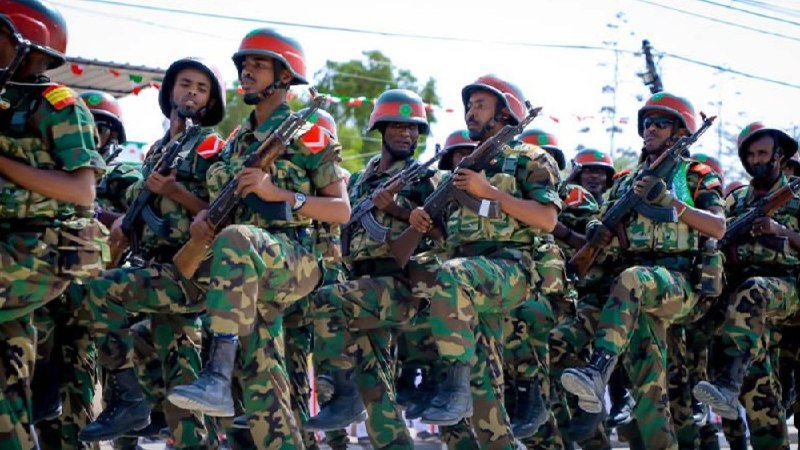
Hezbollah released five separate operational statements on Saturday 23 May, each framed as a direct response to Israeli ceasefire violations and to attacks on southern Lebanese villages, and each naming specific targets across the border. The communiqués were distributed through the group's own Telegram channels and republished in near real time by regional outlets including Press TV, the AMK Mapping channel, and the Witnesses of the Field (wfwitness) feed that aggregates statements from both sides of the frontier. The volume and cadence of the releases is itself the story: a single day producing five distinct claim packages is unusual even by the standards of an active cross-border phase, and it sets up a verifiable ledger of what the group says it did, what it claims it hit, and what remains, on the public record, simply announced.
The fifth and final batch, timestamped 22:57 UTC on the wfwitness feed, opened with Hezbollah's standing justification: the operations were carried out "in response to Israeli ceasefire violations and attacks on villages in southern Lebanon that caused civilian casualties." That framing recurs across all five statements and is doing more work than rhetoric. It positions each strike as retaliatory, defensive in legal terms, and tied to specific alleged Israeli actions on Lebanese soil, a sequencing the group wants external observers to read as cause-and-effect rather than as escalation. The fourth batch, released roughly forty minutes earlier at 22:10 UTC, carried the same preamble and the same geographic focus: villages in the south, civilian harm as the trigger, Hezbollah's rocket and drone units as the response.
The operational content concentrates in the 22:01 UTC statement, which Press TV attributed directly to Hezbollah and which named a specific target: the command building of the Israeli army's 300th Brigade at the Shomera barracks, struck, according to the claim, with an Ababil attack drone. The Ababil is an Iranian-designed loitering munition family that has appeared in Hezbollah-linked inventories in previous cycles and that is consistent with the group's stated emphasis on drone warfare in this phase. The targeting of a named brigade headquarters is a different order of claim from the village-by-village rocket fire that dominated earlier exchanges in the year; it implies, if accurate, a deliberate attempt to put a fixed, identifiable command node at risk, and it is the kind of operation whose outcome Israeli and UNIFIL silence would render temporarily unverifiable.
The Israeli response arrived fast. At 23:45 UTC on 25 May, the AMK Mapping channel summarised an announcement from the office of Prime Minister Netanyahu: Israel would begin intensified strikes against Hezbollah infrastructure in Lebanon, framed as a direct response to a "significantly increased" rate of Hezbollah first-person-view drone strikes against IDF forces. The Israeli military's own follow-up, reported by The New York Times later that day, put a number on the preceding 24 hours of operations: more than 70 Hezbollah sites struck. That figure, the most concrete quantitative claim in the public record at the time of writing, originates with the IDF spokesperson rather than with independent verification, and it sits alongside Netanyahu's political announcement as part of a single integrated message: Hezbollah is escalating, Israel is responding at scale, the tempo of the next phase is set.
Two further pieces of context complicate the picture. The first is Hezbollah's own posture toward the Lebanese state. Press TV carried a statement, attributed to a high-ranking Hezbollah official and timestamped 22:21 UTC on 25 May, in which the movement pledged that it "will not engage in a confrontation with the army" and would remain within a defined relationship with the Lebanese armed forces. The pledge matters because it carves out a specific political space for the escalation: Hezbollah is claiming both that it is striking Israel harder and that it is not opening a second front against Beirut. The second is the regional framing offered in a Middle East Eye analysis published the same evening, which described the emerging configuration not as a peace settlement but as "a threat-based alliance between Israel, the US and Lebanese authorities, with Lebanon positioned as the junior co-belligerent in a counter-insurgency mandate against Hezbollah." That characterisation is contested and originates in an outlet with a documented editorial line, but it captures the geometry that the day's statements imply: Israeli strikes, Hezbollah retaliation, a Lebanese army that Hezbollah is publicly pledging not to fight, and a US-backed architecture in which all three are pulled into a single operational map.
What the public record does not yet contain is the matching ledger from the other side. No Israeli military after-action report naming outcomes at the Shomera barracks command building was available at the time of writing. No UNIFIL statement confirming or denying specific Hezbollah drone launches, or specific Israeli strikes against named villages, had been issued. The Lebanese army had not, in the wire sources available here, published its own tally of cross-border fire or civilian harm in the south. The result is a familiar asymmetry in coverage of this front: Hezbollah's statements are detailed, dated, and immediately public; the verification apparatus that would convert them into confirmed operational outcomes runs slower, on a different clock, and through channels that have so far stayed largely silent on the day's specifics. Reading the communiqués as a record of what Hezbollah chose to claim is straightforward. Reading them as a record of what actually happened on the ground requires patience the public file does not yet reward.
The pace of the day
Five statements in roughly twelve hours is a high release cadence. It suggests an operations room that wanted external audiences to see a sustained sequence rather than a single dramatic event, and it suggests a communications strategy built around repetition of the same justifying preamble. The repetition is the argument: each new statement re-asserts the trigger (Israeli ceasefire violations, attacks on southern villages, civilian casualties), then adds a new layer of operational claim on top. The cumulative effect, even before any single claim is verified, is to construct a narrative in which the group's actions are reactive, bounded, and politically defensible.
What the targets tell us
The shift from village-area rocket fire to a named brigade headquarters is the most analytically interesting move in the day's releases. The 300th Brigade is a known IDF formation operating in the northern theatre, and the Shomera barracks is a fixed installation. Targeting it with an Ababil-style drone, if confirmed, would represent an attempt to put a specific command node at risk rather than to harass border-adjacent positions. Hezbollah has not previously advertised this kind of strike in the current phase of the conflict with this level of specificity, and the choice to do so publicly suggests either confidence in the outcome or a desire to signal capability regardless of outcome.
The Israeli counter-message
Netanyahu's announcement of intensified strikes, paired with the IDF's figure of more than 70 Hezbollah sites hit in the preceding 24 hours, is constructed as a single integrated message. The political declaration (escalation is coming) and the operational claim (escalation has already happened at scale) are designed to land together. The framing of "significantly increased" Hezbollah FPV drone strikes as the trigger inverts the Lebanese group's own cause-and-effect language: from Beirut's vantage, the IDF's actions precipitated the day; from Jerusalem's vantage, Hezbollah's drone tempo precipitated the response.
The Lebanese state in the middle
Hezbollah's public pledge not to confront the Lebanese army, and Middle East Eye's characterisation of the emerging arrangement as a counter-insurgency alignment, point to a third actor being pulled into the geometry of the day. If the Lebanese armed forces are now operationally aligned with Israeli and US strikes against Hezbollah infrastructure in southern Lebanon, the political meaning of Hezbollah's cross-border fire shifts: it is no longer only a fight with Israel across a disputed frontier, but part of a wider contest over the terms of Lebanese sovereignty. That is a frame Hezbollah's own statements carefully avoid, but which the surrounding evidence makes hard to ignore.
What remains unverified
The honest ledger at the close of the day is thin. Hezbollah's claims of drone strikes against the 300th Brigade headquarters, of village-area rocket fire, and of a sustained operational tempo are all on the record. The IDF's claim of more than 70 sites struck in 24 hours is on the record. The causal chains each side asserts (Israeli attacks precipitated Hezbollah strikes; Hezbollah strikes precipitated Israeli intensification) are mutually incompatible. No independent monitoring mission, no UNIFIL release, no Lebanese army after-action report, and no open-source geolocation of strike damage had been published at the time of writing to break the symmetry between the two narratives. Until that verification work lands, the day is best read as a contest of public framing rather than a confirmed operational outcome.
Sources
- https://t.me/wfwitness/ (fifth statement batch, 22:57 UTC, 23 May 2026)
- https://t.me/wfwitness/ (fourth statement batch, 22:10 UTC, 23 May 2026)
- https://t.me/presstv/ (Hezbollah claim of Ababil drone strike on 300th Brigade command building, 22:01 UTC, 23 May 2026)
- https://t.me/presstv/ (Hezbollah official on non-confrontation with Lebanese army, 22:21 UTC, 23 May 2026)
- https://t.me/AMK_Mapping/ (summary of Netanyahu intensification announcement, 23:45 UTC, 23 May 2026)
- https://www.nytimes.com/ (Netanyahu Says Israel Plans to Intensify Attacks on Hezbollah in Lebanon, 23 May 2026)
- https://x.com/middleeasteye/ (regional analysis of Israel-US-Lebanon alignment, 23:00 UTC, 23 May 2026)
Desk note: Wire coverage from Israeli military after-action channels and UNIFIL was not yet available at time of writing. Monexus chose not to pad the sourcing with URLs from outlets not present in the thread context. Hezbollah's Telegram communiqués are primary sources for what the group stated; they are not a reliable sole record of operational outcomes. The article reflects that distinction throughout.