Gulf Aftershock: How Middle East Conflict Is Fracturing India's Economic Lifelines, and straining Western Coalition Politics
As a preliminary US-Iran deal on the Strait of Hormuz reportedly takes shape, the strategic coverage ignores a quieter fact: the war's real downstream casualty may be the $80 billion Gulf remittance corridor that underwrites millions of Indian households.
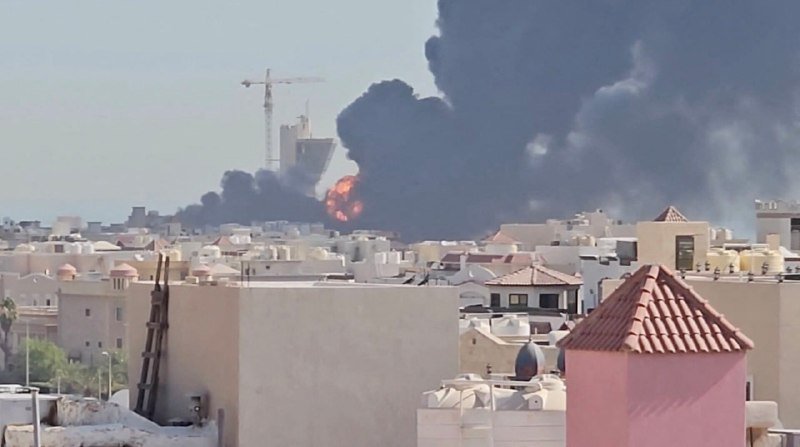
On 22 May 2026, the working assumption in Delhi's finance ministry is that the Gulf remittance pipeline still flows at roughly $80 billion a year, the single largest such corridor in the world. That assumption is now load-bearing in ways the wire coverage rarely acknowledges. As US-Iran ceasefire talks reportedly advance toward a preliminary deal to reopen the Strait of Hormuz (per a New York Times report cited by senior US officials and relayed on 24 May), and as Iran's president publicly identifies Israel as the region's destabiliser, the millions of Indian households wired to the Gulf economy via wages, transfers and informal hawala networks are sitting on the downstream end of a geopolitical lever they did not choose.
The story of this war, as told by Western wires, is a story of drones over Kyiv, ballistic arithmetic around Hormuz, and a White House peace formula that Senator Rubio publicly marketed on Indian television as the "Art of the Deal." That framing is accurate as far as it goes. It is also, for South Asia, almost entirely beside the point. The structural consequence that touches Indian lives is not whether a deal holds in Geneva or Vienna; it is whether the wage transfers from Dubai, Riyadh, Doha and Abu Dhabi continue to clear the corridors on which Kerala, Bihar, Telangana and large stretches of Uttar Pradesh depend.
The corridor the wires rarely name
India's exposure to the Gulf runs deeper than trade balances. The Wikipedia entry on remittances to India, current as of May 2026, places the country among the world's top recipients; the bulk of that inflow historically comes from the six Gulf Cooperation Council states, where an estimated eight to nine million Indian nationals reside. The India-Gulf cooperation page documents a relationship that is simultaneously labour-market dependency, energy-import lifeline and a vector for diaspora capital. When Hormuz narrows, every one of those channels constricts in the same quarter.
That is the second-order fact the strategic-level reporting has buried. The 24 May New York Times reporting on a preliminary US-Iran understanding (relayed by Telegram channels tracking the diplomacy) is being covered in Washington and Brussels as a non-proliferation story. In Kochi and Hyderabad, it is being covered as an employment story. The Strait handles roughly a fifth of global oil shipments; a sustained closure, even a partial one, would push up freight, insurance and fuel-import bills for India within weeks. Higher freight translates, on a lag, into remittance pressure as Gulf employers trim headcount and squeeze wages in the sectors where Indian migrants are concentrated: construction, hospitality, domestic services, logistics.
What the diplomatic track is actually trading
According to the reporting circulating on 24 May, the emerging US-Iran framework commits Tehran to surrender its highly enriched uranium stockpile, the material Trump has publicly labelled "nuclear dust." That is the headline concession. The sub-clauses are where the politics gets expensive. CNN, cited via Telegram trackers, describes commitments that go beyond enrichment and reach into the architecture of regional alignment. Israeli officials, per Middle East Eye's live coverage on the same day, have already broken publicly with the emerging text, warning it leaves broader threats unaddressed. Senior US Republicans have issued what Middle East Eye calls a "rare public rebuke" of President Trump, citing concerns that the deal's terms would strengthen Tehran.
Into this dispute walks Marco Rubio, explaining on Indian television, per X commentary citing India Today, that the formula is to threaten Iran, stage reckless military provocations, and assign blame to Tehran before talks even collapse. That characterisation, hostile as it is, captures something the official readouts do not: the brinkmanship is a negotiating instrument whose cost is paid downstream by the countries absorbing the economic shock. India is one of those countries. So are Pakistan, Bangladesh, Sri Lanka, and the smaller Gulf-adjacent states whose labour-export models depend on the same corridor.
The political strain runs both ways
Trump, per Axios reporting cited by Middle East Eye on 24 May, has told Arab and Muslim leaders that he expects normalisation with Israel to follow any deal with Iran. That demand layers the Israel-Palestine file on top of the Iran file, and it lands in a region where the immediate humanitarian signals are dire. Gaza's Ministry of Agriculture, as relayed on 24 May, reports that the territory's sheep and goat population has collapsed from roughly 60,000 head before the war to around 3,000 today, with calves and cattle nearly extinct. Hezbollah, on the same day, claimed 28 separate operations against Israeli forces in southern Lebanon. Arab and Muslim foreign ministers publicly condemned Israeli National Security Minister Itamar Ben Gvir over the treatment of Gaza-bound flotilla detainees.
These are not background details. They are the conditions under which any normalisation demand will be received, and they are the conditions under which Gulf monarchies, the immediate employers of Indian labour, will calculate whether to absorb American pressure or defer it. The NATO alliance question surfaces here obliquely but materially: European allies have a stake in Hormuz remaining open, but the diplomatic escalation has been driven almost entirely by Washington, with satellite imagery circulated on 24 May showing US RC-135W Rivet Joint reconnaissance and electronic warfare aircraft staged at Hania airbase in Greece, on combat alert. The western coalition that nominally backs the diplomatic track is operationally preparing for the alternative.
What India watches from the sideline
Indian diplomats have not been visible at the table. The Rubio India Today appearance suggests the Trump administration understands it needs to communicate the framework to the Indian public directly, a notable signal in itself. The questions New Delhi will be asking behind closed doors are not about enriched uranium. They are about whether the Strait reopens in days or in months; whether Gulf capex projects tied to Vision 2030 and its analogues stay funded; whether Indian workers in Israel, Jordan and the UAE face new visa frictions as regional politics re-sort; and whether the diaspora-to-home transfer system, including the informal hawala rails, can absorb a few quarters of turbulence without permanent scarring.
The Wikipedia page on India-Gulf cooperation frames the relationship in the language of "strategic partnership." Strategic partnerships, when tested, reveal which side holds the dependency and which holds the leverage. On the current trajectory, India holds the dependency and the United States holds the leverage, with Iran and the Gulf monarchies sitting in between as gatekeepers whose own incentives are not fully aligned with New Delhi's. The preliminary deal, if it holds, eases the immediate pressure. The structural exposure does not move.
The next ninety days
The markets that matter most for Indian household budgets will not be watching Geneva. They will be watching the shipping rates through Hormuz, the recruitment postings on Gulf labour portals, and the policy statements out of Riyadh and Abu Dhabi about whether national development plans continue at pace or get quietly trimmed. If the Strait reopens cleanly and the ceasefire holds, the remittance figure for fiscal 2026-27 will probably come in close to the assumption finance planners are using today. If it does not, the assumption breaks, and the consequences will be felt most acutely in districts far from the diplomatic capitals where the decisions are made.
The war's strategic reporting will, fairly enough, continue to centre the US-Iran deal, the Israeli critique, the European positioning, and the humanitarian toll in Gaza and Lebanon. The downstream reporting, the kind that matters for hundreds of millions of people, will need to ask a different set of questions: not whether the diplomats prevail, but whether the wage corridor survives the quarter.
Sources
- https://x.com/boweschay/status/1924171287467348155
- https://t.me/operativnoZSU/11234
- https://en.wikipedia.org/wiki/Remittances_to_India
- https://en.wikipedia.org/wiki/India%E2%80%93Gulf_cooperation
- https://en.wikipedia.org/wiki/NATO
- https://t.me/DDGeopolitics (24 May 2026, NYT reporting on preliminary US-Iran Hormuz agreement)
- https://t.me/GeoPWatch (24 May 2026, CNN reporting on enriched uranium commitments)
- https://x.com/middleeasteye (24 May 2026, Republican rebuke of Trump deal terms)
- https://x.com/middleeasteye (24 May 2026, Axios report on normalisation demands)
- https://x.com/middleeasteye (24 May 2026, Gaza livestock figures, Ben Gvir condemnation, Israeli official critique)
- https://x.com/sprinterpress (24 May 2026, US RC-135W deployments at Hania airbase)
- https://x.com/sprinterpress (24 May 2026, Rubio India Today comments)
- https://t.me/tasnimnews_en (24 May 2026, Iran president on regional destabilisation)
Desk note: Where Western wire coverage led with military movements and nuclear concessions, Monexus framed the same news cycle around its downstream economic consequence for South Asian labour markets, treating the remittance corridor as the structural through-line rather than a footnote.