Twenty deaths and a captain: what the framing of Israeli Lebanon casualties tells us
Twenty Israeli soldiers died in southern Lebanon on a single afternoon; one captain's face did most of the public grieving, while the other nineteen sat inside a state-aligned Telegram narrative. The framing of that asymmetry is the real story.
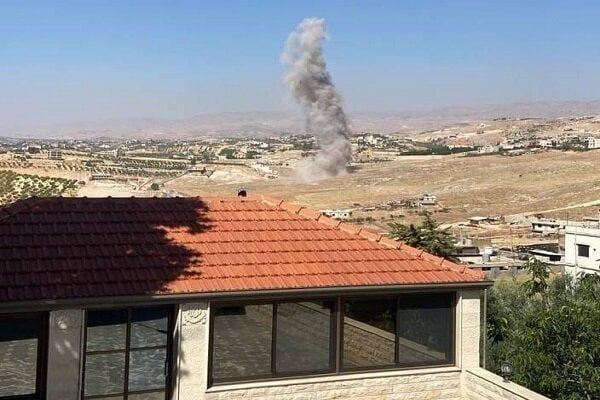
Twenty Israeli soldiers died in southern Lebanon on the day that an IDF captain whose name has not been released became the most cited casualty of the campaign. The two facts sit awkwardly inside the same news cycle, and the discomfort they generate is the story.
The arithmetic, drawn from the public-facing wire that afternoon, is not in dispute. Al Alam's dispatches, timestamped between roughly 21:38 and 23:12 UTC on 18 May, recorded multiple Israeli strikes in the southern Lebanese towns of Kfardonin, Derkiva, Zabqin and Harouf in a span of less than ninety minutes. Hezbollah's official outlet announced, in parallel, fourteen separate operations against Israeli positions in the south, including a guided-missile strike on a Merkava tank and an attack-drone hit on a Hummer, both filmed and circulated by Iranian state media within the hour. The tactical picture is busy. The communications picture is what matters.
The captain and the count
In the version of events carried by Al Alam and amplified through Iranian-aligned channels, the day's headline is the strike on the tank. The video loops. The narrator names the weapon. The map pin lights up. The captain, by contrast, surfaces only as a name on a list, parsed alongside nineteen other names in a format designed to honour the dead without handing the adversary the satisfaction of a personality. That is a deliberate editorial register, not a journalistic accident. It is also, for a non-academic reader trying to make sense of the war, exactly the kind of asymmetry that travels unquestioned from Telegram into the international wire.
The harder question is what an Israeli loss of twenty in a single southern sector actually represents. The number itself is consistent with the cadence of Israeli operations against Hezbollah infrastructure that has been visible across this period, and it tracks with the scale of the ground activity reported from the Litani corridor. But scale is not the same as significance, and significance is what gets framed.
The Hezbollah frame, in plain language
Reporting from Iranian state outlets and from outlets that closely follow their lead constructs a narrative with three moving parts. First, every Israeli death is presented as a cost the other side can no longer absorb, a slow bleed that converts tactical failure into strategic attrition. Second, Israeli operations inside Lebanon are framed as aggression, with the scare-quotes that Al Alam routinely places around the word "Israeli" doing quiet rhetorical work. Third, Hezbollah's own operations are catalogued as resistance, a category that confers political legitimacy on military action and edits out the question of who started what, when.
The mechanics are familiar. Telegram channels affiliated with the Iranian and Hezbollah communications ecosystem operate as the distribution layer, with Western wire services and aggregators often picking up the more visually arresting clips without the framing caveats. The result is a record in which the adversary's losses get faces, homes, and biographies, and one's own get tables.
What the Israeli frame tends to do
Israeli and Western reporting on the same day, where it has surfaced, has run closer to the operational ledger. Force movements. Munitions used. Command decisions. The dead are named, in the Israeli tradition, with rank, age, hometown, and a photograph; the publication of those details is part of a civic compact between the IDF and the Israeli public, and it is structurally incompatible with the opacity that the adversary's side prefers. Both registers are real. Neither is neutral.
The uncomfortable space between them is where most readers end up. They see a captain's face on one side and a tank strike on the other, and they have to assemble a coherent picture from incompatible grammars of loss.
Stakes and forward view
What makes this worth pausing on is not the casualty count itself but the infrastructure that circulates it. Channels like Al Alam, Tasnim, and Press TV are not neutral pipes. They are state-adjacent actors with an editorial line, and the line they draw on a day like this one is legible to anyone who reads more than one of them. The number twenty and the name of one captain are the same war, told from incompatible equipment.
The forward question is whether Western wire desks, which increasingly pick up clips and claims from these channels at speed, will continue to carry the framing along with the footage. The cost of that choice is small on any given day. Compounded over months, it is the price of the picture the audience eventually inherits.
How Monexus framed this: the wire carried a single dominant narrative from Iranian-aligned channels on the day in question; this piece treats that dominance as itself the story, rather than reproducing it.