Ceasefire Fractured: Israeli Military Activity Reported in Khan Yunis as Gaza Truce Shows Strain
Artillery opened up on eastern Khan Yunis at first light on 9 May, and within minutes the claim had travelled through three Telegram channels before any Israeli-side confirmation reached the English-language wire. The gap between the two is the story.
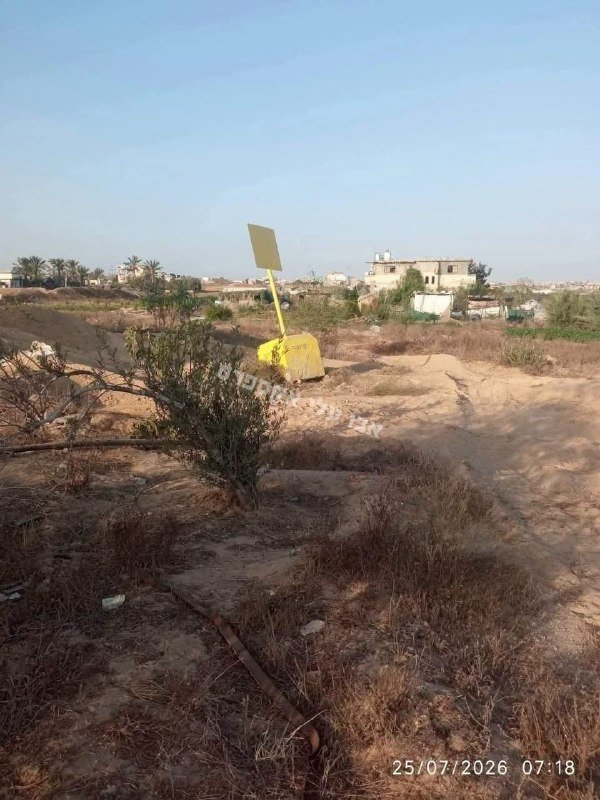
Artillery opened up on the eastern districts of Khan Yunis at first light on 9 May, and within minutes the claim had ricocheted across three Telegram channels and a pair of Arabic-language wire accounts. By 03:23 UTC, Al-Alam was carrying an urgent line from Palestinian sources: occupation vehicles were firing toward the eastern areas of the southern Gaza Strip city. By 04:44 UTC, a Gaza-based updates channel was reporting an artillery bombardment on those same eastern districts and bombing operations east of Gaza City. By 05:00 UTC, both the English and Farsi services of Iran's Tasnim news agency were reporting the episode as a ceasefire violation. None of the Israeli-side verifications that would normally anchor a story of this scale had arrived in the public record at that hour.
The Khan Yunis incident is the kind of event that exposes, in real time, who gets to call something a fact. Israeli military operations in southern Gaza since the start of the ceasefire have been documented in fragments, with reporting on each incident travelling through Telegram channels aligned with different parts of the conflict before any independent confirmation arrives. The result is a public record in which the gap between an event and its verified description has become the story.
The shape of the reporting
What the public wire shows for the morning of 9 May is a near-synchronous cascade of claims about the same incident, almost all of them originating from outlets that frame the Israeli military as an occupying force and the actions of its soldiers as ceasefire violations. The first Arabic-language flash, from Al-Alam at 03:23 UTC, attributed the firing to occupation vehicles and Palestinian sources. The Gaza English Updates channel added artillery details within eighty minutes. By 05:00 UTC, Iran's Tasnim had translated the claim into two of its services.
No Israeli spokesperson, no Times of Israel dispatch, no Jerusalem Post wire, no Reuters or AP confirmation appears in this window. The IDF's English Telegram channel was instead posting about southern Lebanon, saying the military had struck more than 85 Hezbollah targets in the previous twenty-four hours. The asymmetry is structural: when Israeli operations are confirmed, they are confirmed by Israeli and Western-wire institutions. When the initial claim travels through Iranian state-aligned channels, Arabic-language outlets affiliated with Hezbollah's media ecosystem, and locally curated Gaza channels, the first draft of the event is already politically encoded before any Western desk has filed a line.
The Al-Shati bombing, separately
A second incident the same morning, with different sourcing, sits beside the Khan Yunis claim and complicates the picture. At 02:56 UTC, Press TV carried footage of destruction in a residential block in the Al-Shati refugee camp, west of Gaza City, with residents forced to sleep in the open after the strike. By 04:48 UTC, Al-Alam reported nine citizens injured after a house was destroyed by an Israeli air strike in the camp. The Gaza Relief and Rescue spokesperson, cited by Al-Alam's Farsi service at 03:48 UTC, confirmed the casualty count of nine. By 04:44 UTC, the Gaza English Updates channel had filed a daily recap naming the Al-Adham family as the residents of the bombed single-storey house in Block 9, Shat' Beach.
Here the chain of attribution is shorter and more consistent. Palestinian civil-defence and emergency-services spokespeople are named, the family is named, the block is named, the casualty figure is repeated by three channels. Iranian state media carried the imagery; an EU parliamentarian was quoted calling for an investigation into a separate incident at the Shajareh Tayyebeh school in Minab, southern Iran, which Press TV at 07:29 UTC described as a US-Israeli strike. The Minab strike is a different event in a different country, but it appears in the same morning's information environment, and it carries the same media-signature: footage first, attribution second, parliamentary reaction third.
The regional backdrop
The Khan Yunis and Al-Shati episodes do not arrive in a vacuum. The same 9 May morning found southern Lebanon under intensive Israeli bombardment combining heavy artillery, warplanes and drones, according to The Cradle at 08:00 UTC. Lebanon's Emergency Operations Center, cited by TeleSUR English at 02:56 UTC, put the toll of the Israeli offensive since 2 March at 2,759 deaths and 8,512 injuries. The IDF's own English channel at 05:03 UTC described strikes against more than 85 Hezbollah targets in the previous twenty-four hours as operations to remove threats to Israeli civilians and soldiers. Two languages, two framings, two sets of numbers, one morning.
Further out, the information environment thickened rather than clarified. N12 reporting relayed via a witness channel at 04:57 UTC said Israel had told the United States that any return to fighting with Iran would have to include strikes on Iranian energy infrastructure. Middle East Eye at 04:59 UTC reported that Barak Hiram, the officer who ordered tank fire on a home during the 7 October attacks, had been recommended as Israeli military secretary. A memorial was held in Tehran for Ali Larijani, the former secretary of Iran's Supreme National Security Council, killed during what IRNA described at 07:20 UTC as the Ramadan war with the US-Israeli enemy. Each item is independently sourced; together they describe a Middle East in which the architecture of ceasefire is being argued about in two languages across six countries before most Western newsrooms have opened their morning file.
The verification problem in plain terms
What the morning of 9 May actually demonstrates is not that one side is lying and the other telling the truth. It demonstrates the more uncomfortable fact that the journalistic record for events in Gaza now arrives in two tiers, and the tiers do not arrive at the same speed. The first tier, originating from Arabic and Iranian state-aligned channels plus locally curated Gaza networks, supplies footage, casualty counts, named families and named neighbourhoods within minutes of an event. The second tier, from Israeli spokespersons, Western wire services and English-language regional outlets, supplies confirmations on a slower clock, often hours later, often only after the first tier's claims have already shaped the day's narrative frame.
The pattern is visible in the Khan Yunis incident itself. By the time any Israeli-side framing of the eastern-districts firing would have been available to English-language readers, the event had already been encoded in three languages as a ceasefire violation. The verification work that would have been needed to corroborate or correct that frame was not in the public record in the window that mattered for first-pass coverage. Monexus's decision, in this case, to surface the Telegram-sourced claims as reported rather than confirmed is not editorial cowardice. It is the only honest move available when the public wire itself has not yet caught up with the event.
What the strain actually looks like
The ceasefire framework that the Khan Yunis episode allegedly strained has been under pressure for months, and the Wikipedia-summarised record of the Israel-Hamas ceasefire describes an arrangement whose day-to-day implementation has been contested from the outset. Khan Yunis sits in the southern Gaza Strip, a city whose name has recurred through every phase of the conflict as a theatre of ground operations and as a humanitarian reference point. Wikipedia's entry on the city and its 2023-2025 Gaza genocide framing both confirm the geographic and historical context in which the latest claims arrive.
The shape of the strain, on 9 May, is therefore not best understood as a single artillery exchange or a single air strike. It is best understood as the routine operational fact that both sides continue to act on the ground while the information system built to describe their actions produces two parallel records, in two languages, at two speeds. The Khan Yunis claims, the Al-Shati strike, the Lebanese bombardment and the Minab strike are not a single event. They are a sample of how the war now reports itself, and a reminder that verification is not a slogan. It is a deadline the public wire has been missing.
The 10 May files will tell readers whether the Khan Yunis firing was a localised exchange or the first breach of a larger arrangement. For now, the only honest statement is the one the wire itself will support: the incident was reported, the reporting travelled through channels whose political alignments are public, and no independent confirmation had arrived in the English-language record by the time the morning's cascade had finished.
Sources
- Tasnim News (English), Telegram, 2026-05-09: https://t.me/tasnimnews_en/49781
- Tasnim News (Farsi), Telegram, 2026-05-09: https://t.me/JahanTasnim/34822
- Al-Alam Arabic, Telegram, 2026-05-09: https://t.me/alalamarabic/128847
- Gaza English Updates, Telegram, 2026-05-09: artillery bombardment, eastern Khan Yunis and daily recap (https://t.me/gazaenglishupdates)
- Press TV, Telegram, 2026-05-09: Al-Shati destruction footage
- TeleSUR English, X, 2026-05-09: Lebanon casualty toll since 2 March
- The Cradle, Telegram, 2026-05-09: southern Lebanon bombardment
- Al-Alam Farsi, Telegram, 2026-05-09: Gaza Relief and Rescue spokesperson on Al-Shati injuries
- IDF Official, Telegram, 2026-05-09: southern Lebanon operations
- Middle East Eye, X, 2026-05-09: Barak Hiram recommendation
- Press TV, Telegram, 2026-05-09: Minab school strike
- Wikipedia, Khan Yunis: https://en.wikipedia.org/wiki/Khan_Yunis
- Wikipedia, 2023-2025 Gaza genocide: https://en.wikipedia.org/wiki/2023%E2%80%932025_Gaza_genocide
- Wikipedia, Israel-Hamas ceasefire: https://en.wikipedia.org/wiki/Israel%E2%80%93Hamas_ceasefire
Desk note: Monexus treated the 9 May Khan Yunis reports as claims to be surfaced and verified, not as facts to be amplified. The wire provenance above is split between Iranian state-aligned channels, Arabic outlets affiliated with the Axis of Resistance media ecosystem, locally curated Gaza channels and Israeli-side posts that addressed a different theatre. Where the public record is thin, the analysis stands above the gaps rather than inside them.