The Face of a New Axis: What North Korea's Red Square Parade Really Tells Us
North Korean troops marching on Red Square alongside active Russian soldiers is not a photo-op. It is a statement of operational fact — one that the Western alliance's diplomatic and military apparatus has yet to process.
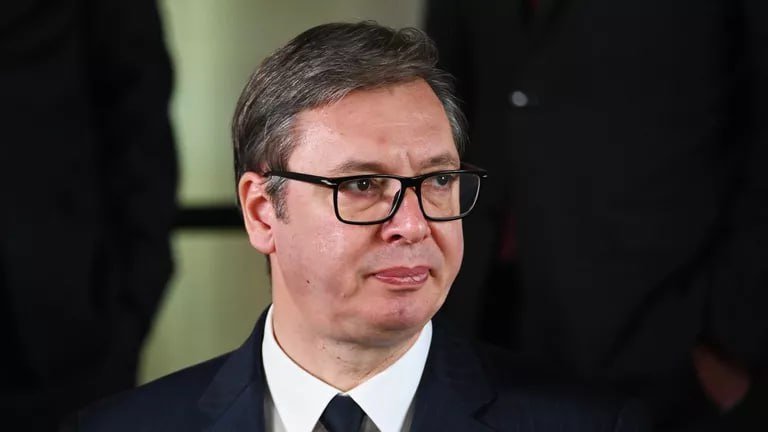
On the morning of 9 May 2026, a detachment of the North Korean People's Army stood on Red Square in full ceremonial formation, positioned alongside active Russian military personnel who had returned from combat operations in Ukraine. Cadets from Russia's Zhukovsky and Gagarin Air Academies and the Russian Naval Academy marched in the same parade. The footage, distributed via the BellumActaNews Telegram channel, showed North Korean troops in dress uniform sharing a stage that Russian state media had designed as a showcase of national power. It was not a rehearsal. It was not theatre. What the cameras captured was operational fact rendered in ceremonial language.
The dominant Western framing treats North Korean troop presence in this conflict as a geopolitical curiosity — an irritating footnote to a war defined by Russian ambitions and European security. That framing is wrong, and the consequences of its persistence are significant.
The Scale of What Has Changed
North Korea's deployment of conventional forces to a European active war zone represents the most consequential expansion of the conflict since its opening weeks in February 2022. Russian state media and military-adjacent channels have confirmed the presence of North Korean personnel in operational roles inside Ukraine. The parade in Moscow did not create this reality; it gave it public, ceremonial confirmation. The intelligence community had flagged these deployments. The diplomatic community, by contrast, has behaved as though the political and legal implications do not require immediate reckoning.
They do. If North Korean troops are engaging Ukrainian forces under Russian command, the conflict has already crossed a threshold that Western policy documents and alliance statements have consistently described as a red line. That red line has been crossed, observed, and celebrated with a parade. The question now is whether Western capitals will revise their assessment frameworks or continue operating as though the red line still exists.
Why the Response Has Been So Cautious
There is a structural reason Western governments have been reluctant to name the North Korean deployment in the strongest terms. The political architecture around this war has been built on a series of calibrated escalations that were always intended to stay below a threshold that would force a direct response from NATO. Naming North Korean involvement as a casus belli for expanded alliance action would require defining what comes next — and the alliance consensus on that question does not exist.
The result is a diplomatic posture that confirms the fact while carefully declining to draw the operational consequences. Statements from Western capitals have acknowledged the deployment without specifying what it changes. This is not caution; it is a form of institutional avoidance. The implications of the deployment are real whether or not Western governments choose to articulate them.
What This Says About the Emerging Order
The parade was not simply a show of military cooperation. It was a statement about what the emerging multipolar order looks like in practice. North Korea has been integrated into a European war under Russian command, with Chinese diplomatic cover in the background and Russian battlefield necessity in the foreground. The logic of this alignment is not ideological in the traditional sense; it is transactional, built on mutual interest in demonstrating that Western-led security architectures can be countered and that a new configuration of states can act with operational coherence on a continental scale.
The United States and its allies have spent two decades building a framework of international norms that positioned North Korea as a pariah state and Russia as a strategic competitor in containment mode. What is happening now is not the collapse of that framework. It is the construction of an alternative that works from the ground up — with boots on the ground, operational interoperability, and shared stakes in the outcome. The parade visualised that alternative more effectively than any policy paper could.
What Is Still Unclear — and Why That Matters
The sources do not specify the size of the North Korean contingent, the specific combat roles individual units have been assigned, or the terms of the financial and material arrangements between Moscow and Pyongyang. Those details exist in intelligence channels and have not been publicly confirmed. What can be confirmed is the presence, the public acknowledgment of that presence in a ceremonial context, and the fact that this marks a structural shift in the war's character that Western policy has not yet incorporated.
What remains uncertain is whether the alliance will recalibrate its response frameworks, what Chinese signalling will accompany the next phase of this deployment, and whether Ukrainian military planning is being adapted to account for a North Korean presence that is no longer theoretical. The sources do not answer those questions. They do, however, make clear that the questions are now operational, not academic.
This publication covered the parade through BellumActaNews wire footage — a Telegram-adjacent research channel — while noting that Western wire services had covered North Korean troop deployments in more cautious terms. The gap between what the footage shows and how official sources frame it is itself part of the story.
Wire provenance
This editorial synthesis draws on the following public wire/social posts:
- https://t.me/BellumActaNews/18432
- https://t.me/BellumActaNews/18431
- https://t.me/BellumActaNews/18430