US Strike on Iran Sites Raises Ceasefire Dispute as Oil Markets Jump
US and Iranian forces exchanged fire across West Asia on 8 May as crude futures climbed 2.3%, with Tehran accusing Washington of breaching a ceasefire and the Pentagon insisting its strikes were a justified response.
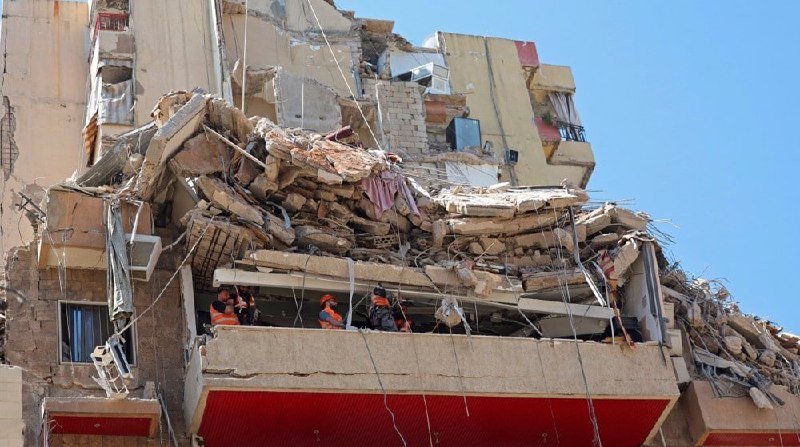
The Pentagon confirmed on 8 May that US forces had struck Iranian-linked targets in West Asia, hours after Iranian state media reported the strikes and Tehran's foreign ministry formally accused Washington of violating a ceasefire arrangement. Brent crude futures surged 2.3 percent in afternoon trading as traders priced in elevated risk premiums for the world's most critical oil transit corridor.
The exchange marks the most direct US military action against Iranian assets since the strikes of late April and deepens a diplomatic fog that both sides are interpreting in sharply divergent terms.
What happened — the verified sequence
According to Reuters reporting on 8 May, Iranian state media reported that US forces struck sites inside Iran, prompting the foreign ministry in Tehran to issue a statement accusing Washington of breaching "pre-arranged understandings." The US Central Command subsequently confirmed that American forces carried out strikes it described as retaliation against Iranian无人机 and missile threats — framing the action as a defensive response, not a violation of any prior agreement. No casualty figures or specific target locations were included in the initial CENTCOM statement.
Earlier that day, the United Arab Emirates Foreign Ministry issued a statement via Telegram acknowledging that it was "engaging with missile and drone threats from Iran," per Middle East Eye's wire report. The UAE statement did not specify whether the threats were directed at Emirati territory or transited through Emirati airspace en route to other targets, nor did it name specific launch points. Scroll.in reported that oil prices rose in the wake of the strikes, reflecting immediate market concern about the stability of the Strait of Hormuz corridor — through which roughly a fifth of global oil shipments pass.
The immediate catalyst appears to have been a weekend escalation involving strikes between Israel and Iran, following Iran's acceleration of nuclear activity. Reports that a ceasefire understanding had been reached between Washington and Tehran — brokered in part through Swiss intermediaries who handle US diplomatic interests in Iran — are now central to the dispute.
The competing framings
Iran's position, as articulated by foreign ministry spokesperson Mohammad Baqeri, is that the ceasefire was understood to prohibit kinetic action against Iranian territory, and that the US strike constituted a breach. Iran contends it communicated the ceasefire terms to Washington through Swiss channels before the retaliatory strikes were launched, and that the American action was therefore a deliberate violation rather than a proportionate response to a new provocation.
The US position, as stated by the Pentagon, is that its strikes were retaliation for specific threats — Iranian drones and missiles that were assessed as posing imminent danger to US personnel and regional partners. This framing places the US action in the tradition of defensive reprisal rather than ceasefire breach. The administration has not released the text of any prior understanding with Tehran.
The gap between these framings is not merely rhetorical. If the ceasefire framework included explicit carve-outs for self-defence, the US strike may be defensible within its terms. If no such carve-out existed, the strike is a clear violation. Neither version is corroborated by the available sources, which do not include the underlying ceasefire document or the Swiss diplomatic communications.
Regional ripple effects
The UAE's public acknowledgment of Iranian threats is significant. Abu Dhabi has invested heavily in maintaining a posture of non-escalation with Tehran — a strategy rooted in its hosting of US military assets at Al Dhafra air base and its long-standing concern about being drawn into a US-Iran conflict it cannot control. A statement acknowledging engagement with Iranian threats suggests either that threats were directed at the UAE itself or that Iranian military activity in the Gulf has become sufficiently visible to warrant public mention. Neither reading is benign.
Saudi Arabia has maintained a notably quiet posture, reflecting a strategy of allowing the US to manage the direct relationship with Tehran while preserving Riyadh's own channels for de-escalation. That silence will be tested if strikes continue or expand.
The oil market reaction, while significant, remains contained compared with scenarios where strikes disrupt actual transit through the Strait of Hormuz. Traders appear to be pricing in a 30-to-45-day window of elevated risk rather than a structural disruption — consistent with a pattern in which each escalation is followed by a diplomatic intervention that prevents full-scale conflict.
What we verified / what we could not
The following can be confirmed from the sources:
Verified: US forces carried out strikes inside Iran on 8 May 2026, per both Iranian state media and a CENTCOM confirmation. Iran formally accused the US of violating a ceasefire through its foreign ministry. The Pentagon characterized the strikes as retaliation for imminent threats. Oil prices rose approximately 2.3 percent following the strikes. The UAE acknowledged engaging with Iranian missile and drone threats.
Could not be verified: The existence and specific terms of any prior ceasefire arrangement between Washington and Tehran, including whether it contained self-defence carve-outs. The contents of Swiss diplomatic communications between the two governments. The specific targets struck, their military function, and any resulting casualties. Whether the Iranian threats cited by the Pentagon were directed at US assets, regional partners, or other targets. The degree to which the ceasefire was communicated to or acknowledged by third parties including the UAE, Saudi Arabia, and Israel.
The reporting does not include independent OSINT corroboration of strike locations or target types.
Structural context and stakes
The broader background to this exchange is a tentative American opening toward Iran. Trump signalled openness to a nuclear deal in early May, and both sides have strategic incentives to negotiate from a position of demonstrated strength rather than concession. A ceasefire, if it existed, served both governments' domestic political needs: it de-escalated without appearing to capitulate. But ceasefire maintenance in a conflict where both sides have constituencies demanding firmness is inherently fragile.
The proximate trigger — Iranian nuclear acceleration followed by Israeli strikes followed by US strikes followed by Iranian accusations — follows a pattern visible throughout the prior eighteen months: each escalation raises the probability of the next, and diplomatic de-escalation arrives at the last possible moment. The pattern has held so far. Whether it holds through another cycle is the structural question.
The oil market response reflects the correct intuition: the Strait of Hormuz is the single chokepoint that can move global energy prices in a single week. A disruption affecting even 10 percent of throughput for sixty days would constitute a supply shock by any reasonable definition. Markets are currently pricing a contained escalation. The risk premium will expand if strikes continue into a second week.
For Gulf states, the strategic challenge is acute. The UAE and Saudi Arabia have spent years building relationships with both Washington and Tehran, hedging the region's instability. A sustained US-Iran exchange with visible Iranian threats to Gulf airspace would force that hedging to collapse toward one pole. The trajectory of the coming days will determine whether that choice arrives.