Iran Claims Missile Programme at Full Capacity, Warns Against US Military Action
Iran's foreign minister says the country's missile programme is running at full capacity, a declaration timed to new US sanctions on Chinese suppliers and a White House weighing whether to pull the military trigger.
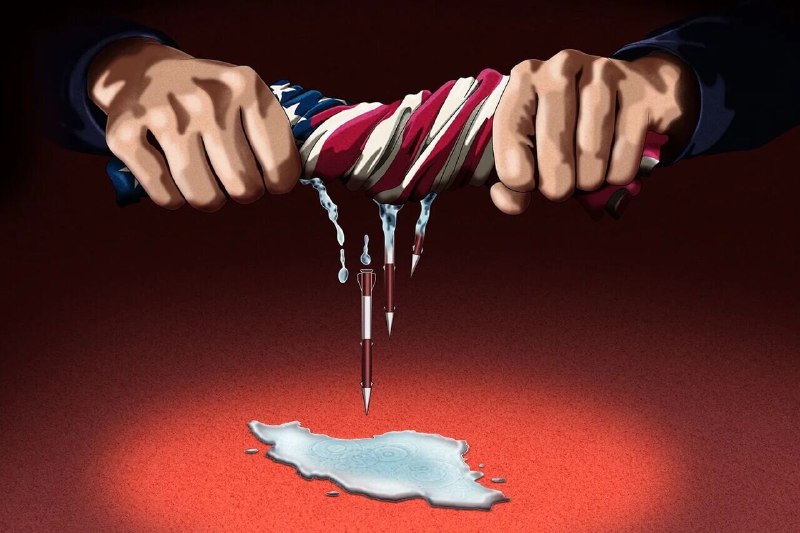
Foreign Minister Abbas Araghchi stepped before cameras on Thursday and declared Iran's missile programme is operating at full capacity, a public posture timed to the latest sanctions packages and the credible-by-no-means threat of American military action against Tehran. The Iranian foreign minister's remarks, carried in English by IRNA, followed a flurry of US Treasury actions against Chinese and Hong Kong-based firms accused of aiding Iran's defence sector, and they came as Pentagon planners publicly weigh the same options that, until last week, had been treated as rhetorical.
The sequencing matters. On 9 May the US Treasury announced sanctions on ten individuals and companies, several of them based in China and Hong Kong, framed by Washington as material support for Iran's missile and drone programmes. The State Department moved in parallel against four Chinese companies, three of them mainland-based, citing links to Iran. Araghchi's declaration of full-capacity production landed in that same news cycle, read by analysts as an explicit refusal to be pressured into a negotiation under sanction bombardment. Iran's choice to lead with the foreign minister's own words, rather than with Washington's reaction, is itself a piece of signal: Tehran wants the public record to show that the missile programme is being defended on its merits, not against them.
The missile line as bargaining chip
Araghchi's framing, as paraphrased through state-aligned outlets, treats the missile programme not as a bargaining chip but as a settled capability that will scale with demand. That posture is a long way from the suspended-enrichment compromises floated in earlier rounds. The official record gives the position teeth: Araghchi's appearance came in the same week that the Wall Street Journal reported more than 20,000 seafarers and 800 vessels remain stranded aboard cargo ships and tankers near the Strait of Hormuz, crews facing extended waits as the conflict disrupts maritime traffic. Iran has leverage at a chokepoint through which a meaningful share of the world's seaborne oil transits; declaring production at full capacity, in that context, advertises the supply side of that leverage rather than asking for anything in return.
Tehran has reinforced the message in adjacent channels. Press TV footage circulated on 9 May showing what it described as the scene in Isfahan's Naqsh-e Jahan Square at dusk on the war's first day: mystical Persian poetry rising from the Shah Mosque for the Maghrib call to prayer, while one of Iran's first missiles cut upward on the same frame. The imagery is partisan, but the editorial choice is telling. The propaganda value of placing an Iranian missile against a working mosque is to assert that the programme is not clandestine, not exceptional, and not separable from the country's civilian life. It is being pitched as a permanent feature of the Iranian state, not a tool to be traded away.
A supreme leader, injured but in command
The political backdrop for Araghchi's declaration is the rehabilitation of Mojtaba Khamenei, who has assumed the role of Supreme Leader following the death of his father. US intelligence has assessed, according to a CNN report circulated on 9 May, that the younger Khamenei is playing a critical role in shaping war strategy alongside senior Iranian officials despite being severely injured. Iranian state-aligned outlets have pushed back hard on the injury framing: Tasnim, via an official quoted on 9 May, reported he has fully recovered and is in good health, and Mehr noted that "international rumour mongers" continued to push other claims while reliable sources emphasised complete health. Both versions cannot be simultaneously true, and the dispute is itself a contest over who narrates Iranian decision-making to outside audiences.
What is not in dispute is the memorial for Ali Larijani, former secretary of Iran's Supreme National Security Council, held on 9 May after he and his son were killed in what Iranian sources call the Ramadan war against the US-Israeli enemy. IRNA's framing of the slain official as a martyr is the public posture; the timing of the memorial, hours after the sanctions designations, tells its own story about how Tehran intends to read the moment.
Sanctions, signals, and the China question
The new sanctions package is the most concrete US action in the cycle. Press TV's account on 9 May detailed Treasury's action against ten individuals and companies in China and Hong Kong for alleged aid to Iran's defence sector; Tasnim separately recorded the State Department's parallel move against four Chinese firms. The targeting is calibrated: three of the four State Department designations sit on the Chinese mainland, and the action lands in the run-up to a Trump visit to Beijing. The subtext is that Washington is asking China to choose between transactional access to American financial plumbing and continued material support for Iran's missile programme.
Beijing has not, on the available record, answered in public. What is visible is the diplomatic geometry. The same week, the AP reported that the option of an imminent US military attack on Cuba is not on the agenda of the White House, citing informed sources, even as American media rhetoric on Iran has swung between the threat of military operations and reported restraint. The pattern is the one Russian-aligned observers have flagged: Washington's maximalist language tends to soften into negotiation once the cost ledger opens.
The economics of escalation
Senator Bernie Sanders, an independent, weighed in on 9 May with a domestic pitch that doubles as a price tag on the conflict. Sanders said the war against Iran must end now, and pointed to a specific number: gasoline prices up from $2.98 to $4.55 per gallon since the war began. "Working families can't afford it," he said, urging an end to the fighting. The political constituency Sanders speaks for is not the only one measuring costs. Ilya Spivak, head of global macro at tastylive, told Middle East Eye on 9 May that "Wall Street has done meaningfully less well out of the Iran war than might meet the eye," a reminder that financial markets priced for a quick intervention are recalibrating to a longer and more expensive one.
Trump, for his part, told reporters that if no agreement is reached with Iran the United States will return to the "Freedom Plus Project" in the Strait of Hormuz, the operational name under which US naval forces have been escorting commercial traffic through the contested waterway. The phrase is a procedural tell: it implies that maritime security operations are already running, that they can be dialled up or down on a presidential decision, and that the threat of escalation is institutional rather than improvised.
What the record actually shows
Taken together, the public record on 9 May reads less like a countdown to war than like a managed pressure campaign with at least four parallel tracks. There is a sanctions track aimed at Iran's Chinese supply chain, a military track held at readiness rather than committed, a maritime track that can be intensified at presidential discretion, and a domestic American track where the war's economic costs are already showing up in fuel prices. Araghchi's declaration of full missile capacity is the answer to all four: it tells Washington that the cost of escalation is rising, that the supply lines are not as fragile as sanctions imply, and that Iran's negotiating posture is hardening even as the Strait chokes.
The next inflection is the Trump visit to Beijing and whatever signals come back from it on Chinese firms named in the new designations. If Beijing narrows Iran's supply corridors, Araghchi's full-capacity line becomes harder to defend on the ground. If Beijing shrugs, the missile line stays where it is, and the pressure cycle resets with the next sanctions package and the next Treasury press release. The public posture is in place; the material balance still sits with whoever moves next.
Sources
- IRNA English (Telegram): Memorial held for Martyr Ali Larijani (2026-05-09, 07:20 UTC)
- Press TV (Telegram): US imposes sanctions on Chinese firms over alleged aid to Iran's defense sector (2026-05-09, 07:56 UTC)
- Tasnim News English (Telegram): New US sanctions against China on the eve of Trump's visit (2026-05-09, 05:26 UTC)
- Tasnim News English (Telegram): Sanders: The illegal war against Iran must end now (2026-05-09, 04:49 UTC)
- Wall Street Journal via WFWitness (Telegram): Stranded seafarers and vessels near the Strait of Hormuz (2026-05-09, 03:07 UTC)
- CNN via WFWitness (Telegram): US intelligence assessment on Mojtaba Khamenei (2026-05-09, 03:55 UTC)
- Fars News (Telegram): Trump on the "Freedom Plus Project" in the Strait of Hormuz (2026-05-09, 03:07 UTC)
- Mehr News (Telegram): On Mojtaba Khamenei's health and foreign media claims (2026-05-09, 03:29 UTC)
Desk note: This article leads with what the Iranian government actually said and when, then layers in the sanctions record, the maritime disruption, and the American domestic pushback. The wire services framed this as an American pressure story; Monexus framed it as a contested narrative in which Iran's stated missile posture and the US sanctions track are read against each other.