The Strait of Hormuz Isn't a Stage, It's a Fault Line
A Gujarati sailor's death and 800 stranded vessels have turned the Hormuz standoff from headlines into a daily energy bill. The real fight is not at sea; it is over who pays the cost of patience.
On 7 May 2026, a dhow out of Gujarat was caught in crossfire in the Strait of Hormuz and a crewman died, according to a seafarers' association representative cited by the Hindustan Times. Five more were injured on the same vessel. The killing was local, the ripple was not. Roughly 20,000 seafarers and 800 vessels sit stranded nearby, the Wall Street Journal reported via the WFWitness wire, as the waterway that carries a disproportionate share of the world's seaborne oil remains choked by an active US-Iran confrontation.
This is not a blockade in the textbook sense, and it is not a war in the legal one either. It is something more unsettling: a slow, grinding closure by incident, where each new seizure or skirmish tightens the noose on global energy supply while negotiators in two capitals insist talks are still alive. The American Automobile Association warned on Saturday of "severe" fuel pressure inside US markets as the corridor stayed shut, according to Al Alam Arabic's relay of the AAA statement. The message to households is already arriving through the petrol pump.
How we got here
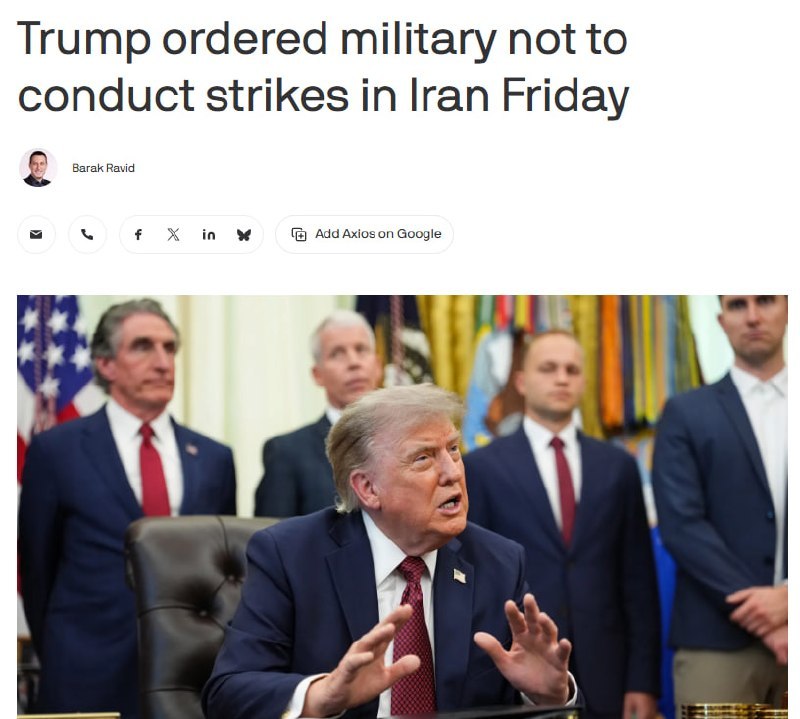
President Donald Trump told reporters on Friday that absent a deal with Tehran, the United States would restart what he called the "Freedom Plus Project" in the strait, per Fars News. The phrase is a throwback: "Operation Freedom," the 1987-88 US reflagging and convoy campaign that ended the previous Tanker War on Washington's terms. The revival talk is partly saber-rattling and partly a signal to Gulf monarchies and Asian importers that the US still has the will to escort tankers through the world's most consequential chokepoint. The fact that a sitting president is reaching back four decades for the operation's name tells you something about how exposed the present arrangement looks.
A CGTN bulletin the same morning framed the situation as "clashes flaring" while Iran weighed a US proposal to end the war. That is the diplomatic floor under the surface noise: behind the seizures, the drones, and the stranded crews, two governments are still talking. The problem is that talking is not the same as shipping, and every day the corridor stays restricted, the cost of the disagreement is paid somewhere else.
What the framing papers over
Iranian state media, particularly Tasnim, has been amplifying sympathetic Western voices. It republished University of Chicago professor Robert Pape's comment that "Iran's power is increasing day by day," a useful soundbite for a regime that wants the world to read the standoff as momentum on its side. The clip is real, the man is a real scholar of political violence, and the underlying point about Iranian asymmetric reach is defensible. But citing an American professor to legitimise a tactical maritime seizure is a different thing from conceding that Iran's strategic position has fundamentally improved. The former is a media operation; the latter is a claim that does not survive contact with the stranded seafarers or the fuel lines.
Coverage in the Gulf has tended to compress two distinct stories into one. There is the military story: drones, fast boats, the threat to shipping. And there is the economic story: insurance premiums, freight rates, US petrol prices. The first is dramatic; the second is the one that lands on voters. American consumers do not need to understand what happened in the strait to feel what is happening at the station.
The fault line itself
A strait is never just a strait. Roughly a fifth of the world's traded oil moves through Hormuz on a normal day. When the corridor convulses, the disruption is global before it is regional: European refiners see it in dated Brent, Indian and Chinese buyers see it in their import bills, and US drivers see it at the pump within weeks. The Gujarat sailor who died on 7 May was not a party to the confrontation, and neither were the 20,000 seafarers now effectively hostage to its continuation. They are the human floor under the abstraction.
The asymmetry is the point. Iran does not need to win a naval engagement to extract concessions; it needs to keep the corridor expensive enough, for long enough, that the political cost of holding the line exceeds the cost of cutting a deal. That is the dynamic the Iranian side has spent two decades perfecting, from IRIS Bushehr confrontations to the recent seizures. The US, by contrast, has the firepower to clear the strait for a few weeks but cannot permanently occupy the coastline that flanks it. The structural advantage, in a grinding contest of patience, sits with Tehran. That is the uncomfortable math that the saber-rattling about Freedom Plus does not change.
What to watch
The next 72 hours matter more than the previous 72. A revived convoy mission would shift the risk premium overnight, and insurance markets would price it within hours. So would any confirmed ceasefire, even a partial one: tanker-tracking data would show queue lengths shrinking before any government issued a statement. The Gujarat death makes one cost concrete and human; the AAA warning makes another concrete and domestic. Both will harden political positions on both sides.
The deeper risk is that this stops being a crisis and becomes a condition. A Hormuz that operates at 60 percent throughput for months is not a blockade. It is a new equilibrium, one in which the world's energy map quietly redraws itself around Gulf instability. That is the fault line the headlines keep circling without naming: not a single battle, but a slow shift in what the world is willing to treat as normal. The 800 vessels sitting outside Bandar Abbas are not waiting for a news cycle to end. They are waiting to find out which world they will sail back into.