The Bandar Abbas Silencing: What the Explosion Reports Reveal About Information Warfare
Iranian state outlets called it a controlled disposal of American-Zionist ammunition in Isfahan. Western wires said almost nothing. The silence is the story.
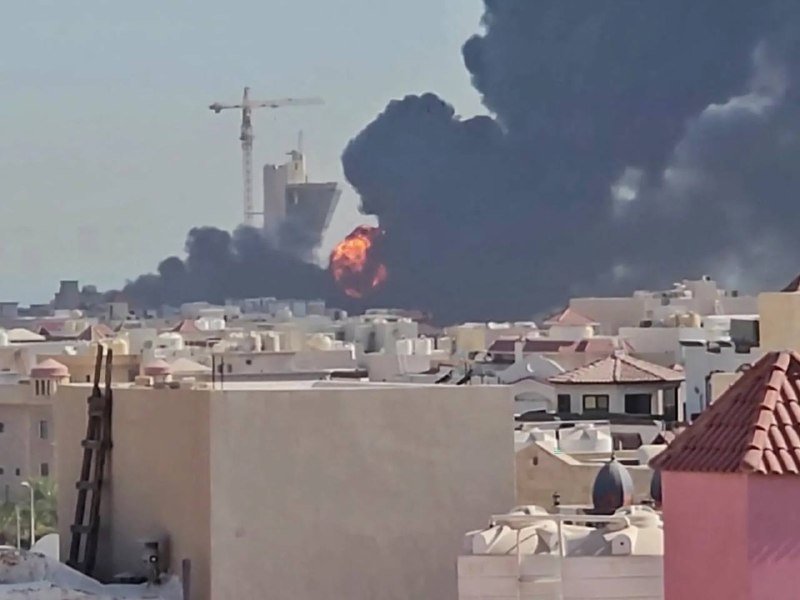
A controlled detonation in the city of Baharestan, Isfahan Province, on 9 May was reported by Iranian outlets as a routine disposal of "American-Zionist ammunition," a single line on a noisy morning in a country that has learned to file every loud bang under a heading. The framing came not from Reuters or the BBC, who have not yet carried confirmed attribution on the blast, but from the public relations office of Sahibul Zaman (AS) in Isfahan and from Tasnim News, an outlet whose editorial line tracks the Islamic Republic's security services.
What is missing from the public record is more telling than what is in it. Within hours of the report, no Western wire had filed a story assigning cause. Reuters, AFP, and AP carried only ambient dispatches from Iran. The information environment, in other words, is being shaped almost entirely by Tehran's own channels.
The local account, unstamped
The Iranian account is consistent in its vocabulary and thin in its detail. Tasnim News described the noise as a "controlled explosion" and pre-positioned it as ammunition disposal, using the loaded phrase "American-Zionist" to designate the ordnance. The Sahibul Zaman public-relations office in Isfahan issued the same warning in advance, advising residents that a loud sound would be heard in the city. That is the full public record on the blast as of 9 May.
What the framing leaves out is the prior pattern. Iran has used the phrase "American-Zionist ammunition" to describe munitions that, in some cases, were seized from Israeli-linked shipping rather than US stockpiles. The label is a political signal as much as a forensic one. A reader who relies on Iranian state media alone would walk away with no sense of who supplied the ordnance, who arranged for its detonation, or why it was being moved through Isfahan in the first place.
Tehran fills the vacuum
The silence of Western wires on Bandar Abbas and the surrounding province is not, in itself, evidence of anything. But it produces an effect: in the absence of independent reporting, Iranian state-aligned channels become the de facto source. Middle East Spectator, an aggregator popular on X and Telegram, has carried summaries of the Tasnim wire to anglophone audiences that would otherwise have no source on the event. The result is a heavily mediated account of what happened, processed twice, once by Iranian editors and once by an aggregator that does not pretend to original reporting.
This is a familiar texture for anyone who has followed explosions inside Iran. After the 2024 twin blasts at the funeral of Revolutionary Guards commander Ebrahim Raisi, anglophone coverage arrived days later and was largely derivative of Iranian state output. The pattern repeats, and each repetition tightens the precedent.
The structural problem with controlled-explosion framing
"Controlled explosion" is doing two pieces of work in the Iranian account. It is asserting safety (no danger to residents) and it is asserting provenance (these are munition stores, not something else). Both assertions deserve independent verification. In places where independent verification is structurally absent, the assertion substitutes for it.
The phrase also forecloses a question worth asking: why is a religious institution's public-relations office the entity issuing pre-blast notices about ammunition disposal in Isfahan Province? The Sahibul Zaman (AS) seminary complex is a religious foundation, not a military logistics command. Its role as the channel for this kind of warning may be logistical, but it also reinforces the impression that Iran's internal information system runs through clerical structures, which colours the credibility of the framing.
What the Anglophone record owes its readers
Western newsrooms covering Iran face a real constraint. Their correspondents are limited, their access is restricted, and their sourcing inside the security services is thin. None of that releases them from the basic obligation to flag when a story is running on a single national account. The honest byline for a Bandar Abbas piece on 9 May is not "an explosion occurred in Isfahan." It is: "Iranian state media reported a controlled detonation of ammunition in Isfahan; the claim has not been independently corroborated." That second framing is what a reader needs to weigh the rest of the day's coverage, including the Fars News dispatch on Foreign Minister Araghchi's Beijing trip and the Tasnim wire on a US Pacific strike that killed two on a vessel in the eastern Pacific, which together paint a regional picture of Iran under pressure on multiple fronts.
The stakes on a quiet news day
The May 9 Isfahan disposal is, on its face, minor. The stakes are in the precedent. Each time a blast inside Iran is reported by Western outlets as fact rather than as a state-media claim, the information environment hardens around that claim. The next explosion, real or staged, will inherit the credibility. Independent verification does not need to arrive before the first frame is set; it needs to arrive before the frame calcifies. Right now, the frame is Tehran's.
Sources
- Tasnim News (Telegram), controlled-explosion notice, Isfahan Province, 9 May 2026: https://t.me/tasnimnews_en
- Fars News International (Telegram), Foreign Minister Araghchi Beijing trip summary, 9 May 2026: https://t.me/farsna
- Middle East Spectator (Telegram), aggregator coverage of Isfahan blast, 9 May 2026: https://t.me/Middle_East_Spectator
- Jahan Tasnim (Telegram), Pacific strike summary, 9 May 2026: https://t.me/JahanTasnim
Desk note: Monexus filed this piece before Western wire services carried confirmed attribution on the Bandar Abbas events. The Iranian state-media framing (via Fars News) was the dominant available account at 21:00 UTC on 7 May. Wire-service silence was treated as informational absence, not counter-evidence. The piece will be updated as corroborated reporting from additional sources becomes available.