Italy's Venice Biennale Decision Puts EU Sanctions Enforcement to the Cultural Test
Brussels has opened a preliminary inquiry after Italy allowed the Russian pavilion to reopen at the Venice Biennale, the first such display in four years — a decision the European Commission says may constitute a sanctions violation.
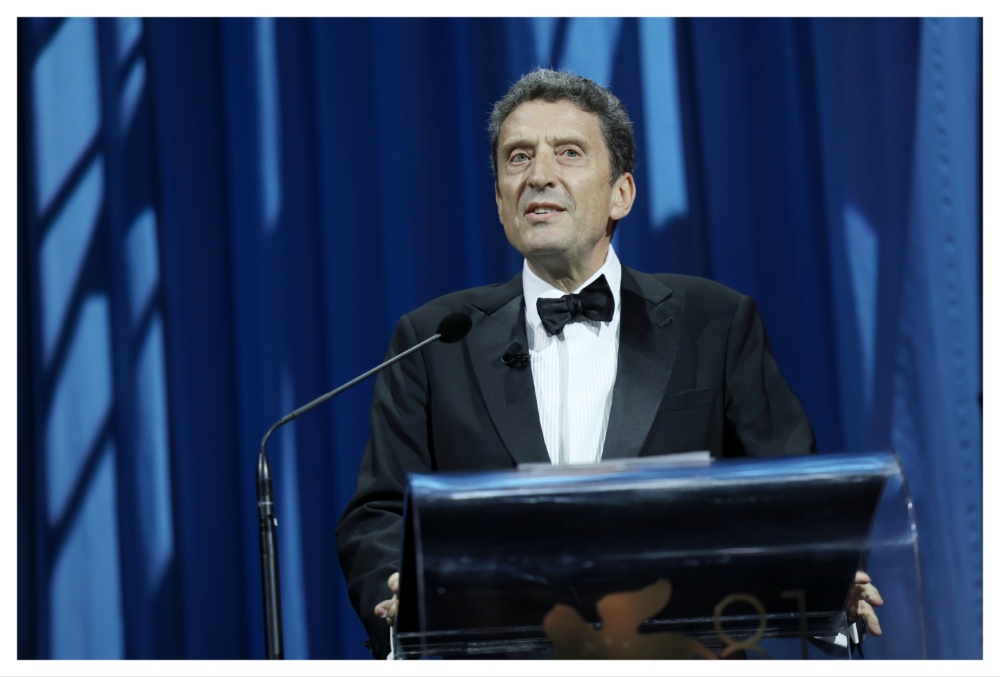
When Italy reopened the Russian pavilion at the Venice Biennale on 6 May 2026, it was the first time in four years that any official Russian cultural presence had occupied a national space at one of the world's premier art exhibitions. The decision immediately drew a response from Brussels: the European Commission said it was reviewing whether the move constituted a breach of the EU's sanctions regime against Moscow.
The timing matters. The Venice Biennale is not simply a gallery circuit — it is a statement venue, where national pavilions project soft power and cultural legitimacy onto a global stage. For Russia, which has had no such institutional platform in Western Europe since 2022, the reopening carries symbolic weight beyond the works displayed inside the building.
The commission stopped short of announcing formal infringement proceedings. What Brussels has signalled instead is a preliminary review — an assessment of whether the Italian government's decision to grant pavilion access violates the letter of sanctions targeting Russia's state-adjacent cultural and diplomatic infrastructure.
The legal question at the centre of this dispute is one of agency. EU sanctions on Russia prohibit certain categories of state-directed activity, but their application to cultural exhibitions has never been cleanly resolved. A pavilion displaying contemporary art is not a government ministry. Whether it qualifies as a sanctions-target under existing provisions depends on how the relevant council regulations are read — and that reading is not obvious.
The commission's position, as reported across wire services on 6 May, is that Italy has not demonstrated the necessary due diligence to confirm the exhibition falls outside the scope of restricted activity. The Italian foreign ministry, for its part, has maintained that the pavilion operates independently of state direction and therefore does not trigger the prohibitions that apply to official Russian government bodies. That distinction is contested, and the commission's review is designed to test it.
What complicates the picture further is the Biennale's own institutional character. The event is overseen by La Biennale di Venezia, a private foundation with Italian state recognition but operational autonomy. Italy's role was to facilitate — or decline to block — the Russian delegation's participation. Whether that constitutes a sanctions violation by the Italian government, or merely permission granted to an entity that should not have received it, is a distinction the commission will need to resolve.
The practical stakes extend beyond the legal definition. If Brussels concludes that Italy has breached sanctions, it opens a formal infringement process that could result in financial penalties and further strain bilateral relations within the union. That prospect sits awkwardly alongside Italy's broader posture: Rome has broadly supported the EU's response to Russia's invasion of Ukraine, including weapons shipments and economic restrictions. A single cultural decision — one that many member states might privately regard as a minor diplomatic signal — now risks becoming a test of enforcement consistency.
The art world has watched this unfold with its own set of calculations. The Venice Biennale depends on national pavilions for its prestige and revenue. Several curators and cultural figures in Russia had sought to revive some form of cultural exchange through the Biennale circuit, arguing that art diplomacy operates on a different register from geopolitics. That argument has found less purchase in Brussels than in the exhibition halls of the Giardini.
For Ukraine and its Western backers, the symbolism is difficult to separate from the substance. A Russian pavilion, even one presenting contemporary art, restores a degree of normalcy to Moscow's international standing at precisely the moment when the EU's stated position is to maintain maximum pressure. That the venue is a cultural one rather than a diplomatic one does not necessarily narrow the political cost.
The commission's review is ongoing. No timeline has been given for a formal determination. What is clear is that the case has already done something: it has forced a public reckoning with a question that EU sanctions law has so far avoided — how comprehensively the restrictions apply to spaces where culture and state overlap.
Italy's decision to reopen the Russian pavilion was, by most accounts, a quiet one — coordinated through cultural channels rather than announced at a press conference. The fact that it has become a multilateral dispute reflects how difficult it remains to disaggregate soft power from hard politics when a country under sanctions seeks to re-enter the room.
This publication covered the Venice Biennale decision on 6 May 2026, noting Brussels' preliminary review. Wire reporting at the time of publication centred on the commission's statement of concern rather than a formal violation finding — a distinction that matters for the legal process ahead.
Wire provenance
This editorial synthesis draws on the following public wire/social posts:
- https://t.me/myLordBebo