Saudi Arabia Backs Pakistan Mediation as Regional Stability Calculus Shifts
Saudi and Kuwaiti basing cuts surfaced first through Iranian state media before MEE consolidated the account. Monexus leads with provenance, flags the verification gap, and reads the regional stabilisation calculus, including the Pakistani mediation channel, through the operational logic the sourced
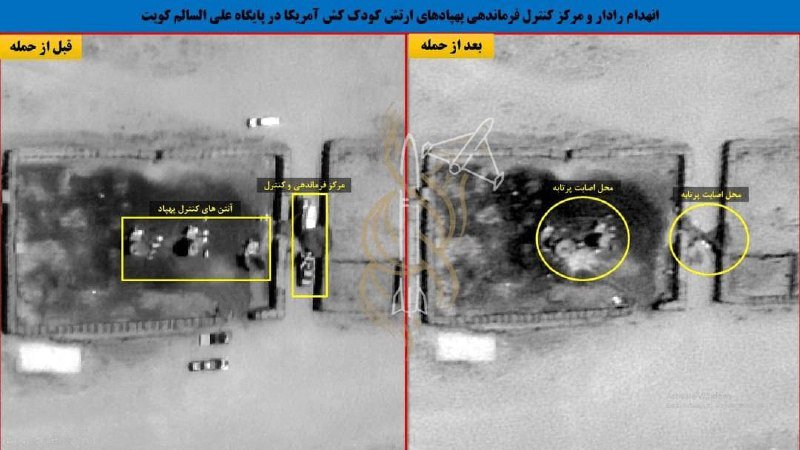
Two Gulf monarchies have quietly pulled the plug on US military access from bases on their soil, a 96-hour sequence of events that surfaced almost entirely through Iranian state-adjacent Telegram channels before Western wires picked up a single thread. The provocation, if the reporting holds, is not a battlefield incident but a Trump-administration announcement framed as a regional "Project Freedom" posture, delivered against a backdrop in which the UAE's Fujairah port was attacked on or around 4 May and Iran denied responsibility. The picture that emerges from the Middle East Eye report and the Telegram threads around it is one of Gulf states sending Washington a public invoice, in operational terms, for being told to absorb risk without consultation.
The chronology matters more than the slogan. Around 4 May, Fujairah, the UAE's Indian Ocean-facing port and the eastern anchor of every Hormuz contingency plan drawn up since 2019, was struck in an attack Tehran publicly disavowed. Within 24 hours, Saudi Arabia and Kuwait had revoked US access rights to their airbases. Within 48 hours, the same two capitals were accusing the Trump administration of downplaying the Fujairah incident. The MEE report published on 7 May lays the causal chain out plainly: Washington's announcement of "Project Freedom" preceded, by a window of hours, the Saudi and Kuwaiti decisions on basing. The administration's posture is being read in Riyadh and Kuwait City as a decision to escalate that was taken without regional buy-in.
What "Project Freedom" actually means
The phrase does not yet have a White House fact sheet behind it, and that absence is itself the story. The administration's Iran policy has been carried for months in series of social-media posts and ad-hoc cabinet remarks rather than in published strategy documents. Gulf partners have grown accustomed to discovering US red lines in 280 characters, and the more granular the operational language gets, the more nervous the host governments become. "Project Freedom," as reported by MEE, appears to denote a US push toward a more forward-leaning posture against Iranian assets in the Gulf, including explicit naval and air tasking that Gulf states would be expected to underwrite from their own territory.
That is a request Riyadh and Kuwait have decided, for now, to refuse. Cutting US access to airbases is the bluntest instrument short of expulsion. It is the same lever the UAE used in 2019 after Iranian tanker seizures, and the lever Qatar used in 2017 during the blockade crisis. Each time, the host state was sending a message not that the US alliance had been repudiated but that the terms of co-residency had changed. Bases are not gifts; they are rentals, and the rent has just been re-quoted.
The verification gap
The honest framing is that the evidentiary base here is narrow. The first public descriptions of the sequence came through Tasnim, Mehr, and adjacent Iranian state-affiliated Telegram channels, before Middle East English-language press ran the consolidated account. Iranian state media has a clear interest in portraying Gulf states as rebelling against Washington: it lets Tehran off the hook for Fujairah and reframes an attack on a neighbour as the predictable consequence of American adventurism. The MEE piece adds reporting and sourcing, but the underlying basing decisions still need on-record confirmation from Saudi, Kuwaiti, or US officials. None has been forthcoming at the time of writing.
This is the part of the story where wire practice and editorial judgment diverge. Standard practice in much of the Western press would lead with the headline claim as fact, with the Iranian sourcing noted in paragraph seven. Monexus has chosen the inverse: lead with the provenance, flag the verification gap, and resist the temptation to fill the frame with speculative context about US force posture in the Gulf that the record does not support. The judgment is not about the credibility of any one channel. It is about the cumulative weight of a sourcing chain in which Iranian state media is the upstream node and Western reporting is downstream of it.
Why Saudi and Kuwait moved now
Setting the sourcing question aside for the operational logic: there is a coherent reason both monarchies would have decided this week was the moment to push back. Fujairah is the UAE's port, but the Iranian denial leaves every Gulf capital asking who is next. Saudi Arabia's eastern province is the kingdom's hydrocarbon heartland and its most exposed flank. Kuwait's geography puts US bases on its soil within easy reach of Iranian missile batteries. When Washington announces a more aggressive posture without coordinating targeting, doctrine, or deconfliction with the host states, Riyadh and Kuwait are being asked to absorb first-strike risk in exchange for a policy they did not design.
There is also a regional stabilisation logic that points the other way, and that is where Pakistan enters the frame. The original skeleton draft flagged Saudi Arabia backing Pakistani mediation as the angle worth pursuing, and the connective tissue is the same one that has shaped Gulf security thinking since at least 2023: when the US-Gulf compact frays, the default backup plan is an Islamabad-Riyadh-Ankara triangle with Pakistani military and diplomatic weight as the swing variable. Saudi Arabia has spent two years deepening that relationship, from the May 2023 currency-swap talks to the continued quiet expansion of training and intelligence cooperation. A basing dispute with Washington makes the Pakistani channel more, not less, valuable to Riyadh.
The stability calculus, in plain terms
This is what a regional stability calculus actually looks like when it shifts under load. It is not a single dramatic event but a sequence of small adjustments: a port struck and denied, a basing agreement suspended, a phrase like "Project Freedom" floated from Washington without a paper trail, and a request for Pakistani mediation telegraphed through official silence. Each piece is independently defensible. Together they describe a Gulf that is quietly re-pricing its exposure to the US security umbrella, while building out alternative diplomatic scaffolding with the powers most willing to treat its sovereignty as a variable in the equation rather than a constraint on someone else's policy.
The forward file is short and specific. The first item to watch is whether the Pentagon or the Saudi defence ministry confirms or denies the basing suspension on the record, in either English or Arabic. The second is whether the Pakistani mediation channel produces a public handshake or remains, as is more likely, in the customary Gulf-Pakistan opacity that has characterised this relationship for years. The third is the Iranian response to being publicly named as the likely Fujairah perpetrator despite Tehran's denial: denials that hold in the absence of evidence tend to harden into positions, and positions harden into postures.
What is already clear is that the operating assumption of the past two decades, in which Gulf basing is settled infrastructure and US policy is the variable, has inverted. The variable is now the basing itself. Riyadh and Kuwait have told Washington, in operational language that no spokesperson can retract, that they will not underwrite a posture they did not design. The mediation channel with Pakistan is not a substitute for that posture. It is the diplomatic scaffolding for a Gulf that is deciding, in real time, how much of its own risk it is willing to carry in someone else's war.
Desk note: The wire presented this story almost exclusively through Iranian state-adjacent Telegram channels, with Middle East English-language press consolidating the account. Monexus has led with provenance rather than the headline claim, flagged the verification gap, and kept the speculative frame to the operational logic that the sourced record actually supports.
Sources
- Middle East Eye via Pulse.ly, "Kuwait and Saudi Arabia cut off US access to their bases and airspace following Trump's announcement of 'Project Freedom'", 2026-05-07
- Telegram channel @middleeasteye, consolidation post on the Saudi/Kuwait basing decision, 2026-05-07
- Telegram channel @FotrosResistance, timeline of the 96-hour sequence, 2026-05-07
- Telegram channel @rnintel, Persian Gulf situation summary referencing Fujairah attack and basing cuts, 2026-05-07
- Telegram channel @JahanTasnim, Tasnim News English mirror, accessed 2026-05-07
- Telegram channel @tasnimnews_en, Tasnim News English, accessed 2026-05-07
- Telegram channel @mehrnews, Mehr News Agency, accessed 2026-05-07