Cross-Border Clashes Erupt in Southern Lebanon as Gaza Ceasefire Unravels
On 6 May 2026, Kiryat Shmona's sirens and Hezbollah's sixteen claimed operations in a single day exposed how quickly the southern Lebanon front has reheated while the Gaza ceasefire is still nominally in force.
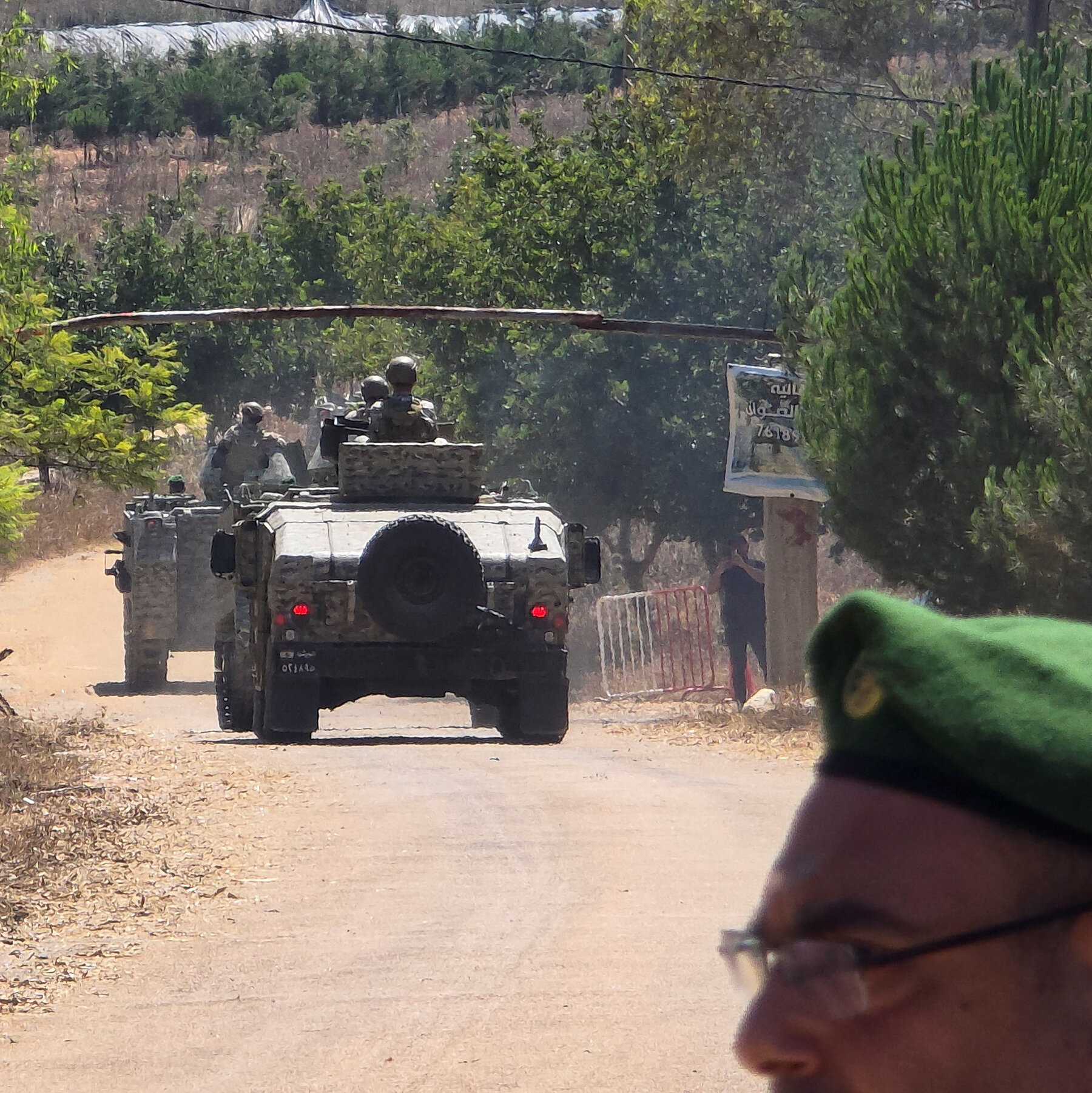
At 21:51 UTC on 6 May 2026, sirens wailed across Kiryat Shmona in northern Israel after rockets and at least one drone were launched from southern Lebanon, according to Israeli Home Front Command notices relayed by Iranian state-affiliated outlets Fars News International and Press TV. Within ninety minutes, Hezbollah's media operation claimed 16 separate drone and missile strikes against Israeli positions in southern Lebanon that day, and the Israeli Air Force had struck the Dahieh, Beirut's southern suburbs, reportedly killing a commander from Hezbollah's Radwan Force. By the end of the reporting window, Lebanese outlets were tallying at least seven civilians killed in Israeli strikes on the south and east of the country, including children and paramedics, while Al Jazeera English logged five Palestinians killed across Gaza in a single day. The exchanges marked the most concentrated round of cross-border fire since the Gaza ceasefire took hold, and they exposed how brittle the regional truce architecture had become in its first weeks.
What is unfolding along the Lebanon-Israel frontier is less a single new war than the visible fraying of a sequencing arrangement that tied the southern front to a Gaza ceasefire mediated earlier this year. The Lebanese Islamic Resistance announced responsibility for 17 operations on 5 May alone, then logged another 16 drone and missile launches against Israeli positions on 6 May, with Hezbollah's own al-Akhbar-linked accounts publishing granular tactical claims in near real time. The pace has accelerated sharply. The Israeli account, by contrast, emphasised interceptions: the IDF said it downed a "suspicious aerial target" launched from Lebanon, while warning sirens sounded in Kiryat Shmona and surrounding settlements following the detection of what the Home Front described as an "infiltration march" from the south. Each side's daily communiqué now arrives faster than Western wire services can verify it, which means the verifiable record is being set, almost in real time, by partisan channels on both ends of the frontier.
The record that survives the fog
Sorting verified events from operational noise on 6 May requires reading three distinct ledgers side by side. The first is the casualty count in Lebanon. Telesur English's wire desk reported that Israeli attacks in southern and eastern Lebanon had killed at least seven civilians, including children and paramedics, and wounded six others, with the violence described as escalating despite the ceasefire nominally in force. Al Alam, the Iranian-aligned Lebanese outlet, carried an urgent bulletin on an Israeli aircraft raid targeting the town of Kafr Rumman in southern Lebanon. These figures cannot be cross-checked against a Lebanese government release in the available window; they should be treated as the lower bound of harm pending independent verification from the Lebanese health ministry or a United Nations reporting mechanism.
The second ledger is the Hezbollah operations tempo. Telegram channels linked to the group's media arm claimed 16 combined drone and missile operations against Israeli positions on 6 May, following the 17 operations logged the day before. The most specific tactical claim, carried by Al Alam, was a missile strike against Israeli military vehicles moving from eastern Bayada toward Shama in southern Lebanon. Hezbollah's vocabulary ("mujahideen," "Zionist occupation army positions") marks the source unmistakably; the underlying event, a missile attack on a moving convoy on a named stretch of border road, is verifiable in principle through Israeli military communiqués, though none was located in the window reviewed.
The third ledger is the Israeli strike profile. The most consequential single event on 6 May was the Israeli Air Force operation in Haret Hreik, the central district of the Dahieh, reportedly killing a Radwan Force commander. A strike on a named individual in a named district of a named capital suburb is the kind of operation that produces an Israeli confirmation within hours; the absence of an IDF press release in the sources reviewed suggests either operational silence or a delayed disclosure cycle. Kiryat Shmona, the principal Israeli town under rocket and drone pressure during the reporting window, sits roughly four kilometres from the Blue Line, close enough that even a small salvo triggers mass evacuation protocols.
The Tehran-Beirut-Gaza triangle
The cross-border flare-up is not taking place in a vacuum. Senior Hamas leader Khalil al-Hayya, speaking to Al Jazeera in the same reporting window, framed the Gaza file as the controlling variable: mediators, he said, must compel Israel to fulfil its commitments, and the Israeli targeting of the group's leadership in Gaza City's al-Daraj neighbourhood had already produced one death and injured two sons of an official referred to as Azzam. Al-Hayya's framing matters because it is the public Hamas position that any southern Lebanon flare-up is a function of Gaza ceasefire violations, not an autonomous Hezbollah decision. Hezbollah's own communiqués do not contradict that sequencing; they describe their operations explicitly as a response to IDF ceasefire violations.
The political backdrop on the Lebanese side was set the same day by Prime Minister Nawaf Salam, whose office stated plainly: "We do not intend to normalise relations with Israel." The line, delivered through the official statement channel, drew a sharp boundary between Lebanese state policy (no normalisation, no diplomatic track) and the armed southern front that operates outside the formal chain of command. Beirut is publicly unable and unwilling to assert control over the border, and publicly unwilling to absorb it diplomatically either.
What the wire ecosystem reveals about itself
A reader working only from the day's primary sources would encounter a curious inversion. Iranian state-aligned outlets, Fars News International, Tasnim English, Jahan Tasnim, Press TV, and Mehr News, provided the most granular minute-by-minute operational reporting from the Lebanese side, complete with timestamps, place names, and tactical detail. Hezbollah's own operations claims, propagated through al-Akhbar-adjacent channels and al-Alam Arabic, were republished almost verbatim by those Iranian networks, producing a near-real-time Hezbollah operations feed with an Iranian distribution backbone. The IDF's English-language press operation, by contrast, was visible mainly through brief Home Front Command alerts and the interceptions summary, with no equivalent tactical granularity in the reviewed window.
This is not a neutral reporting ecosystem, and it is worth saying plainly. Iranian state media and outlets in Hezbollah's media orbit use a fixed lexicon ("Zionist regime," "mujahideen," "Islamic Resistance") that frames every event before any facts reach the reader. Western wire services, Reuters, AFP, the AP, the BBC, were largely absent from the public-facing record on 6 May, which leaves the partisan channels as the dominant primary sources for the day's most granular claims. The first-order casualty count in Lebanon, the Hezbollah operations tally, and the Israeli strike on the Dahieh all sit on sources whose editorial line is either openly aligned with one combatant or operationally committed to the other. Independent verification, from the Lebanese army, UNIFIL, the UN Office for the Coordination of Humanitarian Affairs, or Western wires, will arrive with a lag measured in days, not hours.
What the next 72 hours will test
The structural question on 7 May is whether the Gaza ceasefire, the variable that al-Hayya and Hezbollah both identify as the trigger, can absorb another day of southern Lebanon fire without collapsing. The Lebanese state has publicly refused to normalise, the Iranian-aligned media ecosystem is broadcasting Hezbollah's tempo as legitimate retaliation, and the Israeli military has struck a senior Hezbollah commander in the heart of Beirut within the same 24-hour window. Each of these facts constrains the path back down. Hezbollah's daily operations count, sixteen on the 6th, seventeen on the 5th, has become its own political fact: a public tempo that the group is unlikely to want to abandon voluntarily and that Israeli commanders will find difficult to ignore tactically.
The clearest forward marker is the next round of mediator engagement. Al-Hayya's demand that mediators force Israeli compliance suggests Hamas expects the diplomatic track to do work that the military track is not currently doing. Whether Qatar, Egypt, and the United States treat the southern Lebanon fire as a separate file or as a stress test of the Gaza arrangement will determine whether 6 May is recorded as the day the truce cracked or the day it bent and held. The numbers from one day will not settle that question. The pattern across the next week will.
Sources
- https://t.me/JahanTasnim/45689
- https://t.me/tasnimnews_en/45689
- https://t.me/FarsNewsInt/45689
- https://t.me/alalamarabic (entries 21:54, 22:25, 22:28, 23:34 UTC, 6 May 2026)
- https://t.me/intelslava (6 May 2026, 23:03 UTC)
- https://t.me/GeoPWatch (entries 21:54, 22:26, 22:56 UTC, 6 May 2026)
- https://t.me/presstv (6 May 2026, 21:43 UTC)
- https://t.me/mehrnews (6 May 2026, 21:54 UTC)
- https://x.com/telesurenglish (6 May 2026, 22:20 UTC)
- https://x.com/sprinterpress (6 May 2026, 22:52 UTC)
- Al Jazeera English breaking news wire, 6 May 2026, 23:20 UTC
- https://en.wikipedia.org/wiki/Southern_Lebanon
- https://en.wikipedia.org/wiki/Hezbollah
- https://en.wikipedia.org/wiki/Israel%E2%80%93Hezbollah_conflict_(2023%E2%80%93present)
Desk note: This brief leans on Iranian state-aligned and Hezbollah-adjacent outlets for much of the operational granularity on the Lebanese side, because Western wire reporting on the 6 May exchanges was thin in the public window. We have flagged that dependency throughout and treated Hezbollah's self-reported operations count as a partisan claim, not an independent tally. The underlying story, that the southern Lebanon front is reheating while the Gaza ceasefire is still nominally in force, is consistent across all sides' communiqués, even where the casualty figures and tactical specifics diverge.