Trump leaves door open to Iran strikes as Tehran submits 14-point counterproposal
Washington called it a 'pause,' Tehran called it a 'retreat,' and a 14-point Iranian proposal is now sitting on a US desk via Pakistani intermediaries. Neither side has moved off its opening position; the Strait of Hormuz is still the table they are negotiating across.
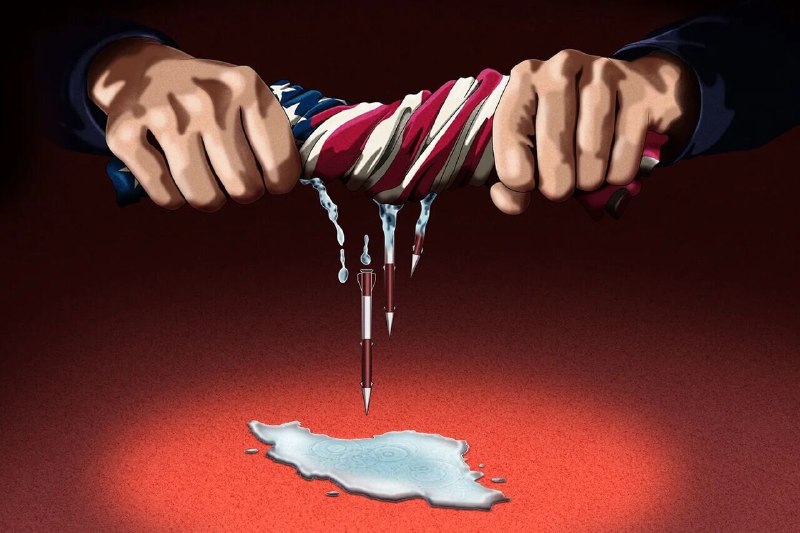
At 2250 UTC on 3 May, President Donald Trump used the word "paused," not "ended," when announcing that the US operation to reopen the Strait of Hormuz would halt so Washington could test whether Iran was serious about a deal. The qualifier matters: a pause is reversible, and it sits beside a separate threat that Iran had not yet "paid the price for what it has done to the world for 47 years." Tehran, for its part, confirmed through state-linked outlet Tasnim that it had delivered a 14-point counterproposal, transmitted via Pakistani intermediaries and framed as a pathway to ending the war. The two governments are now speaking past each other in different rooms of the same building.
What the public record shows, as of 3 May, is a standoff that the combatants themselves are calling a success. Trump described the campaign as a "tremendous Military Success." Iranian state media described the American pause as a "retreat." Both descriptions are on the wire. Neither, on its own, captures the operational reality: roughly a month into an active US campaign against Iran, the Strait of Hormuz is not reliably open, commercial and military vessels continue to come under fire in the narrow waterway, and Filipino crew members have been injured aboard a cargo ship struck by what US officials told CBS was a possible cruise missile. Secretary of War Pete Hegseth publicly detailed "Project Freedom" as a Trump-ordered Middle East operation launched on 4 May, the day before the pause.
Two operations, one corridor
The American posture, as read out by Open Source Intel from Rubio's public comments, is two-track: a continuing economic pressure track called "Economic Fury," and the military track, "Freedom," aimed at safe passage through the Strait. The pause applies to the latter, not the former, and is conditional on a deal landing. Rubio's framing, per the channel's notes, is that the US does not want offensive strikes at least until after Trump's return from Beijing, a summit he previewed by dismissing friction with China over the Iran war and touting personal ties with Xi Jinping.
That timing detail is doing more work than it looks. A pause calibrated to a presidential trip to Beijing suggests the administration is sequencing the Iran file around the China file, not the other way around. If Hormuz is the world's most consequential oil chokepoint, then any pause is also a message to Beijing, to Gulf clients, and to crude markets about who holds the lever when the cameras move.
Tehran's 14 points, Islamabad's envelope
Iran's offer, as Tasnim reported on the evening of 3 May, is a 14-point plan focused on ending the war, handed to Washington through Pakistani mediation. The provenance is significant: Pakistani intermediaries give both sides a diplomatic face-saver and a channel that does not require direct recognition. The contents, beyond the topic of ending the war, have not been published in the materials available to Monexus; what is on the record is the existence of the document, the mediator, and Tehran's framing of it as a constructive response.
Trump's counter-frame is that Iran has not "paid the price" and that "tremendous Military Success" has been achieved. The two framings are not symmetrical. One frames the proposal as an opening. The other frames it as a position taken from a point of strength, with the threat of resumed strikes implicit in the choice of the word "pause." Iranian-aligned commentary on Telegram has already claimed the suspension as a "retreat" and noted that Iran was firing toward commercial and military vessels while attempting to withdraw what one channel put at 1,600 ships. Those claims are reported here as Iranian-aligned framing, not as established facts.
What "paused" buys, what it costs
A pause creates a window in which insurance, freight, and crude benchmarks reprice. It also creates a window in which Iran can do what Iran's navy has signalled it intends to do: continue to fire on, or near, shipping in the strait. The ceasefire that Reuters described on 3 May as "teetering on meltdown" was already a stalemate before the pause, with leaders in both capitals publicly claiming victory. The pause does not resolve the stalemate. It interrupts it.
The cost on the US side is credibility. Hegseth publicly detailed an operation that was then suspended within roughly 24 hours, at the request of Pakistan and "other Countries." That phrasing, "other Countries," is itself a tell: it implies a coalition pressure that has not been named. The cost on the Iranian side is the 14-point document sitting on a desk in Washington with no public US response beyond the threat language. Both sides are betting that the other blinks first. The Strait is the table.
The world that has to wait
For shipping, the wait is operational: routing, insurance war-risk premia, and the question of whether the 1,600-ship backlog cited by an Iranian-aligned channel reflects a real queue or a propaganda figure. For Gulf energy buyers, the wait is contractual: loadings, term deliveries, and the question of whether a paused operation reopens under different rules. For Beijing, the wait is diplomatic: the Trump-Xi summit is the next fixed point on the calendar, and the pause appears sized to land before it.
The honest reading of 3 May is that neither government has moved off its opening position. Trump has preserved the option to resume strikes by choosing "paused" over "ended," and has preserved the option to negotiate by choosing "agreement" over "surrender." Tehran has preserved the option to claim diplomatic process by submitting a 14-point plan through a third-party channel, and has preserved the option to keep firing by not publicly committing to a halt of its own. The asymmetry is not in the proposals. It is in the framing: Washington speaks in the language of price and punishment; Tehran speaks in the language of process and proposal. The Strait sits between them, and the markets, the shipping lanes, and the summits in Beijing all now move to whichever framing holds first.
What to watch next
Three dates will tell. First, whether the US resumes "Project Freedom" before, during, or after Trump's Beijing trip, and whether the resumption, if it comes, is conditioned on a public Iranian response to the 14 points. Second, whether the 14-point document is published in full by either side, which would convert a mediation into a negotiation. Third, whether the Strait of Hormuz sees a confirmed ceasefire incident, a downed vessel, or another crew injury before the pause expires. Each of those events would force a re-pricing of the same two-word claim both governments are currently making in opposite directions.
Sources
- Reuters (via X), 2026-05-05T23:15, Trump says operation to reopen Strait of Hormuz will be 'paused', http://reut.rs/49gzfAN
- Al Jazeera, 2026-05-05T23:40, Trump announces pause on US operation to reopen Strait of Hormuz, https://www.aljazeera.com/news
- Tasnim News (via Telegram), 2026-05-05T23:36, Iran handed over to the United States a 14-point plan to end the conflict, https://t.me/zvezdanews/...
- South China Morning Post, 2026-05-05T23:12, Trump dismisses China friction over Iran war, touts Xi ties before Beijing summit, https://www.scmp.com/news/china/article/3352542/
- Open Source Intel (via Telegram), 2026-05-05T23:02, Trump statement on pausing Project Freedom, https://t.me/OsintLive/89231
- Open Source Intel (via Telegram), 2026-05-05T22:02, Rubio framing on offensive strikes and Beijing timing, https://t.me/OsintLive/89235
- Sprinter Press (via X), 2026-05-05T22:03, Trump threat language on Iran "paying the price", https://x.com/sprinterpress
- World News / wire summary, 2026-05-05T22:04, US-Iran truce teeters on meltdown as stalemate takes toll on each side
- CubaDebate (via Telegram), 2026-05-05T23:42, Hegseth details on "Project Freedom", https://t.me/CubaDebate/...
- CBS News (via Telegram citation), 2026-05-05T23:32, Filipino crew injured after possible cruise missile strike on cargo ship in Persian Gulf region, https://www.cbsnews.com/live-updates/iran-war-trump-strait-of-hormuz/
Desk note: Monexus framed this on 3 May as a pause-with-threat posture, not as a breakthrough, keeping Iranian state-media framing of the 14-point proposal and the Trump administration's framing of price-not-paid on equal evidentiary footing rather than treating either as the dominant narrative.