Trump's Hormuz Bluster and the Leverage That Wasn't
Two days into Project Freedom, Trump paused it at Pakistan's request. The contradiction baked into the policy, hitting Gulf allies and Chinese oil buyers harder than Tehran, did the work no Iranian missile had to.
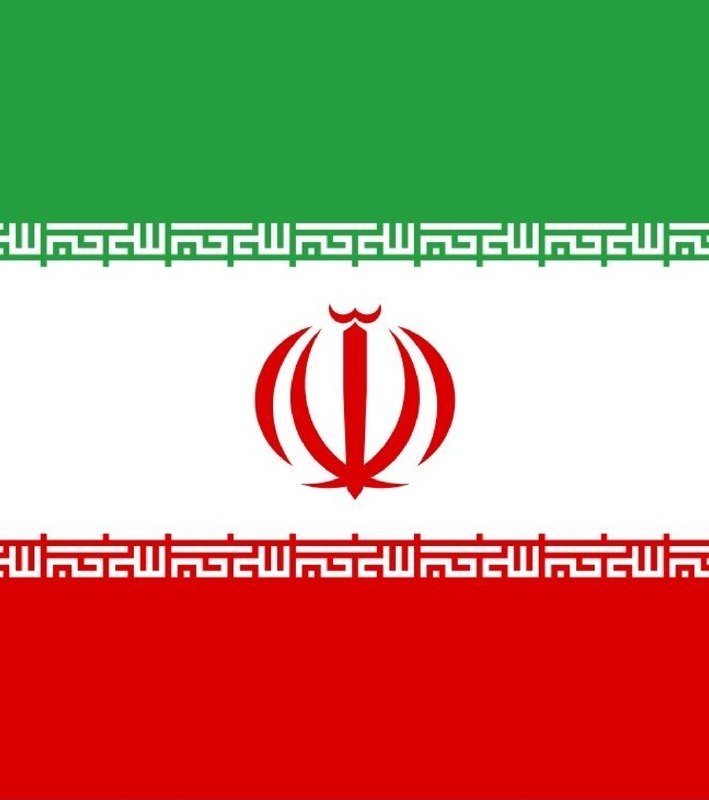
Two days after the United States launched a naval operation to keep the Strait of Hormuz open, President Donald Trump paused it. The reversal, announced on the evening of 5 May, came at Pakistan's request and was justified, in Trump's own words, by the "tremendous Military Success" already achieved against Iran and by "Great Progress" toward a signed agreement. The framing matters more than the facts: Washington had set out to guarantee free passage through the world's most consequential oil chokepoint, and within forty-eight hours it was pleading for someone else to broker the exit.
Project Freedom, as the administration labelled the operation, was launched on 4 May by Trump's order and elaborated the following day by Secretary of War Pete Hegseth. The Strait of Hormuz, a twenty-one-mile-wide corridor between Iran and Oman through which a substantial share of seaborne crude transits, had effectively become a combat zone. Reports carried by CBS News, via the OSINTLive feed, said several Filipino crew members were injured after a possible cruise missile strike on a cargo ship in the Persian Gulf. The premise of the American operation was that US naval power could neutralise the threat and reopen the waterway to commercial traffic on Washington’s terms.
That premise collapsed faster than the operation itself. By 5 May, Tehran had handed Washington a fourteen-point plan, transmitted through Pakistani mediation, focused on ending the war. Trump announced the suspension of Project Freedom the same day, describing it as a short pause to allow diplomacy to conclude. Al Jazeera's breaking-news ticker recorded the announcement in real time, and Reuters confirmed the pause within minutes. The diplomatic choreography, an Iranian offer mediated by a third-party Muslim-majority state, accepted onto a Pakistani request and answered with an American climb-down, was the inverse of the operation's original framing. The United States did not pause Project Freedom because the Strait was secure. It paused because the alternative to pausing was a wider war it had not prepared for.
The structural contradiction runs deeper than the timing. A blockade-style operation designed to coerce Iran inevitably hits the Gulf monarchies and the Chinese economy harder than it hits Tehran. The Saudis, the Emiratis, the Iraqis and the Kuwaitis depend on the same waterway the US Navy was pretending to police; their export infrastructure sits on the same littoral. Iran, by contrast, has spent forty years preparing to fight in this exact geography, with anti-ship missiles, fast attack craft, mining capability and the political will to absorb costs that the Gulf's rentier monarchies will not. A sustained closure raises the price of Brent crude, but it does so in a way that funnels revenue and leverage toward the very regime under blockade, while punishing the customers Washington claims to defend.
Then there is China. Beijing is the single largest buyer of Hormuz crude, and any sustained disruption translates directly into a strategic concession on Taiwan, into domestic fuel-price pressure, or into accelerated Chinese diversification away from the dollar-denominated system. Iran's calculus in closing the Strait has always assumed that the cost of doing so is shared with Washington's principal competitors. The Trump administration either did not run that arithmetic, or ran it and decided that the political value of a televised naval operation outweighed the strategic cost of one. Either reading is unflattering. The pause, brokered by Pakistan and accepted by Tehran, suggests that the cost was understood only after the operation had begun.
What remains, as of the evening of 5 May, is the strange spectacle of an operation designed to project leverage ending as a request for it. Trump's own statement credited Pakistani diplomacy and the prospect of a signed agreement; Iranian state outlets, including Tasnim and Fars, framed the pause as an American retreat in the face of "resolute warnings" from the Islamic Republic. Both narratives flatter their speakers and obscure the same underlying fact: the United States entered a contest it could not win on the terms it announced, and found an off-ramp before the price of staying exceeded the price of leaving. Whether the fourteen-point plan produces a durable settlement, or merely a longer pause before the next operation, is now a question for Islamabad, Tehran and Beijing as much as for Washington. The leverage Project Freedom was supposed to demonstrate was, on the available evidence, never actually in American hands to begin with.
Sources:
- Al Jazeera Breaking News, Trump announces pause on US operation to reopen Strait of Hormuz, 5 May 2026
- Reuters, Trump says operation to reopen Strait of Hormuz will be 'paused', 5 May 2026
- CubaDebate (Telegram relay of official remarks), Hegseth details on Project Freedom, 5 May 2026
- Tasnim / zvezdanews relay, Iran handed over 14-point plan via Pakistan, 5 May 2026
- Disclose.tv / Truth Social, Trump statement on Pakistan's request, 5 May 2026
- OSINTLive / CBS News relay, Filipino crew injured in possible cruise missile strike on Persian Gulf cargo ship, 5 May 2026
- OSINTdefender, Summary of Trump's pause announcement, 5 May 2026
- PressTV / Mehr News, Iranian framing of the suspension, 5 May 2026
Desk note: Wire coverage framed the episode as an Iranian success story. Monexus foregrounds the structural mismatch: an operation designed to coerce a regional power whose geography favours defence, while alienating Gulf allies and Chinese customers whose cooperation the policy required.