Hezbollah's FPV Offensive: How Drone Warfare Is Reshaping the Lebanon-Israel Battlefield
Hezbollah's release of FPV quadcopter strike footage from Bint Jbeil, alongside claims of eleven daily operations, points to a low-cost, high-tempo drone doctrine now reshaping the southern Lebanon front.
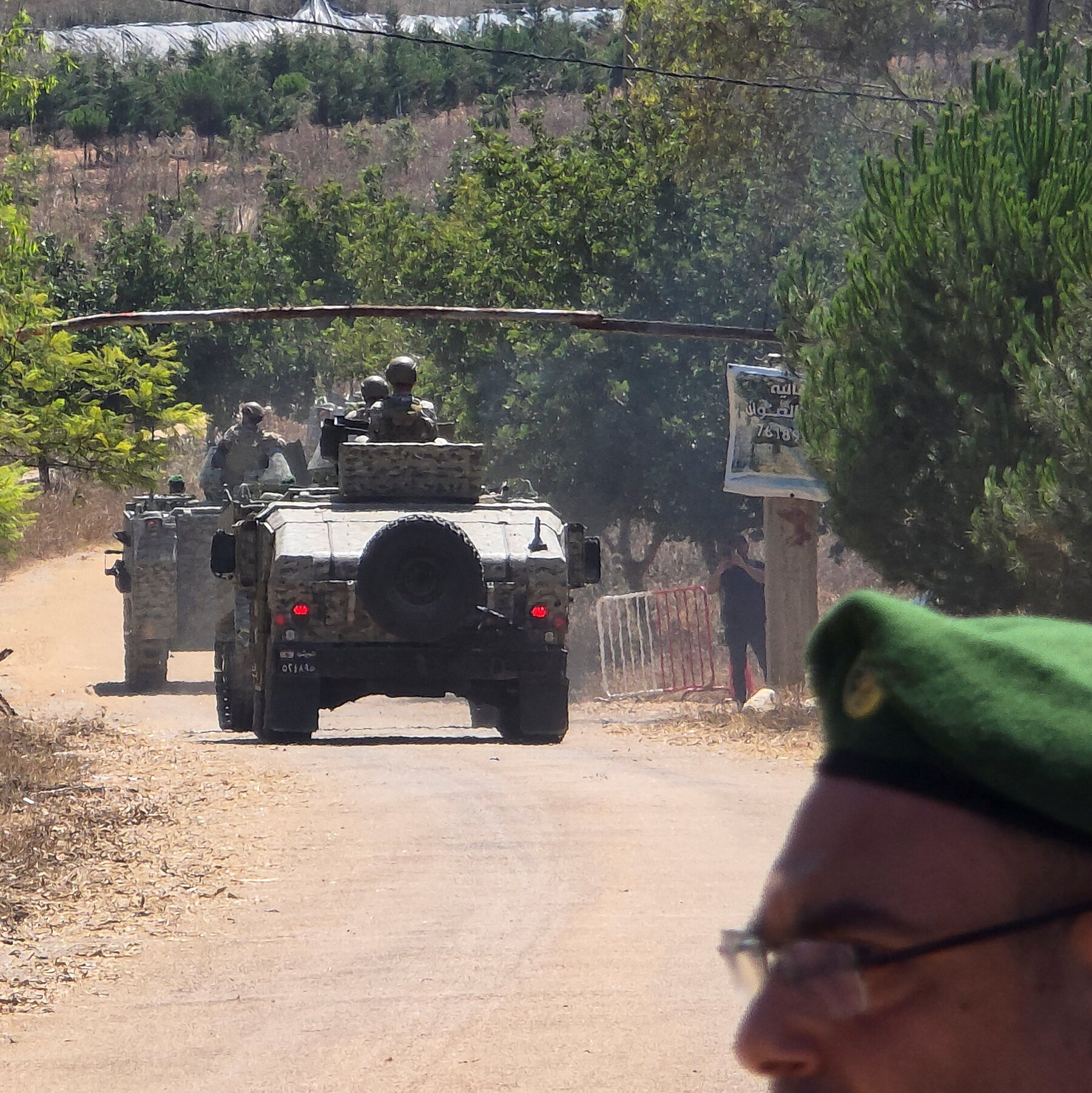
On 3 May 2026, Hezbollah's media wing released footage that, by the group's own account, showed first-person-view (FPV) quadcopter drones tracking and striking two Israeli armoured vehicles in the town of Bint Jbeil in southern Lebanon: a Namer armoured personnel carrier and a Fire Direction Control vehicle associated with an M109 Paladin self-propelled howitzer. The clips circulated within hours through channels including the Hezbollah-aligned Middle East Spectator, the open-source tracker osintlive, and a series of aggregator posts on Telegram that re-published the group's communiqués. The footage is the most visible piece of a broader claim from Hezbollah that it conducted eleven separate operations against Israeli forces in a single day, the highest operational tempo the group has claimed in the current phase of the border war.
What the videos show, and the way they were framed in the immediate aftermath, marks a step-change in how Hezbollah is fighting. The Lebanese movement is no longer presenting itself as a rocket-and-missile force trading volleys across the Blue Line. It is selling a doctrine: cheap, slow, low-flying drones that thread through ruined buildings, hover above tanks, and detonate on contact. If even a fraction of the claimed strikes hold up to the kind of independent verification the group has not yet invited, the implications for the northern front run well beyond propaganda.
A new signature weapon
The most striking element of the 3 May release was the device itself. CNN reported, in coverage relayed by Iranian state outlets Tasnim and Al-Alam, that Hezbollah had fielded a "new weapon that eludes Israel's detection": a quadcopter drone carrying explosives that "flies over the buildings in southern Lebanon and carefully moves among the ruins" before striking an Israeli tank. The phrasing matters. The drones appear to be operated in a loitering mode, manually guided through urban debris, in a way that conventional Hezbollah anti-tank missiles are not. The promotional footage, including the Bint Jbeil sequences republished by the intelslava channel, is the first widely-circulated evidence that the group is using FPV quadcopters in this density along the border.
The weapon class is not new to the region. Ukraine's defenders, and the Russian forces opposing them, have spent three years industrialising the FPV strike, hollowing out armoured columns at a fraction of the cost of a Javelin or a Kornet. What Hezbollah appears to have done is port that playbook into the terrain of southern Lebanon: the same rubble, the same line-of-sight problems, the same incentive for an under-resourced defender to favour disposable, slow-flying munitions over expensive precision rounds. The cost curve is the point. A Namer runs to several million dollars per vehicle; an FPV quadcopter runs to the price of a hobbyist drone and a shaped-charge warhead.
Eleven operations in a day
Hezbollah's official operations summary, posted in parallel by Tasnim and the group's Arabic-language outlet Al-Alam, claimed eleven distinct engagements on 3 May. The list, framed as a response to "the border aggression of the Zionist regime" and "to defend the land and the people of Lebanon," included the Bint Jbeil strike, multiple rocket and missile firings, and what the communiqués described as anti-personnel and anti-fortification actions. The cumulative tempo is the headline: it is the kind of daily operation count that, in previous rounds of cross-border fire, Hezbollah was not claiming at this density.
The tempo claim is also a credibility test. Israeli forces were not idle. Reports aggregated by the AMK_Mapping channel, drawn from Hebrew-language media and IDF-aligned social accounts, pointed to a "security incident" in southern Lebanon on the same day, indicating Israeli soldiers killed or wounded in a Hezbollah attack. Israeli artillery shelled the town of Hadada in southern Lebanon, according to Al-Alam Arabic, and alarm sirens in the West Galilee town of Yeroun were triggered, though Israeli media later reported the sirens had been a false alarm. The exchange is the standard pattern of the current front, and the difficulty for outside observers is that the only ground-truth numbers on either side come from the combatants themselves.
The Israeli reaction: a war of attrition
What is striking is how the Israeli press is now characterising the fight. Haaretz, as summarised by Al-Alam, described the southern Lebanon front in unusually blunt terms: Israel is in a "war of attrition," the Lebanese arena is "the most difficult and bloody arena" facing the military, and Hezbollah is the "Achilles heel of the Israeli army." That is not the language of a containment operation. It is the language of an open-ended commitment against an adversary that can keep showing up.
The strategic complaint is not that Hezbollah is winning the tank-on-tank exchange. The Namer and the Paladin FDC are survivable platforms, and the IDF's combined-arms counter-drone capabilities are extensive. The complaint is volume. If Hezbollah can credibly field FPV quadcopters at the rate its propaganda suggests, and if the bin Jbeil-type strike cycle is replicable across the southern villages, then the cost of holding the border goes up, slowly but steadily, every day the war continues. Attrition wars are not won by who fires the most expensive round. They are won by who runs out of patience first.
Why the drones work in this terrain
Southern Lebanon is a tailor-made environment for FPV warfare. Three features stand out. First, density: the villages along the border, including Bint Jbeil, have been substantially rebuilt since 2006, with multi-storey concrete structures that break line-of-sight for both air defence radars and ground-based observation. Second, debris: repeated Israeli strikes have produced a steady supply of rubble that an FPV pilot can use as cover, dipping a drone behind a collapsed wall and popping it up beside a turret. Third, distance: the relevant engagement zone is short enough that an FPV link holds reliably, but long enough that the operator is not under direct fire.
The platform also degrades the Israeli air defence posture in a way that rocket salvos do not. Iron Dome and the layered system around it are built for ballistic threats: short-range rockets, mortars, drones on fixed trajectories. An FPV quadcopter at twenty metres above the ground, weaving between buildings, presents a different problem. Its radar cross-section is tiny, its flight path is unpredictable, and its target is a single vehicle, not a city. The economics of interception (an interceptor missile that costs more than the drone it is killing) reverse themselves. The cheaper weapon, paradoxically, becomes the harder one to defeat at scale.
A regional picture
The southern Lebanon front does not sit in isolation. On the same day that Hezbollah was claiming its eleven operations, the wider regional picture was shifting around it. Iranian leader Mojtaba Khamenei, in a message about the Persian Gulf, was characterised by Israeli Channels 12 and 14 as "showing his power" and remaining "active and on the scene," with the implicit message that Iran had not yet exhausted its options. A senior Iranian lawmaker warned, according to Middle East Eye, that any US involvement in managing traffic through the Strait of Hormuz would breach the ceasefire currently in force. President Donald Trump said the US was in ongoing talks with Iran that could end the war destabilising the Middle East.
Those are not Hezbollah's decisions, but they are Hezbollah's weather. If the regional temperature drops, the southern front is the place where the residual pressure on Israel continues to build. If it rises, the FPV campaign becomes one of several fronts that the IDF has to resource against a peer-level Iranian-aligned network. The drone footage from Bint Jbeil is, in that sense, a signal: not of what Hezbollah did, but of what it intends to keep doing while diplomats talk.
What to watch next
Three indicators will tell whether 3 May was an inflection point or a one-off. First, the verification rate. Independent OSINT analysts have so far confirmed the locations of the Bint Jbeil footage against pre-war imagery, but not the specific damage to the claimed vehicles. If Israeli sources confirm, even quietly, the loss of a Namer and a Paladin FDC, the FPV claim graduates from propaganda to operational fact. Second, the cadence. A single day of eleven operations is a statement. Two consecutive days would be a doctrine. Third, the export question. Hezbollah has not historically been a first-mover in drone design; it has typically absorbed techniques from Iran, Syria, and latterly the Ukraine war theatre. The signatures in the released footage will be read closely in Kyiv, in Tehran, and in the drone shops of the Bekaa to see whose fingerprint is on the airframe.
The Lebanon-Israel border has been a quiet, grinding war of fire and counter-fire for months. The 3 May videos changed the texture of that war. They showed, in grainy first-person footage, an adversary that has decided to fight on the cheap, in the rubble, for as long as the patience on the other side of the fence holds out.
Sources
- osintlive Telegram, 3 May 2026
- Middle East Spectator Telegram, 3 May 2026
- Wfwitness Telegram, 3 May 2026
- intelslava Telegram, 3 May 2026 (Namer/Paladin FDC footage in Bint Jbeil)
- Tasnim News English Telegram, 3 May 2026 (CNN report on new Hezbollah weapon)
- Al-Alam English Telegram, 3 May 2026 (Haaretz "attrition war" summary; 11-operations claim)
- AMK_Mapping Telegram, 3 May 2026 (security incident, southern Lebanon)
- Middle East Eye, 3 May 2026 (Trump-Iran talks; Iranian lawmaker on Hormuz)
Desk note: Monexus centred this piece on Hezbollah's own operational footage and communiqués as the primary source, supplemented by Israeli press summaries (Haaretz) relayed through regional aggregators. The 3 May material is dense on operational claims and thin on independent casualty confirmation; the article flags that asymmetry rather than smoothing it over. Wire services (Reuters, AP, AFP) were not present in the source thread and have not been back-filled.