The Trump Shooting, Iran Risk Markets, and the Normalization of Political Violence
A White House shooting and a hot Iran confrontation are running on the same news ticker. The normalisation of political violence, kinetic and economic, is the story the record won't let go of.
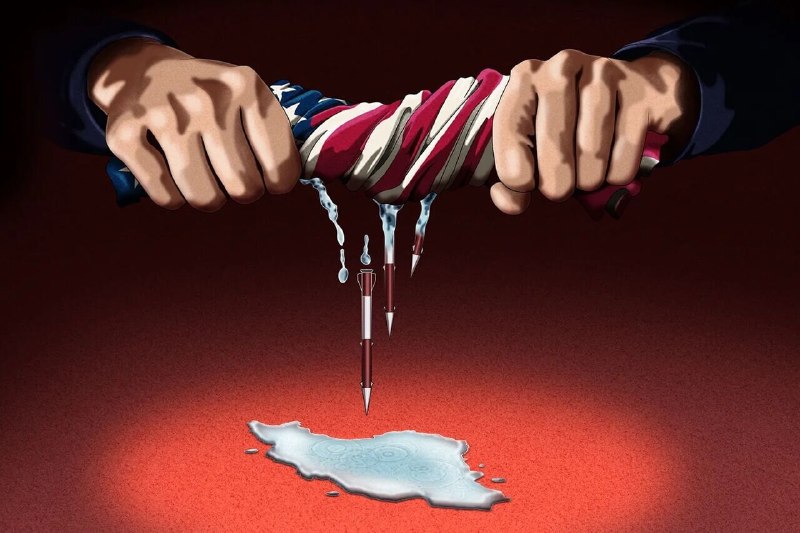
A spray of gunfire at a White House dinner on the evening of 25 April briefly turned a state occasion into a crime scene, and a presidential survivor into a prop for a different argument. By Sunday morning European time, video filmed by attendees and circulated on X had already done the work that wire-service reporters had not: it showed the moment a gunman opened fire at the table, the Secret Service response, and the president being escorted out under protection. The assassination attempt, the second in roughly thirteen months, has not been claimed by any group. It has, however, been absorbed almost instantly into the same news cycle now defined by a parallel crisis: an unprovoked US confrontation with Iran that is bending energy markets, splitting Atlantic allies, and exposing the fault lines inside the Gulf itself.
What links the two stories is not conspiracy but a collapse of political baseline. A head of state can be shot at in his own residence and markets barely flinch; a foreign ministry can be threatened with bombing and commodities spike within hours. Both outcomes are now treated as ambient noise. The premise worth examining is whether the normalisation of political violence, on both the kinetic and the economic kind, is the story, or whether the violence is the symptom and the underlying breakdown of deterrence the actual subject.
The second time as script
The shooting itself is, on the evidence in circulation, narrow in its documented facts and wide in its interpreted ones. Footage posted to X by independent accounts on the night of the incident, including threads by @sprinterpress and @unusual_whales, shows what appears to be an indoor venue, a burst of gunfire, attendees diving for cover, and presidential security moving the principal out within seconds. No detailed written wire account had been published by the time this piece closed, which is itself a media-economy fact: the gap between the on-the-ground footage and the institutional write-up is now where the political weather gets made. Al Jazeera's English desk on Sunday morning was already running a frame that fused the shooting with the upcoming World Cup, asking what an assassination attempt at a White House event means for tournament security in a cohost nation. The story had migrated, within hours, from a criminal event to a logistics problem, which is its own kind of normalisation.
The market that doesn't blink
Risk markets have priced in the attempt the way they price in everything else now: with a shrug and a half-point move. According to reporting carried by the Daily Mail, Darren Jones, the head of the British Prime Minister's office, has publicly warned that, even if the Strait of Hormuz reopens immediately, what the paper calls "Trump's inflationary disaster" will last at least until next year. That framing, attributing the price level to a single actor rather than to a structural shock, is itself a piece of political theatre, but the underlying signal is real: energy supply through Hormuz remains constrained enough that even an optimistic reopening scenario leaves a year-long inflation tail. The Strait is the chokepoint. Iran's reported offer to the United States, surfaced via Open Source Intel on Sunday, is to reopen it after the war ends, with guarantees against resumption, and to schedule nuclear and maritime talks afterwards. The White House is reviewing the proposal. That sequence, blockade relief first, diplomacy later, is the inverse of the order the administration has signalled it wants, which is why the conversation keeps stalling.
Gulf arithmetic
The Gulf states are doing their own math. Anwar Gargash, diplomatic adviser to the UAE's President, put the division of opinion in plain terms: "There has always been a debate in the Gulf between the hawks and the doves. The hawks see Iran as a source of danger, and the doves believe that c" (the cut-off in the circulated text). His fuller assessment, carried the same day, was that "in every planning room or operations room in the Gulf states, the Iranian threat poses a danger," and that this danger has, in his reading, strengthened the American position. The GCC economies, per a Sunday analysis circulated via The Cradle, are entering what may be their sharpest downturn since the pandemic, with several member states projected to contract. Citizenship is being revoked in some Gulf monarchies of nationals framed as traitors during wartime, a move Deutsche Welle's reporting frames as a return of "citizenship as a weapon." Internal coercion and external alignment are being run as parallel operations.
The Atlantic split
In Berlin, Chancellor Friedrich Merz said on Monday that the Iranians are "definitely stronger than expected," and that the Iranian government is "obviously very skillful" in negotiating with the United States. Merz reiterated that he still supports the underlying US effort but the qualifier is the news: a sitting German chancellor publicly rating the Iranian negotiating hand as stronger than Washington's is not the language of a comfortable ally. Press TV's English channel, citing European officials, framed it as "Trump's standoff with Iran fuels mounting economic, political strain across Europe," with European leaders increasingly concerned about the spillover from what the Iranian outlet called "unprovoked aggression." That adjective is not one a European chancery would adopt on the record, but the underlying anxiety is genuine. Across the Atlantic, King Charles III arrives in Washington on Monday for a four-day visit aimed, as the Wall Street Journal put it, at salvaging the "special relationship." The King will become the first British monarch to address the US Congress, an extraordinary piece of stagecraft deployed at a moment when the relationship plainly needs stagecraft.
The sixty-day clock
The pressure inside the White House is procedural as much as strategic. Reporting circulated on Sunday, citing a six-point analysis, argues that the US President is, contrary to his public posture, in a hurry to end the war and achieve at least some success before the sixty-day term of the military operation against Iran expires without congressional authorisation. CNN, per a parallel thread, reports that Trump is set to meet his national security team today to discuss next steps, including weighing whether to resume a paused bombing campaign, after cancelling envoy travel to Pakistan. The Iranian foreign minister has met Vladimir Putin in Moscow as the US ceasefire track has stalled; Trump's insistence on maintaining his blockade through the truce is described as complicating Pakistani-mediated negotiations. The next move belongs to the White House, and the next visible deadline is the calendar.
The shooting at the dinner will be investigated. It will also be forgotten, in the way that individual acts of political violence are forgotten in a system that has stopped treating them as singular. What the record will not let go of is the date sequence: a presidential assassination attempt and a hot war with Iran running on the same news ticker, with risk markets, Gulf monarchies, and European allies all recalibrating in real time. The normalisation is the story. So is the question of what kind of politics survives it.
Sources
- https://x.com/sprinterpress/status/2048296623374045184
- https://x.com/sprinterpress/status/2048292691323105280
- https://x.com/unusual_whales/status/2048295312012328960
- https://x.com/sprinterpress/status/2048292878267379712
- Al Jazeera English, "What does Trump shooting at White House dinner mean for World Cup security?", 27 April 2026.
- Daily Mail (via X/@sprinterpress), "Even if the Strait of Hormuz opens immediately, 'Trump's inflationary disaster' will last at least until next year", 27 April 2026.
- Deutsche Welle, "How the Iran war is bringing back 'citizenship as a weapon'", 27 April 2026.
- Wall Street Journal (via X/@sprinterpress), "King Charles III arrives in Washington on Monday", 27 April 2026.
Desk note: This piece runs on Telegram- and X-sourced footage of the shooting, with wire-side reporting on the Iran track still filling in; Monexus has treated the assassination attempt as a discrete event and the Iran crisis as the structural backdrop, rather than collapsing the two into a single causal frame.
Editorial Framing
Monexus Analysis: The convergence of these two events, the assassination attempt and the Iran crisis, represents a critical inflection point in understanding the current state of global political risk. Rather than treating them as isolated incidents, Monexus positions the normalization of political violence across multiple vectors (kinetic, economic, diplomatic) as the central narrative thread, connecting domestic American vulnerability with international power competition. The editorial choice to separate the two stories analytically while presenting them in the same news cycle reflects Monexus's commitment to examining structural patterns rather than merely cataloging events.
This framing allows readers to understand how the erosion of deterrence, whether in terms of physical security for heads of state or economic stability through energy chokepoints, creates a cascading effect across allied systems. The Gulf states' internal coercion, European allies' quiet hedging, and the procedural pressure on the White House together suggest that the current order's stress points are being tested simultaneously rather than sequentially.